
Prosecutors say synchronized videos show an officer steering toward a fleeing man moments before an unmarked SUV crushed both his legs.
Story Snapshot
- A Harris County grand jury indicted ICE officer Mario Alberto Morales for aggravated assault with a deadly weapon.
- Prosecutors unveiled synced body-camera and bakery surveillance clips that they say show Morales driving at Miguel Parra-Hernandez.
- The 911 call captures Morales’s account that he tried to get around the man; he also said, “I hit him with the car”.
- Immigration and Customs Enforcement (ICE) rejects claims of intent and calls the indictment political.
What the grand jury decided and why it matters
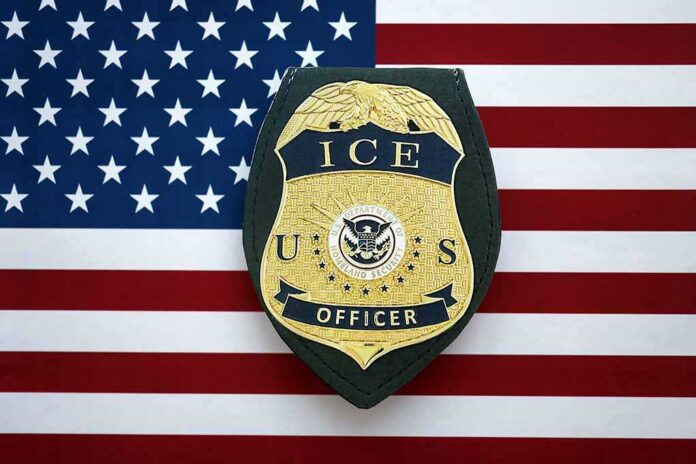
A Harris County grand jury returned a second-degree aggravated assault indictment against Immigration and Customs Enforcement officer Mario Alberto Morales. District Attorney Sean Teare announced the decision and named the charge: aggravated assault with a deadly weapon. In Texas, a vehicle can be a deadly weapon. A grand jury does not decide guilt. It decides if evidence supports a charge for trial. The vote signals prosecutors showed enough for the case to proceed under state law.
Prosecutors said the evidence includes synchronized body-camera video from Morales and surveillance from a nearby bakery. They argued the combined clips show Morales turning toward Miguel Parra-Hernandez and striking him as he ran on foot. That claim goes to intent, which separates a crash from a felony assault. The district attorney’s team said the impact ran over both of Parra-Hernandez’s legs. Reporters on scene described the sync as clear enough to track movements in real time.
What the videos and the 911 call appear to show
News outlets reported surveillance video of two men exiting a pickup and running. The Jeep Grand Cherokee then crossed a median in pursuit. The clips, according to prosecutors, show the SUV hitting Parra-Hernandez while he fled on foot. After the collision, a 911 recording captured Morales stating he tried to get around the man and that the man hit his car. In a separate remark captured on video, he also said he “hit him with the car,” creating a tension that a jury will study line by line.
Parra-Hernandez suffered fractures that required hospital care and rehabilitation, which fits the “serious bodily injury” profile behind felony assault law. Reports placed the incident on October 10 on Clay Road in west Harris County. The vehicle was described as an unmarked black 2025 Jeep Grand Cherokee. These concrete details allow reconstruction experts to measure speed, path, and braking. That kind of analysis often decides cases like this, where seconds and steering angles matter more than slogans.
The competing account from a federal agency
ICE rejects the idea that Morales used his vehicle as a weapon. The agency says Parra-Hernandez ran or stepped in front of the SUV. ICE called claims of intent “reckless and false” and branded the local indictment a political stunt. That is a sharp charge, and it sets up a conflict between local prosecutors and a federal agency. The smarter reading is this: let the tapes, the measurements, and the law guide the outcome, not the press releases.
🚨 ICE OFFICER INDICTED IN TEXAS!
Mario Alberto Morales, 33, faces up to 20 years in prison after allegedly driving his SUV into Miguel Parra Hernandez, 48, in Houston. The victim suffered serious injuries. Morales denies intentionally striking him.https://t.co/vsCvlSHQKF pic.twitter.com/PXR8o3UWyi
— Marco Watts (@MarcoWatts_) October 31, 2026
American conservative values prize law, order, and equal justice. Those values cut both ways here. Officers deserve due process and a fair hearing on dangerous, split-second choices. Citizens, including suspects, deserve protection from excessive force. The grand jury stage met the legal threshold to charge, not to convict. A trial demands more. Jurors should see complete footage, hear expert reconstructions, and weigh the 911 call against the synced videos before judging a man’s intent.
The larger lesson: vehicles, pursuits, and split-second force
Vehicle pursuits blur lines between accident and assault. Research shows pursuit crashes are common and often harm bystanders, which is why agencies tighten pursuit rules. The most important question in this case is narrow and technical: did the driver have a safe out and choose not to use it? That answer rests on speed, distance, sight lines, and braking. Clear policies, data from the vehicle, and full, unedited video will help the public accept the verdict, whichever way it lands.
Sources:
houstonpublicmedia.org, upi.com, milenio.com, ojp.gov
© featuredheadlines.com 2026. All rights reserved.