
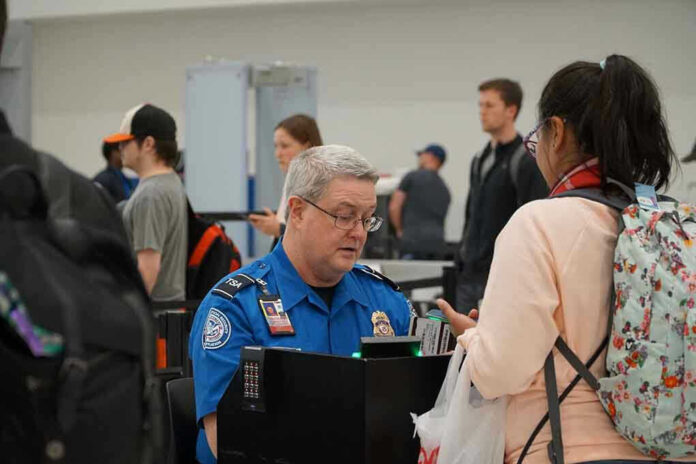
Imagine risking your livelihood to keep America’s skies safe, only to watch a select few colleagues pocket a $10,000 bonus for perfect attendance—while your own sacrifice goes unrewarded.
Story Snapshot
- Trump administration’s $10,000 bonus plan rewarded just 776 out of 11,000 air traffic controllers and technicians
- Thousands who worked through the historic shutdown were excluded for missing even one day
- Unions and lawmakers condemned the move as divisive and unfair to essential workers
- Bonuses became a flashpoint in the political and labor fallout from the record-long shutdown
How a Shutdown Bonus Became a Flashpoint for Worker Recognition
On November 20, 2025, the Department of Transportation announced a $10,000 bonus for air traffic controllers and technicians who showed “perfect attendance” during the 43-day government shutdown. The catch: out of roughly 11,000 eligible workers, only 776 met the strict standard. The rest—thousands who braved empty paychecks, high stress, and family emergencies—were left empty-handed, sparking a fierce backlash from unions and lawmakers who called the reward system a slap in the face for most of the workforce.
Controllers and technicians had been deemed essential, forced to work without pay as the shutdown dragged on. Many missed days for reasons ranging from illness to scrambling for secondary jobs to pay the bills. The FAA, already stretched thin by years of staffing shortages, saw morale plummet. Operational chaos in the National Airspace System led to flight cuts at 40 major airports, while some controllers retired or quit under the strain. The selective bonus announcement, rather than uniting this battered workforce, drove a wedge between the “perfect” and the rest.
The Criteria: A Test of Endurance Few Could Pass
The Trump administration framed the bonus as a reward for “patriotic” service amid crisis. President Trump and Secretary of Transportation Sean Duffy praised the 776 recipients as exemplars, while FAA Administrator Bryan Bedford called their dedication “heroic.” Critics, including the National Air Traffic Controllers Association (NATCA) and Democratic Rep. Rick Larsen, argued that the criteria were unrealistic and unfair. Missing even a single day—often for unavoidable reasons—meant forfeiting recognition, even for those who worked the majority of the shutdown under grueling conditions. Unions argued that such an approach ignored the workplace realities faced by most controllers and pitted colleagues against one another.
Lawmakers and labor leaders pressed for a more inclusive approach, citing long-standing precedents for recognizing all essential workers during national emergencies. Past shutdowns saw broader gestures of appreciation, not exclusion. The FAA’s decision, they warned, risked undermining morale and further eroding trust in management—especially at a time when controller retention and recruitment were already critical issues.
Political Fallout and the Road Ahead
The controversy did not play out in a vacuum. The bonus plan landed amid debates about shutdown responsibility, worker recognition, and the proper role of government in compensating essential labor. Trump defended the bonus as a necessary motivator and a show of gratitude for “those who truly went above and beyond.” Union leaders countered that dividing the workforce into “winners” and “losers” would have lasting repercussions for labor relations and operational cohesion.
As the December 9 payout date approached, the excluded majority faced a bitter reminder of how recognition can be as political as it is personal. NATCA pressed for broader compensation, warning that future crises would be harder to manage if workers felt their sacrifices might go unnoticed. Congressional oversight and ongoing union advocacy suggested the bonus program would not be the last word in this debate. For many air traffic controllers and technicians, the shutdown’s legacy was not just financial hardship, but a deeper question of who gets to be called a hero—and who decides.