
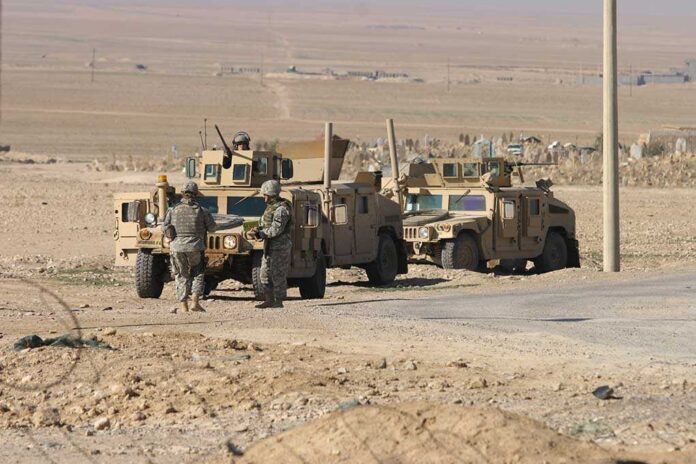
The Trump administration is establishing a new militarized zone along California’s border with Mexico, signaling an aggressive escalation in border security enforcement that could reshape immigration control strategies.
Story Snapshot
- Department of Interior announces new militarized border zone in California
- Initiative represents expansion of Trump’s immigration enforcement strategy
- Focus targets unlawful migrant crossings along Mexico border
- California becomes latest state to receive enhanced border militarization
California Border Gets Military Enhancement
The Department of the Interior announced Wednesday that California will receive a new militarized zone along its southern border with Mexico. This development represents a significant expansion of the Trump administration’s border security apparatus, extending military-style enforcement into one of America’s most populated border states. The announcement comes as part of broader efforts to combat what officials describe as unlawful migrant crossings.
California’s extensive border with Mexico spans approximately 140 miles, running from the Pacific Ocean inland through diverse terrain including urban areas, desert landscapes, and mountainous regions. The state has historically served as a major entry point for both legal and illegal border crossings, making it a strategic priority for immigration enforcement agencies seeking to establish comprehensive border control.
Strategic Implications of Border Militarization
Military-style border zones typically involve enhanced surveillance technology, increased personnel deployment, and expanded authority for border patrol agents. These zones often include advanced detection systems, reinforced barriers, and coordinated response teams designed to intercept unauthorized crossings before they penetrate deeper into American territory. The militarization approach represents a departure from traditional civilian border patrol methods.
The establishment of militarized zones reflects a philosophy that treats border security as a national defense issue rather than simply an immigration matter. This approach prioritizes deterrence through visible displays of enforcement capability and rapid response to border violations. Critics argue such measures create tensions with local communities, while supporters contend they provide necessary tools for maintaining sovereignty.
Trump administration setting up another militarized zone on California-Mexico border https://t.co/5CcfC3xIK4
— Ryan Mancini (@ManciniRA) December 11, 2025
Broader Immigration Enforcement Context
California’s new militarized zone joins existing enhanced enforcement areas along the southern border, creating a more comprehensive network of high-security regions. The Trump administration has consistently emphasized border security as a cornerstone of immigration policy, arguing that robust enforcement reduces incentives for dangerous illegal crossings and protects American workers from unfair labor competition.
The timing of this announcement suggests coordination with other immigration enforcement initiatives, potentially including expanded detention facilities, accelerated deportation procedures, and enhanced cooperation agreements with Mexico. These interconnected policies aim to create what administration officials describe as a complete deterrent system spanning the entire southern border region.
California’s Response and Implementation Challenges
California state officials have historically opposed federal immigration enforcement expansion, creating potential friction over implementation of the new militarized zone. The state’s sanctuary policies and legal challenges to federal immigration initiatives could complicate coordination between federal agents and local authorities. However, federal agencies retain primary jurisdiction over border security regardless of state-level opposition.
Implementation will likely require significant resource allocation including personnel training, equipment deployment, and infrastructure development. The rugged terrain along portions of California’s border presents unique operational challenges that may require specialized equipment and tactics different from those used in other border states like Arizona and Texas.
Sources:
Trump Administration Adds Militarized Zone in California Along Southern US Border