

The real villain in the so-called “entitled woman banned me from reclining” saga is not a stranger in 22B, but an airline industry that quietly shrank your space and then sat back to watch you fight over it.
Story Snapshot
- Airlines engineered a war over reclining by squeezing economy seats to historic lows.
- Reclining is a paid-for mechanical right, but etiquette experts say how you use it defines your character.
- Physical shoving of seats crosses a bright line from frustration into unacceptable aggression.
- Simple, conservative ground rules can defuse most seat battles without calling the flight attendant.
How a Routine Recline Turns into a Midair Standoff
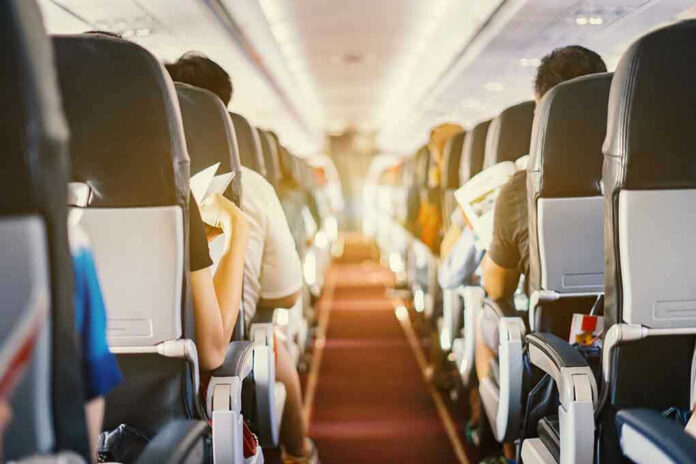
Coach cabins today are a pressure cooker: seat pitch often dips under 31 inches and widths under 18, so when the person in front reclines, the person behind can feel cornered, trapped, even disrespected. Viral clips from flights like Paris to Los Angeles show exactly this chain reaction, as a rear passenger physically pushes a reclined seat and lectures, “Respect the person behind you,” while the front passenger insists on using the seat as designed. The result is not dialogue; it is a standoff over inches.
Similar videos show the reverse dynamic: the recliner lashes out, yelling that the traveler behind keeps shoving the seat upright, shouting, “I’m allowed to put my seat back.” The script barely changes across Reddit posts, TikTok stories, or tabloid write-ups about “entitled women” and “rude men” on planes; the details blur, but the pattern stays the same. Two paying customers, both convinced they are the victim, fight over space neither of them designed and neither of them controls.
Rights, Courtesy, and Where Expert Advice Draws the Line
Travel experts and etiquette professionals largely agree on one key point: if a seat reclines, the passenger in that seat has the right to use that function. Pilots interviewed on the issue back that view, describing the seat as belonging to the traveler in front, not as shared property. Yet the same experts also argue that exercising a right without restraint does not make someone admirable; it just reveals how little they care about the human being wedged behind them in an already cramped space.
Thomas Farley and others teach a common-sense formula: recline, but do it slowly, check the space behind you, avoid doing it during meals, and use the feature most on long or overnight flights when people try to sleep. Diane Gottsman goes further, calling full recline in standard economy generally inconsiderate unless you are in extra-legroom or premium cabins. This advice reflects a conservative impulse toward voluntary manners rather than government mandates: choose to restrain your own comfort just enough to avoid trampling the next person’s.
When Frustration Becomes Physical Aggression
Physical interference changes the entire moral equation. Shoving, punching, or bracing your knees into someone’s seat is not “enforcing respect”; it is escalating a design problem into a confrontation that can injure people and potentially divert a flight. Incidents have spilled drinks, caused back strain, and forced crew to step in as referees between two adults old enough to know better. Conservative values emphasize personal responsibility; that includes controlling your temper when cramped, tired, and annoyed at 35,000 feet.
Historical flashpoints like the “Knee Defender” gadget, eventually banned after a diverted flight, underline why airlines and regulators will not tolerate physical escalation. Airlines want cheap, dense cabins and on-time operations, not midair brawls recorded for social media. Pushing someone’s seat repeatedly may feel satisfying in the moment, but it hands moral and practical leverage to the very people you think are behaving badly. Once you move from words to force, you become the problem, not the solution.
Practical Ground Rules for Keeping the Peace in Row 22
Reasonable travelers can still protect their knees and sanity without turning every recline into a culture-war skirmish. Start with timing: do not recline during meal service or on quick hops where nobody has time to sleep anyway. If you must recline, lean back gradually, glance behind you, and say a brief, civil heads-up if someone is very tall, working on a laptop, or caring for a child. That ten-second courtesy costs nothing and often earns cooperation that rules and lectures never do.
When you are the passenger in back, defend your space like an adult, not a toddler with a tantrum. Speak up early and calmly: explain your height, injury, or laptop situation and ask whether the person in front can limit their recline or adjust partly. If that fails and you truly cannot cope, escalate to a flight attendant rather than starting a silent war of shoves, kicks, and sighs. The system is flawed, but the answer is not to assault the nearest fellow customer; it is to pressure airlines to stop selling misery and then letting strangers fight it out.
Sources:
Outside: Airplane seats reclining rules
The Points Guy: Jetiquette – reclining your airplane seat
Rick Steves Forum: Do not lean your seat back, period