One woman’s death in a quiet Minneapolis neighborhood has turned into a national referendum on how far federal power can go before a community snaps.
Story Snapshot
- Federal officials call it self-defense; local leaders and video evidence have raised starkly different questions.
- The Twin Cities became ground zero for DHS’s largest-ever immigration enforcement surge.
- What began at one intersection spread to hotels, airports, and then more than 1,000 protests nationwide.
- Members of Congress were literally shown the door when they tried to look behind the curtain.
How A Single Shooting Lit The Fuse In A City Already On Edge
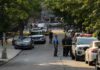
Renee Nicole Good was shot and killed in her car on Jan. 7, 2026, at 34th and Portland in south Minneapolis, during a sweeping federal immigration operation that had quietly flooded the Twin Cities with more than 3,000 federal agents. DHS says ICE officer Jonathan Ross fired in self-defense against a driver weaponizing her vehicle; local officials, after reviewing available video, contest that account and have openly questioned the self-defense narrative. That clash of stories became the spark.
Protesters did not need organizing calls from Washington to show up. Within hours, people clustered at the residential shooting scene, many of them already shaped by the memory of George Floyd and years of debate over police power. Chemical irritants met those first crowds, setting a tone: federal and local officers would not concede the streets, and demonstrators would not quietly absorb another official explanation that left out crucial seconds of video. The line between neighborhood vigil and full-fledged uprising blurred almost overnight.
From Neighborhood Corner To Downtown Hotels And A Federal Fortress
As the days rolled into Thursday and Friday, the protest map widened: the Whipple Building near the airport, home to regional ICE and DHS operations, drew crowds that were met more than once with chemical agents as Border Patrol guarded its perimeter. Downtown, the fight over federal power took a more tangible form at the Canopy by Hilton and Depot Renaissance hotels, where ICE personnel were reportedly staying, turning hospitality properties into symbolic bunkers.
Friday night gave Minneapolis officials the scenario they most feared after 2020: a dense downtown crowd, national media attention, and a fragile line between protest and riot. Some protesters tried forcing their way into the Canopy Hotel, objects flew toward police, and streets clogged as the confrontations escalated. Around 10:15 p.m., MPD declared an unlawful assembly, poured roughly 200 officers and state partners into the area, and by the next morning reported 29 arrests or citations and one officer injured by a thrown chunk of ice.
Congressional Oversight Meets A Closed Federal Door
Saturday morning stripped away any illusion that this was just a local law-and-order story. Reps. Ilhan Omar, Angie Craig, and Kelly Morrison arrived at the Whipple Building asserting standard Article I oversight authority over a federal agency now under intense scrutiny. They were initially waved in and then, in a move that should trouble anyone who cares about checks and balances, told to leave and denied continued access to the facility they came to inspect.
That reversal did not just irritate progressive politicians; it underscored a central concern for many conservatives as well: unaccountable federal power thriving behind security gates. When an agency can deploy thousands of armed officers into a metro area, kill a civilian in a residential street, and then turn away duly elected members of Congress seeking answers, the problem extends beyond left-versus-right arguments over immigration. It becomes a separation-of-powers issue that cuts to basic constitutional common sense.
Peaceful Marches, Chaotic Nights, And A National Echo
By midday Saturday, the city saw the other face of the backlash: thousands gathered at Powderhorn Park under the banner of the Minnesota Immigrant Rights Action Committee and marched down Lake Street toward the memorial at the shooting site. The crowds remained notably more restrained around homes and small businesses than the 2020 unrest, a distinction national coverage highlighted even as it chronicled the hotel clashes and highway disruptions. Many participants framed Good not as an abstract symbol but as a neighbor trying to monitor federal operations who paid with her life.
Far beyond Minneapolis, the story mutated into a map of more than 1,000 planned anti-ICE protests across the country that same weekend, organized under the ICE Out For Good coalition and amplified by groups like the ACLU, Voto Latino, and United We Dream. Organizers portrayed the Minneapolis and Portland shootings as proof that, in their words, armed federal agents were “out of control,” using immigration enforcement as a license to spill blood on city streets while political leaders argued over definitions of self-defense.
What This Clash Reveals About Power, Order, And Community Limits
DHS insists its unprecedented Twin Cities surge, partly linked to alleged Somali fraud investigations, represents necessary toughness on immigration laws. Local officials, however, must live with the day-to-day consequences: frightened immigrant families, business districts bracing for unrest, and police departments caught between collaboration with federal partners and accountability to voters wary of overreach. Minneapolis leaders stressed that most protesters remained peaceful while still condemning forced hotel entry and assaults on officers, reflecting the tightrope they now walk.
For Americans watching from a distance, the Minneapolis chaos poses uncomfortable questions with straightforward implications. A secure border and serious enforcement matter to anyone who believes laws should mean something. So do clear limits on government force, transparent investigations when civilians die, and a Congress that can perform real oversight without being shoved back through a metal detector. When any part of that equation breaks, streets fill, tempers flare, and trust erodes and fast.
Sources:
Minneapolis ICE shooting: Thousands gather for anti-ICE protest in Minneapolis – FOX 9
Protest update – City of Minneapolis
Hundreds of Anti-ICE Protests Are Happening Across the Nation This Weekend – Mother Jones