When concrete slabs trap the living and politics cloud the air, real partnerships decide who makes it out alive.
Story Snapshot
- U.S. military assets and faith-based groups moved fast after Venezuela’s twin quakes.
- International teams from Europe and the Americas turned a fractured region into a rescue network.
- Critics see hidden motives, but facts show requested aid, lifesaving logistics, and open gaps to watch.
- This operation fits a long pattern where disaster response and geopolitics collide in Latin America.
How the call for help turned into a massive rescue partnership
Venezuela’s interim authorities did something the old regime almost never did: they asked the United States for help after the June 24 earthquakes. U.S. Southern Command reported that the Venezuelan government formally requested American support, making this not a unilateral move but a response to a direct call from Caracas.[11] That one decision unlocked military lift, specialized rescue teams, and planning staff who are trained to move in the first, most critical days after a disaster.
The United States did not just send a few planes and press releases. The State Department announced about $150 million in humanitarian aid, much of it routed through Christian groups like Samaritan’s Purse and Catholic Relief Services, plus two United Nations agencies.[3][16] For some Americans, this looks like common sense: use trusted, experienced charities that have boots on the ground. For critics on the left, it raises questions about whether money is tilted toward ideological allies instead of neutral groups.
Ships, aircraft, and dogs: the hard mechanics of saving lives
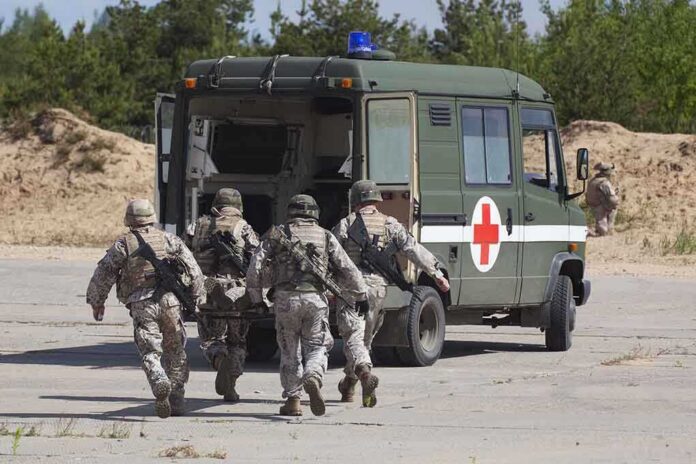
On the ground and in the air, this operation shows why the U.S. military still matters in disaster zones. Two C-17 transport jets carried elite Urban Search and Rescue teams from Fairfax County, Virginia, and Los Angeles, California, along with their search dogs, into Venezuela.[11][5] These teams know how to cut through concrete, shore up unsafe buildings, and find survivors by sound and scent. A major general from Southern Command flew into Caracas to coordinate the whole effort with Venezuelan officials.[16]
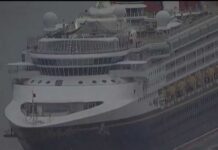
Airport runways near the epicenter were damaged, so normal passenger jets could not land safely.[7] That pushed more weight onto military assets. U.S. Navy ships USS Fort Lauderdale and USS Billings took station off Venezuela’s coast, backing up helicopter lift and providing a platform to move supplies and teams ashore.[10][11] Three Army Chinook helicopters and Marine Corps Osprey tilt-rotors helped solve the basic problem in any quake: how to get heavy gear and skilled people into places where roads, airports, and bridges no longer work.[10][11]
Where faith groups and foreign partners fit into the wider aid picture
The $150 million aid package channels money through Christian organizations that have long histories in disaster zones.[3] Many conservatives see this as smart: these groups often stretch dollars further, keep overhead low, and share values about human dignity and charity. Critics worry that steering tax money toward religious networks could blur the line between neutral relief and mission work. So far, no hard evidence has surfaced that funds are being misused for politics rather than food, medicine, and shelter.[3]
Venezuela was not just a U.S. show. France, Spain, Italy, Germany, and El Salvador all sent rescue specialists, paramedics, and transport aircraft.[4] This matters for two reasons. First, shared effort spreads cost and risk. Second, it makes claims of “U.S. occupation” sound weaker when a wide coalition shows up with their own flags and uniforms. Still, in a region with a long history of suspicion toward Washington, some observers frame the heavy American presence as a way to tighten U.S. influence now that Maduro is gone.[5]
Maduro’s capture, political baggage, and what that means for trust
The elephant in the rubble is the fact that the United States captured Nicolás Maduro months before these quakes.[2][3] Trump said the United States would “run the country” until a safe transition could be set up, while his secretary of state Marco Rubio later insisted Washington would not directly govern Venezuela.[2][3] That split message feeds fears that every American move, even in a disaster, doubles as strategy to shape oil, drugs, and elections.
America is sending a lot of heavy lifting. Virginia Task Force 1, that’s about 80 people and six search dogs with 70,000 pounds of gear, flew down on Air Force C-17 Globemaster IIIs, same for teams from LA and Miami. We’ve also got three Army CH-47 Chinook helicopters for moving… https://t.co/1t8hmicrHU pic.twitter.com/fSomjPPgZ6
— Patricia 🇺🇸 (@1109Patricia) June 28, 2026
From a common-sense, conservative view, there is a clear line: removing a brutal ruler who crushed dissent, then responding fast to save Venezuelan lives after a disaster, can both serve U.S. interests and basic morality.[4][5] Aid skeptics have not produced primary documents showing the interim government did not ask for help, or that the rescue teams are sneaking in combat units.[11] Their case leans on history and motive, not on hard evidence about this specific relief mission.
Real limits, open questions, and why transparency now matters
The operation is still far from perfect. Both U.S. Navy hospital ships are reportedly down for maintenance, limiting how much complex care can happen near the disaster zone.[7] Damaged runways and shattered communication networks inside Venezuela slow everything from casualty counts to medicine delivery.[7][10] These are not signs of bad intent; they are the stubborn facts of a country that was already in crisis before the earth moved.[4][6]
Going forward, Americans should demand clear numbers on troop roles, flight logs, and spending audits. If the military presence stays tied to airlift, logistics, engineering, and medical support, and if the $150 million is shown to feed and treat Venezuelans rather than bankroll politics, this operation can stand as a rare case where hard power, charity, and international partners worked together and did some good.[3][11] If not, it will slide into the same old story of mistrust that has haunted Latin America for decades.[1]
Sources:
[1] Web – “Partnerships in action to save lives.”
[2] Web – US military helping plan Venezuela earthquake relief – Task & …
[3] Web – U.S. Military Support to Venezuela Earthquake Relief – southcom
[4] Web – U.S. pledges generous earthquake relief to Venezuela – NPR
[5] YouTube – US airplane loaded to help quake rescue efforts in Venezuela
[6] Web – International community pledges aid to Venezuela after earthquakes
[7] Web – US airplane loaded to help quake rescue efforts in Venezuela SH …
[10] Web – USA-01, one of the elite heavy urban search-and-rescue teams …
[11] Web – Venezuela Earthquake Relief: Unmatched U.S. Department of War …
[16] Web – The U.S. is expanding its military response as earthquake relief …
© featuredheadlines.com 2026. All rights reserved.