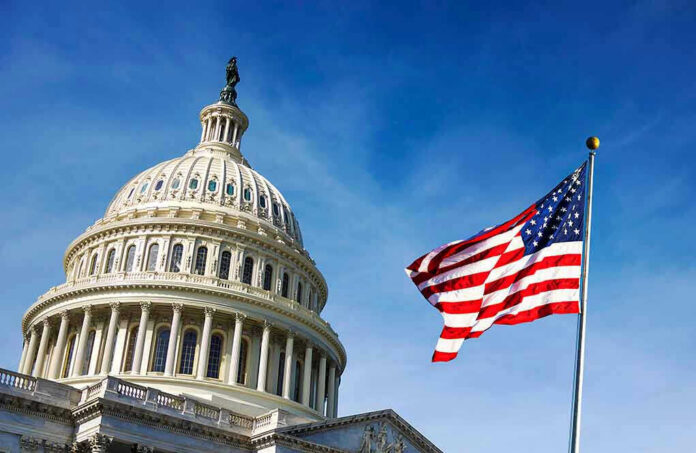
America’s 250th on the National Mall became a late-night test of patriotism, grit, and message discipline.
Story Snapshot
- Trump’s keynote praised American exceptionalism, veterans, and national strength.
- Severe storms delayed entry, forced evacuations, and pushed fireworks to midnight.
- Media focused on thin crowds, artist withdrawals, and partisan optics.
- Trump pushed voter ID and vowed America will never be communist.
The Speech That Refused To Quit
Trump took the stage near midnight after lightning rolled across Washington, District of Columbia. He leaned into a classic theme: America is special because citizens answer hard calls. He saluted veterans from World War II, Korea, and the Cold War. He invoked Medal of Honor heroes by name and framed service as the nation’s backbone. He said America is “winning like never before,” tied that to military recruiting and major investment, and pledged to keep the country strong.
He weaved policy into pageantry. He backed a “Save America Act” that would require voter identification and proof of citizenship. He argued this would secure elections and restore trust. He drew a hard line on ideology, declaring America will never be a communist country. Supporters cheered the clarity. Critics heard campaign notes in a civic moment. Both can be true: patriotic themes land, and policy details sharpen the edge of the message.
Storms, Evacuations, And A Midnight Finale
Lightning and severe storms reshaped the day. Authorities delayed entry to the National Mall and evacuated areas as cells moved in. Trump started speaking around 11:15 p.m. Eastern Time. The fireworks that were billed as the capstone moved to midnight. Friday’s parade was canceled. Safety rules are not partisan; they are common sense. Weather reduced energy, broke schedules, and made a long wait even longer. The show still happened, just on the clock’s terms.
These delays also altered the crowd rhythm. Families with kids left. Tourists sought cover. Some who planned to arrive later never got through the gates in time. That kind of churn always lowers the peak count, especially after evacuations and re-screening. The point is simple: storms take control of logistics. Any fair view of attendance must weigh that context before leaping to sweeping claims about enthusiasm or momentum.
The Crowd-Size Fight Returns
The old fight over crowd size returned right on schedule. Trump allies pointed to big pre-storm expectations. Major outlets posted photos of open grass and thin lines. They argued the turnout missed the hype and mocked empty booths. Some reports said Trump was angry at the images, and that created another round of headlines. This loop sets its own agenda and often drowns out what was said on stage in the first place.
Media framing leaned on sparse attendance, early fair glitches, and artist withdrawals. Forbes and USA TODAY cited thin traffic days before July 4 and noted power issues and a Confederate flag flap at a state exhibit. Those stories fed a narrative of a partisan event, not a unifying national tribute. That framing matters because perception often beats detail in modern politics, even when weather and security rules bent the numbers down.
What Matters To Voters Who Want Results
Voters who prize order, duty, and clear rules heard points that fit those values. Honoring veterans and teaching kids real history build civic unity. Requiring voter identification and proof of citizenship tracks with simple fairness: one citizen, one legal vote. Drawing a line against communism underlines a basic truth of the American story: freedom beats control. These are not fringe notes; they are bedrock views for millions who want a firm spine and clean elections.
President Trump did a “mix of some traditional Fourth of July themes… but also mixed in some very, very partisan politics,” says @jeffmason1 who was in the White House press pool for President Trump’s weather-delayed speech on the National Mall. pic.twitter.com/Uh7B3pILL3
source… pic.twitter.com/Kfax6xcGz2
— TREK (@trek_official) July 5, 2026
One caution stands out. Big claims need firm data. If organizers want a win on attendance, they should release counts and camera records. The National Park Service can backstop with entry logs and evacuation notes. That would settle the number debate, or at least narrow it. In the absence of hard figures, the speech’s core themes carry more weight than crowd boasts. The lasting record should be what was honored and promised, not what a camera angle caught.
Sources:
townhall.com, thedailybeast.com, instagram.com, facebook.com, edition.cnn.com, npr.org, nps.gov
© featuredheadlines.com 2026. All rights reserved.