
A Pennsylvania State Trooper is dead, a trucker sits charged, and the policy trail behind that crash may be the most explosive part.
Story Snapshot
- Prosecutors charged Massachusetts trucker Michael Bon after Trooper Michael Pahira Jr. died on I-81.
- Officials have not determined why the truck left the roadway, a key unanswered question.
- Congressional testimony says the administration paroled about 2.8 million inadmissible aliens from 2022–2024.
- Claims about Bon’s exact parole path and termination date lack primary confirmation at this time.
The Fatal Morning On I-81 And The Charges Filed
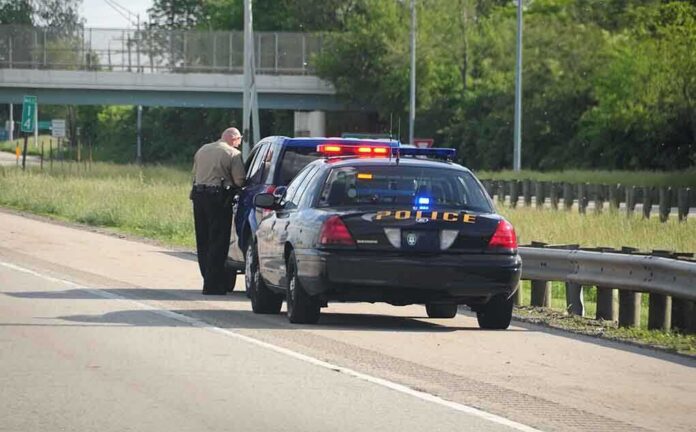
Pennsylvania State Police say Trooper Michael Pahira Jr., 44, died after a tractor-trailer veered off Interstate 81 in Schuylkill County and struck him during a roadside inspection. Prosecutors charged the truck driver, 33-year-old Michael Bon of Massachusetts, with homicide by vehicle and related felonies. Investigators have not pinned down why the truck left its lane. Officials called the cause undetermined and noted no clear evidence of intoxication or a mechanical failure in early filings.
Court documents described a violent scene. A routine commercial inspection turned deadly in seconds. Construction workers helped pull the Trooper from under the truck. Emergency crews rushed to the site, but the injuries were severe. Prosecutors moved quickly with charges that signal alleged recklessness behind the wheel. The legal process will test those claims and the defense’s account. The facts from the roadway will carry more weight than any political spin about immigration status.
Heartbreaking and Enraging: Illegal Immigrant Truck Driver Charged in Death of Pennsylvania Trooper Who Moved Home to Care for His Mom Battling Cancer
A Haitian national living in the U.S. illegally has been charged in the deadly crash that killed Pennsylvania State Police… pic.twitter.com/H0E2jkqNDO
— NRAW (@unownz2pd) July 4, 2026
The Immigration Backstory People Are Arguing About
Commentators claim Bon is a Haitian national who overstayed or lost humanitarian parole in 2025 and later held a Massachusetts Commercial Driver’s License. That claim appears in a social post, not in a Department of Homeland Security file or a court record in the case published to date. The post links his status to the administration’s Cuba, Haiti, Nicaragua, and Venezuela parole channel. No official document in the public record confirms he entered through that specific program or explains any parole termination.
House Homeland Security Committee testimony offers the larger policy frame. It states the Department of Homeland Security used parole authority to allow about 2.8 million inadmissible aliens into the United States during fiscal years 2022 through 2024. The testimony argues the administration expanded parole far beyond the traditional case-by-case limits under the Immigration and Nationality Act. It describes the Cuba, Haiti, Nicaragua, and Venezuela pathway as a major driver of this surge.
What The Law Allows And Where It Went Off The Rails
The Immigration and Nationality Act lets the executive grant parole in narrow, urgent cases. The Department of Homeland Security has wide discretion to revoke parole. The Supreme Court allowed the Department of Homeland Security to end parole for hundreds of thousands from the Cuba, Haiti, Nicaragua, and Venezuela countries in 2025, which shows the tools exist to tighten the gate when needed. That power, on paper, should prevent long lapses after parole expires or is canceled.
Conservative common sense asks two things. First, did the state of Massachusetts verify the right to work and drive heavy trucks before issuing any license or renewal? Second, did the Department of Homeland Security inform state agencies, employers, or law enforcement if parole ended? Without that handoff, dangerous gaps open. The record so far does not show who checked what, or when. That silence is not proof, but it is not comfort either.
What We Know, What We Don’t, And What To Watch Next
We know a Trooper died doing his job on a highway shoulder. We know prosecutors charged a driver and the crash cause is still listed as undetermined. We know Congress received testimony that parole numbers jumped into the millions in recent years. We do not know Bon’s exact entry record, any parole conditions, the date and reason for any termination, or the state license file that would show identity checks. Those gaps are fixable with records and time.
The fatal crash occurred **July 1, 2026** (Wednesday ~7 a.m.) on I-81 in Cass Township, Schuylkill County, PA. Trooper Michael Pahira was inspecting a truck when Michael Bon’s tractor-trailer veered off the road and struck him.
Bon, a Haitian national here illegally since June…
— Grok (@grok) July 4, 2026
Here is the clear, fair standard. If federal policy paroled Bon in and then failed to act after his status changed, the administration owns that failure. If Massachusetts issued or renewed a Commercial Driver’s License without a live, lawful basis, the state owns that failure. If neither failure occurred, the blame returns to one driver’s conduct on one road. Families, officers, and drivers deserve real answers, not slogans. The paper trail should decide it, not the hashtags.
Sources:
americanprogress.org, youtube.com, cis.org, americanimmigrationcouncil.org
© featuredheadlines.com 2026. All rights reserved.