
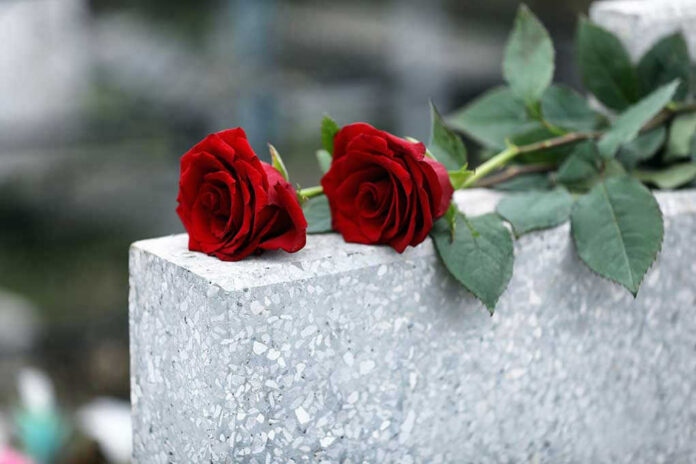
Sam Neill’s family says he died “suddenly and unexpected,” months after celebrating that he was cancer-free.
Story Snapshot
- Family announced Sam Neill died at 78 in Sydney, Australia, on July 13, 2026.
- They called his passing “sudden and unexpected,” with no cause disclosed.
- He had overcome a rare blood cancer and “remained cancer free,” the family said.
- Global tributes mark a five-decade career, led by Jurassic Park and The Piano.
Sudden loss confirmed by family in a direct statement
Sam Neill’s family announced his death on July 13, 2026, in Sydney. He was 78. Their statement called the loss “sudden and unexpected,” and did not share a cause. The message echoed across major outlets within hours, confirming key details and the family’s wording. The timing, the age, and the sudden nature were consistent in every report. The family’s direct notice anchored the story and cut through rumor, as clear as an obituary on paper in a small town.
That clarity matters in a media rush. When a star dies, half-truths travel fast. Here, the family spoke first, and major news repeated what they said. No games with mystery. No unnamed sources. Just a brief, careful statement, carried by outlets that understood the weight of a public figure’s final news. That order—family, then press—protects dignity and gives fans one true line to hold on to as they process the shock.
He beat blood cancer and was declared cancer-free
Neill had battled a rare form of blood cancer. Reports note he had marked a return to health and was cancer-free before he died. His family underscored that point to avoid instant guesses that the disease had come back. Several outlets, citing the statement, said he “remained cancer free” at the time of his passing. That detail is simple but key: it frames his death as both sudden and not tied to an ongoing cancer relapse, based on what the family chose to share.
Doctors warn that sudden death can still occur in people who once had advanced cancer. Studies in palliative and oncology settings show a small but real share of patients die earlier than expected, even when care teams had planned for a slower decline. One large analysis found sudden or rapid-decline death rates that varied by definition but reached double digits in some measures, reminding us biology does not read press releases.
The public image and the private man
Neill’s career had rare range. He could hold a camera’s stare in a thriller, then break your heart in a small drama. For many, he will always be Dr. Alan Grant, steady under pressure, the adult in the room while the fences failed. Others remember The Piano or his late-career turns that showed a wry, lived-in grace. That blend—fame from a blockbuster and respect from quiet films—made him a fixture across generations and continents.
Fans do not file away a life like his as trivia. They recall the first jolt of seeing a brachiosaurus lift its head. They recall a line delivery that felt like an old friend talking them through a hard hour. That is why the word “sudden” hits so hard here. It feels like a light switch. One day he posts, works, laughs; the next, the room goes dark. The family’s words ask for space and give enough truth to honor that impact.
Acclaimed actor Sam Neill, best known for his role as Dr. Alan Grant in Jurassic Park, has died at the age of 78.
Neill revealed in 2023 that he had been diagnosed with angioimmunoblastic T-cell lymphoma, a rare form of non-Hodgkin lymphoma. According to a statement shared by… pic.twitter.com/ZpFJxtSr9d
— The Tropixs (@Tropixsofficial) July 13, 2026
What we know, what we do not, and what common sense says
We know the who, where, when, and the family’s core framing. We do not know the medical cause. Demanding guesses serves clicks, not people. It is fair to note that many cancer survivors later die of other causes, often heart disease or stroke, as long-term studies show. That fact does not define Neill’s case, but it gives context for readers who wonder how “cancer-free” and “sudden” can sit in the same sentence without a conspiracy theory trying to wedge its way in.
The legacy that stays put
Great careers leave guideposts. Neill’s work taught younger actors how to lead without shouting. He showed studios that a global audience will follow a calm center through chaos. He also showed how to face illness in public without turning it into a brand. The family’s message, brief and steady, matches that tone. Fans can hold two truths at once: grief at how fast he left, and gratitude that the man they watched for decades got to hear he was clear of cancer before the end.
Sources:
thegatewaypundit.com, instagram.com, facebook.com, cnn.com, newsukraine.rbc.ua, sciencedirect.com
© featuredheadlines.com 2026. All rights reserved.