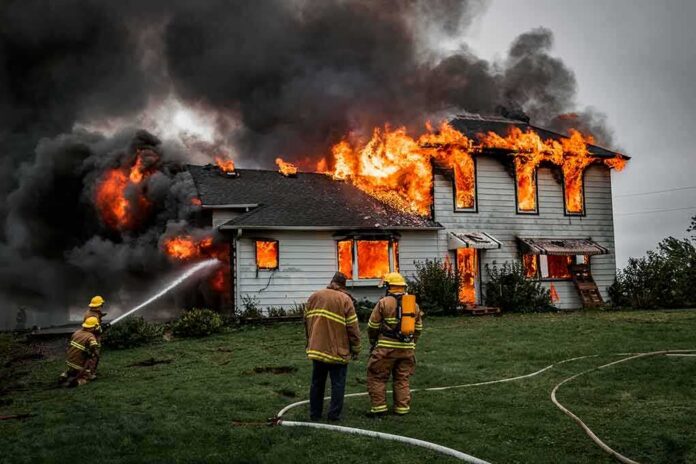
British Columbia’s wildfire crisis turned into a province-wide emergency as more than 20,000 people fled fast-moving flames around Okanagan Lake.
Quick Take
- The province declared a **state of emergency** as wildfires spread across British Columbia.
- Officials said **more than 20,000 people** were forced to leave their homes.
- The Bald Range fire grew with startling speed and threatened communities west of Okanagan Lake.
- Provincial officials said the emergency gave them extra powers to protect residents and find shelter.
What British Columbia Declared
Premier David Eby announced the province-wide declaration after wildfire activity surged across British Columbia, with more than 100 fires burning at the time. Provincial emergency officials confirmed the declaration through EmergencyInfoBC, which also began directing evacuees to support services and local instructions. The move was not just a headline. It gave the province extra authority to limit travel and help secure temporary accommodations for people pushed out by the fires.
The scale of the emergency made the declaration feel less like a formality and more like a brake pedal slammed on a speeding crisis. British Columbia officials said the situation was moving too fast for normal response channels alone. That matters because wildfire season often tests how much control governments really have once dry weather, wind, and fuel lines line up against them. In this case, the province acted while the fire battle was still unfolding.
Why the Evacuation Numbers Kept Rising
The most eye-catching figure was the human one: more than 20,000 people forced to flee. AP reporting said the number topped 20,000, while CBC put the total at roughly 21,700 displaced, with another 9,700 on evacuation alert. Those differences do not change the larger truth. The evacuation was huge, and the public record shows how fast the numbers changed as the fire situation worsened through the day.
That shifting count reflects how wildfires are tracked in real time. One report may count only people under direct evacuation orders. Another may include people on alert, who must be ready to leave quickly. That is why early headlines can look inconsistent even when they describe the same disaster. British Columbia’s own wildfire updates showed a province already under heavy strain, with dozens of active fires and many still out of control.
The Bald Range Fire Became the Flash Point
The Bald Range wildfire became the fire that gave the emergency its urgency. AP reported that it spread to about 50 square kilometers within hours and raced roughly 15 kilometers toward Summerland and Okanagan Lake. CBC described the conditions as explosive, and wildfire officials warned that hot, dry, windy weather made the area especially dangerous. That kind of speed leaves little room for delay, and it often forces officials to move before damage can even be counted.
British Columbia declares state of emergency over wildfires as roughly 20,000 evacuate https://t.co/7YWZtbS6rh via @JustTheNews
— DSP (@DonnaPence5) August 9, 2026
EmergencyInfoBC showed the practical side of the response. It posted evacuation information for the District of Summerland, issued emergency alert guidance, and told evacuees to register with Emergency Support Services. Those details may sound routine, but they reveal the real shape of a major disaster: roads, lodging, reception centers, alerts, and people trying to figure out where to sleep that night. The fire was not abstract. It was a moving problem with a deadline attached to it.
Why Officials Treated This as an Exceptional Event
British Columbia’s own wildfire history places the declaration in rare company. The province has said the 2026 wildfire state of emergency lasted 28 days and became the longest provincial emergency in its history, with tens of thousands of people affected by evacuation orders and alerts. That context matters because it shows officials were not treating this as ordinary summer fire behavior. They were responding to a fire season that had already pushed past normal planning assumptions.
Damage counts were still incomplete when the emergency was announced. AP reported “significant structure loss,” but officials said they could not yet assess the full toll because the area remained an active fire zone. That is a familiar problem in fast-moving disasters. The first duty is to move people out, not to finish the spreadsheet. In British Columbia, that sequence was plainly visible: evacuate first, measure later, and keep the lines of communication open while the fire kept moving.
Sources:
youtube.com, abcnews.com, www2.gov.bc.ca, news.gov.bc.ca, vancouver.citynews.ca
© featuredheadlines.com 2026. All rights reserved.