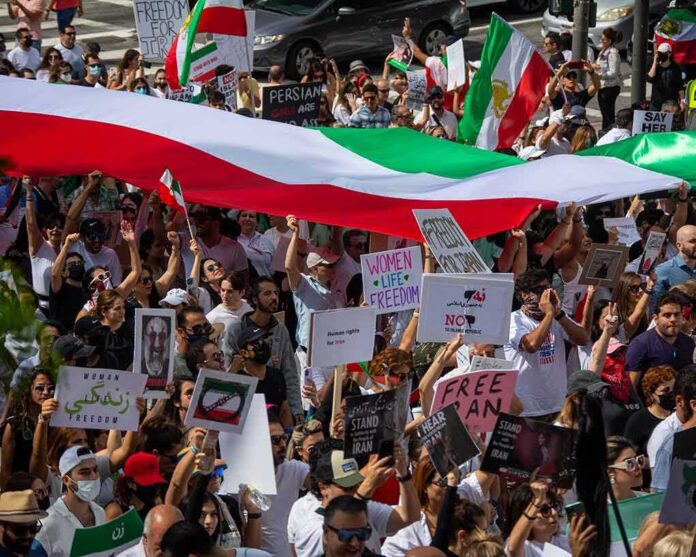
Iran hanged a 24-year-old woman at dawn for killing the man who tried to rape her, rejecting her own testimony that she fought for her life.
Quick Take
- Marzieh Nieri, also spelled Nayyeri or Nayeri, was executed August 8, 2026, at Qazvin Central Prison in Iran.
- She said her husband’s drunk business partner tried to assault her in 2021, when she was 18, and she stabbed him with a kitchen knife to defend herself.
- Her husband also died in the same confrontation, and Iranian courts convicted her of premeditated murder despite her self-defense claim.
- Human rights groups say she had been forced into marriage at age 17, years before the killing that led to her death sentence.
- Iranian authorities separately handed a second woman ten death sentences the same day, in an unrelated case involving elderly husbands.
A Dawn Hanging After Years On Death Row
Marzieh Nieri was put to death at Qazvin Central Prison, also known as Choobindar Prison, in the early hours of Saturday, August 8, 2026. Reports list her age as either 23 or 24. Human rights organizations tracking her case say she spent years fighting a conviction tied to an attack she said she never wanted any part of.
Iranian human rights monitor Hengaw first reported the execution, and outlets across Europe picked up the story within hours. The timing matters. Nieri was a teenager when she was pushed into a marriage she did not choose, and barely an adult when the violence that sealed her fate took place.
What Happened The Night Everything Changed
According to her own trial testimony, the incident occurred in October 2021, when Nieri was 18 years old. She told the court one of her husband’s business partners became drunk and attempted to sexually assault her. She said she grabbed a kitchen knife and wounded him to stop the attack. Her husband was also killed during that same violent encounter, though reports vary on the exact sequence of events.
Nieri had been forced into marriage at age 17, a fact human rights groups say is central to understanding her situation. A girl handed into marriage before she could vote or drive was, a year later, fighting off an assault inside her own home. Iranian courts did not see it that way. They rejected her self-defense claim entirely.
Qisas: How Iran Turns Self-Defense Into A Death Sentence
Iran’s legal system operates under qisas, a retribution-based framework that lets victims’ families demand execution in kind for a killing. Once the court rejected Nieri’s self-defense argument, she was convicted of premeditated murder and sentenced to death under this system. The families of the men involved effectively held the power to seek her execution, and they did.
This is not an isolated legal quirk. Qisas has turned other Iranian domestic violence and self-defense cases into capital punishment matters, because the law treats the outcome, a death, as the deciding factor rather than the circumstances that led to it. A teenage bride defending herself from assault and a calculated murder can result in the identical sentence.
A Pattern, Not A One-Off Case
The same day Nieri was hanged, Iranian authorities handed a second woman ten separate death sentences in an unrelated case involving the deaths of elderly men she had married. Two women, two death sentences, announced within the same news cycle. That is not coincidence. It reflects how frequently Iran’s courts reach for capital punishment against women in cases tangled up with forced marriage and domestic violence.
Marzieh Nieri, 23, was executed at Qazvin Central Prison after a court rejected her account of wounding a man who had attempted to assault her, bringing the number of women executed in Iran since the start of 2026 to at least 14.
Iran executed a young woman at dawn on Saturday… pic.twitter.com/odWiGC8r4V— Alma Gentil (@Chinoy200096633) August 11, 2026
Groups like Hengaw and Iran Human Rights have documented a steady stream of similar executions in recent years, often involving women married off as children who later faced violence from husbands or in-laws. American conservatives who champion the right to self-defense should recognize the stakes here. A legal system that punishes a woman for stopping a sexual assault with lethal force has abandoned any claim to basic justice.
The Silence From Official Channels
Iranian state media has offered little beyond the bare conviction label in Nieri’s case, leaving foreign outlets and human rights organizations to piece together the fuller account from court testimony and family statements. That imbalance, foreign reporting filling gaps that state channels leave empty, is common in cases involving Iran’s use of the death penalty against women. It does not change the documented facts of what happened to her.
An execution is final, and a court’s rejection of a self-defense claim does not erase the woman’s own testimony about why she picked up that knife. Marzieh Nieri’s case now joins a growing list of Iranian executions that human rights advocates say reveal a justice system stacked against women forced into marriage and left with no legal shelter when violence follows.
Sources:
thegatewaypundit.com, es.euronews.com, wncri.org, index.hr
© featuredheadlines.com 2026. All rights reserved.