

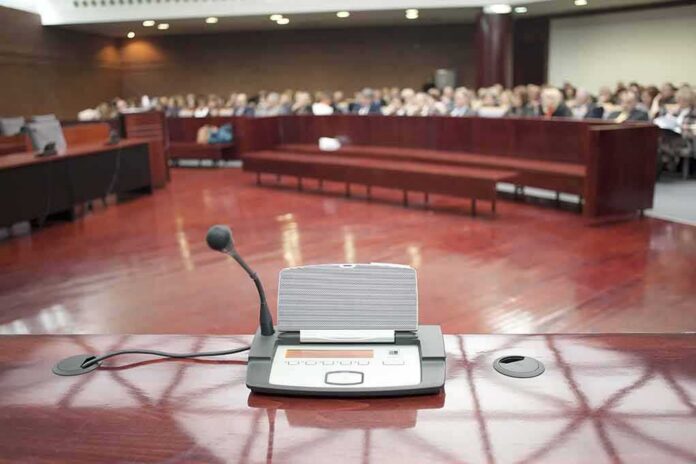
The council opened the microphone, and someone used it to praise Satan on the public record.
At a Glance
- Battle Ground, Washington allowed a pre-meeting invocation under a new open-access policy.
- A speaker delivered a Satanic-themed prayer, echoing a recent Iowa incident.
- City leaders framed the process as viewpoint-neutral, not an endorsement.
- Case law permits legislative invocations when access is evenhanded.
What The Policy Opened And Why It Matters
Battle Ground’s council voted to allow short invocations before meetings, open to religious or philosophical speakers on a first-come basis. That design mirrors a legal line from the Supreme Court and federal appeals courts. Government may allow legislative prayer if it stays neutral about who speaks. The rationale is simple: solemnize the session without favoring one creed. The risk is also simple: if access is open, controversial voices can and will sign up.
Officials described the slot as an open forum, not a city sermon. That point is vital. Courts have treated many council invocations as government speech wrapped in tradition. Yet they also warn that skewed selection or ad hoc gatekeeping invites lawsuits. Battle Ground’s first-come rule aims to avoid that trap. It reduces claims of discrimination. It also means the council will hear from groups many residents dislike, which can shock the room but still fit the rulebook.
The Invocation That Triggered A Culture Clash
A speaker used the Battle Ground policy to deliver a prayer that praised Satan, invoking language similar to the Iowa clip that jolted national audiences days earlier. The format sounded like a customary invocation—address, petitions, closing—yet its content reversed the moral poles many citizens hold sacred. Reactions followed a now-familiar script: gasps in the room, instant outrage online, and a wave of headlines that centered on three words, “Hail Satan,” not on municipal policy design.
City framing tried to separate access from approval. Leaders signaled that the microphone existed because the policy pledged fairness, not because the council shared the speaker’s beliefs. That distinction is easy to miss in the heat of the moment. But it echoes the logic behind Town of Greece v. Galloway, the Supreme Court decision that allowed legislative prayers so long as the government does not exclude faiths or weaponize the slot for proselytizing or disparagement. Viewpoint neutrality is the shield; selective access is the spear that pierces it.
Why Conservative Voters Should Care About The Mechanics
Local government runs on rules. A neutral policy protects the Baptist today and the Catholic tomorrow. It also forces tolerance of unpopular speech under that same shield. Conservatives who value limited government and equal treatment under law should insist on two guardrails. First, write clear access rules that are viewpoint-neutral and easy to apply. Second, define decorum standards that bar disruption and threats for everyone, without turning taste-policing into censorship.
A satanic invocation ending with “Hail Satan” sparked backlash at an Ottumwa, Iowa, City Council meeting.
A pastor objected, the mayor called for 30 seconds of silence, and officials said the invocation did not violate the city’s neutral prayer policy.#CatholicNews pic.twitter.com/xwtirDindO
— SG News (@SGNews123) October 8, 2026
When outrage peaks, councils often face a false choice: kill invocations entirely or start picking winners. The smarter path is to keep the door open and the standards firm. If the slot exists to solemnize, then every speaker should be told up front: no campaigning, no insults, no stunts that hijack the meeting. Enforce that rule evenhandedly. That approach honors free exercise, respects taxpayers, and keeps city business moving without turning every agenda into a theater of provocation.
The Playbook Going Forward
Battle Ground and other cities can steady the ship with a few steps. Publish the full invocation policy. Explain that access does not equal endorsement. Post the speaker schedule in advance. Offer a moment of silence as a fallback when things get heated. Train the chair to gavel down disruptions fast and fairly. Those moves align with court guidance and common sense. They lower temperature without surrendering the principle that the law protects peaceful speech you hate as much as speech you love.
Sources:
ottumwapost.com, thepostmillennial.com, thegatewaypundit.com
© featuredheadlines.com 2026. All rights reserved.