
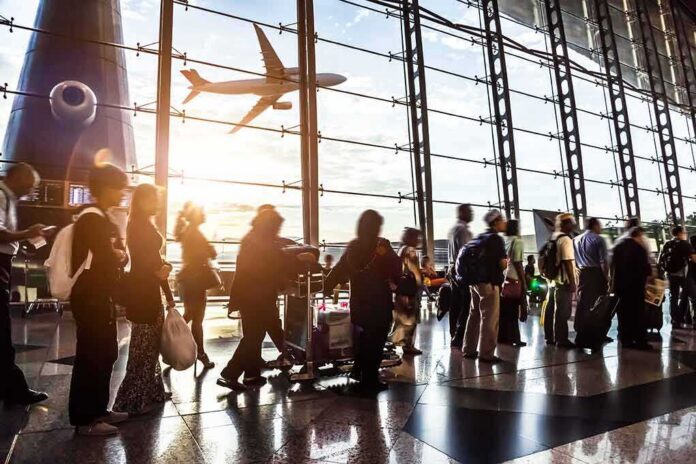
One airport’s “Chaos Score” towers over the rest, and it is not even close.
Story Snapshot
- Researchers ranked the worst airports for Thanksgiving travel using three inputs: delays, cancellations, and traveler reviews.
- Chicago O’Hare topped the list with a 96.73 Chaos Score; John F. Kennedy International was a distant second at 72.66.
- O’Hare’s last three Thanksgiving windows saw delays on nearly 28% of flights, averaging 93 minutes, plus a 6.13% cancellation rate.
- The top ten includes major hubs across regions, signaling broad system strain during the holiday rush.
What the ranking measured and why it matters
The new ranking targeted Thanksgiving, the most stress-prone travel week of the year. It pooled three years of holiday data to build a bigger sample of what travelers face when volume surges. The inputs covered flight delays, cancellations, and Google review sentiment. That mix ties hard performance data to lived experience, which shapes how travelers plan. The method tracks a familiar consumer index pattern used in airport league tables that blend operations and passenger feedback.
Researchers did not rely on a single metric that could hide pain points. A long delay hurts as much as a last-minute cancellation to a family with a turkey deadline. Reviews add a ground-level lens on lines, signage, and staff support. This broader picture helps travelers compare airports across regions. It also signals to operators and airlines where choke points show up first under holiday strain. Clear stakes and transparent comparisons drive better choices.
O’Hare’s wide lead sets the tone
Chicago O’Hare led the “chaos” list with a 96.73 score, far ahead of second-place John F. Kennedy International at 72.66. That gap jumps off the page. O’Hare’s inputs were heavy: nearly 28% of flights delayed across the past three Thanksgiving periods, with average delays of 93 minutes, and 6.13% of scheduled departures canceled. Those numbers explain missed connections and frazzled gate areas. They also reflect O’Hare’s giant role in the network. When it hiccups, ripple effects travel fast.
New York’s John F. Kennedy International landed second, with its review sample showing scale and heat. Analysts looked at 53,462 Google reviews tied to the airport, including 10,446 one- or two-star ratings, for almost 20% negative sentiment. That is a strong signal that crowding, layout, or service pain points show up when traffic spikes. The list’s top five rounded out with Fort Lauderdale-Hollywood, Detroit Metropolitan, and Dallas-Fort Worth, with Orlando, Philadelphia, Miami, Newark Liberty, and Minneapolis-St. Paul in the top ten.
How to read a composite “chaos” score
Composite rankings live or die on their inputs and their math. This score mixes flight outcomes with traveler sentiment to mirror both hard delays and ground friction. That blend makes sense during Thanksgiving, when lines, gates, and baggage can tip a bad delay into a meltdown. The approach matches the broader playbook used by other airport rankings that join surveys and punctuality metrics to capture both performance and experience.
Thanksgiving also amplifies system strain across the map. Traffic swells, spare aircraft shrink, and small weather shifts push delays from one hub to many. Airlines pack schedules, the Federal Aviation Administration manages busy airspace, and airports fight bottlenecks at checkpoints and curbs. Nationwide, late-year flying often sees about one in four flights arriving late, which sets expectations for the season even before storms roll in.
What travelers can do with this list
Travelers can use the ranking to stack small odds in their favor. Pick first flights of the day. Leave room for missed connections. Book longer layovers at the highest-risk hubs. Avoid tight turns at O’Hare and John F. Kennedy International if a same-day arrival matters. Build a plan B: know alternative routes, watch weather fronts, and set airline alerts. These steps trade a little convenience for a lot more control when the system gets squeezed.
Airports and airlines can treat the list as a pressure map. Gate balance, de-icing assets, ramp staffing, and baggage flow matter most when schedules run hot. Clear signage and surge staffing in key pinch points can take heat off lines and reviews. Conservative scheduling helps resiliency more than glossy amenities ever will. Common sense says fix the chokepoints you own, coordinate hard with those you do not, and communicate early when the plan must bend.
Sources:
foxnews.com, noticias.foxnews.com
© featuredheadlines.com 2026. All rights reserved.