

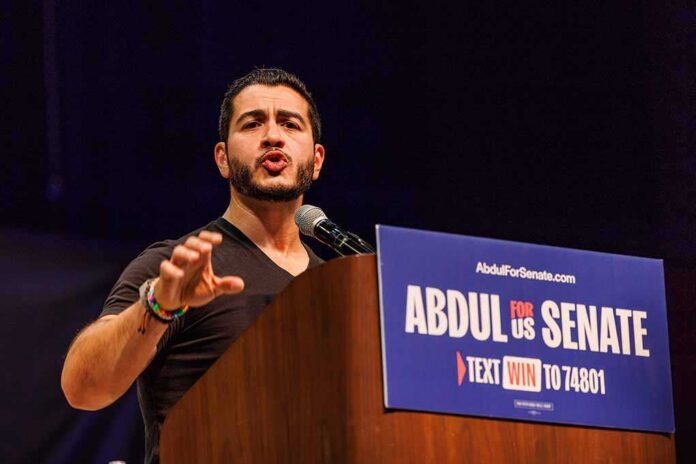
President Trump says he plans to sit down with Michigan Senator-elect Abdul El-Sayed after boosting the Democrat’s gold “TrumpCare” pitch online.
Story Snapshot
- Trump said he expects to meet El-Sayed to discuss Medicare for All.
- Trump reposted El-Sayed’s gold “TrumpCare” card without comment.
- Vice President JD Vance’s office reached out to set up a meeting.
- El-Sayed says he is ready to work with the White House on universal care.
Trump Signals Openness To A Conversation, Not A Deal
President Trump told reporters he expects to meet El-Sayed and discuss the senator-elect’s Medicare for All plan. He described awareness of the meeting and tied it to El-Sayed’s proposal, which the Democrat has branded as “TrumpCare” to entice a conversation. The White House has criticized single-payer plans in the past, but Trump’s acknowledgment creates a new opening. It signals a willingness to hear a pitch, not an endorsement of single-payer coverage or a pledge to advance it.
Trump also reposted El-Sayed’s gold “TrumpCare” card on social media. He added no text. The share gave the idea a large audience and sparked headlines. The post highlighted the branding play but did not lay out policy terms or cost details. The absence of commentary matters. It shows attention and curiosity. It does not show agreement on who gets covered, how doctors are paid, or who funds it.
How The Meeting Came Together
Vice President JD Vance’s office contacted El-Sayed’s team about setting a meeting. Staff confirmed they were aware of El-Sayed’s interest and reached out to arrange a time. That step suggests the White House wants to hear the case directly. El-Sayed, for his part, has said he is open to meeting with Trump and anyone who can help pass universal coverage. He framed it as a chance to deliver on a long-stated American promise.
El-Sayed first floated the gold “TrumpCare” card on social media and invited Trump to put his name on a universal plan. The pitch matched a clear political logic: offer credit up front to draw interest. The move also tapped a deep truth in health politics. Names shape coalitions. “ObamaCare” split the country more than “Affordable Care Act” did, even when the policy was the same.
What Exists Today, And What Does Not
The record shows a planned meeting, outreach from the vice president’s office, public statements from both sides, and a viral card. The record does not show a meeting date, draft bill, cost score, or a joint plan. No benefit schedule, tax design, or timetable has been released. Single-payer systems come with large fiscal choices that the Congressional Budget Office has analyzed in other contexts, including shifting spending to the federal ledger and changing how providers are paid. None of that detail appears here yet.
"Trump says he'll meet with El-Sayed on Medicare for All proposal." (via @USATODAY) https://t.co/ArRboKBf1a
— Dan Nowicki (@dannowicki) November 25, 2026
Trump has also hit Medicare for All before, calling it “Medicare for None,” according to prior reporting cited in coverage of this exchange. That line sets a high bar for any shift. If El-Sayed wants real traction, he must show how seniors keep choice, how rural hospitals stay open, and how families save money. Those are conservative tests rooted in common sense: protect freedom to choose doctors, guard taxpayers, and improve service.
Why The Branding Matters In A Gridlocked Town
Health reform often turns on who owns it as much as what is in it. The Affordable Care Act’s label changed how people felt about the same law. El-Sayed’s “TrumpCare” gambit uses that history. Attach a popular brand to a big benefit and see who salutes. That does not replace math. But it can open a door. If a Republican White House explores cost-cutting ideas that expand access, it could press both parties to get serious about price transparency, competition, and simpler coverage.
What To Watch Next
Three signals will show if this becomes more than a photo op. First, a formal meeting readout with names, topics, and next steps. Second, any request from the administration to study options, such as buy-ins, catastrophic backstops, or low-premium plans that increase competition. Third, signs of a Senate vehicle, including hearings, bill text, and a budget path. Until then, the gold card is a smart hook, the repost is a green light to talk, and the work remains ahead.
Sources:
nypost.com, cnn.com, miamiherald.com, washingtonpost.com, ibtimes.co.uk, aol.com, digitalcommons.providence.edu, stacks.cdc.gov
© featuredheadlines.com 2026. All rights reserved.