

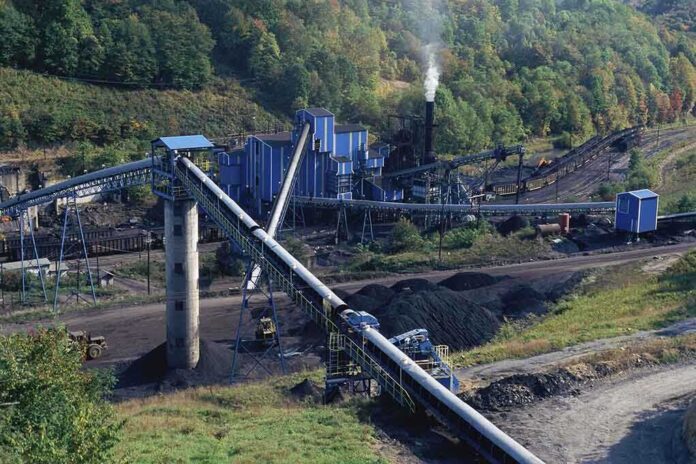
America is literally throwing away enough critical minerals from its own mines to power the entire nation’s energy future, defense systems, and technology sector—yet we continue importing these same materials from overseas.
Story Snapshot
- U.S. mining operations discard critical minerals like lithium, cobalt, and rare earth elements as waste despite being essential for national security
- Recovering even a small fraction of discarded mine tailings could meet nearly all domestic demand for critical minerals
- Current recycling rates are declining with aluminum at a 30-year low and no required recovery standards for lithium
- The primary barriers are outdated recovery technologies and lack of supportive policies, not mineral availability
The Shocking Scale of America’s Mineral Waste
Elizabeth Holley’s groundbreaking study published in Science reveals the staggering scope of America’s mineral mismanagement. Her research team analyzed 70 elements across U.S. mining operations and discovered that mine tailings—the waste left behind after extracting primary commodities—contain enough critical minerals to satisfy virtually all domestic demand. The only exceptions are platinum and palladium, meaning America could achieve near-complete mineral independence simply by recovering what it currently throws away.
This waste occurs while the United States imports massive quantities of these same minerals from foreign suppliers, creating dangerous supply chain vulnerabilities. The irony is stark: America mines these critical elements but lacks the systems to capture them, then ships them overseas as waste while buying them back at premium prices. This represents one of the most significant resource inefficiencies in modern industrial history.
Why Current Recovery Systems Are Failing America
Traditional mining operations focus exclusively on primary commodities like gold, copper, and zinc, treating everything else as worthless byproduct. This approach made sense decades ago when critical minerals had limited applications, but today’s economy depends heavily on these once-ignored elements. Electric vehicles require lithium and cobalt, renewable energy systems need rare earth elements, and defense technologies rely on gallium and other specialty minerals.
The recycling infrastructure suffers from similar outdated thinking. Aluminum recycling rates have plummeted to 30-year lows, and lithium recycling operates without any mandated recovery standards. Unlike established metals with mature recycling systems, critical minerals lack both the technology and regulatory framework needed for efficient recovery. This creates a vicious cycle where waste accumulates while import dependence deepens.
National Security Implications of Mineral Dependence
America’s mineral waste problem extends far beyond economics into national security territory. Critical minerals power everything from military communications systems to missile guidance technology, making foreign dependence a strategic vulnerability. Geopolitical tensions and supply chain disruptions have repeatedly exposed these weaknesses, yet the solution literally sits in American mine waste piles.
The defense implications become even more concerning when considering that many critical mineral suppliers are either adversarial nations or countries with unstable political situations. Recovering domestic mineral waste would eliminate these risks while creating jobs in American communities. The technology exists to make this happen—what’s missing is the political will to implement comprehensive recovery policies.
The Path Forward Requires Bold Action
Solving America’s mineral waste crisis demands coordinated action across multiple fronts. Congress must establish mandatory recovery standards for critical minerals, similar to existing requirements for other materials. Federal agencies need to streamline permitting for recovery operations while maintaining environmental protections. Most importantly, the government should provide targeted funding for recovery technology development and deployment.
The economic opportunity is enormous, but time is running short. As global demand for critical minerals continues surging, America faces a choice: continue throwing away its mineral wealth while depending on foreign suppliers, or seize the opportunity to become the world’s most resource-efficient nation. The minerals are already here—we just need the wisdom to stop wasting them.
Sources:
Mineral recovery rates: The why and how for lithium-ion battery recycling policy
America is throwing away the minerals that could power its future