

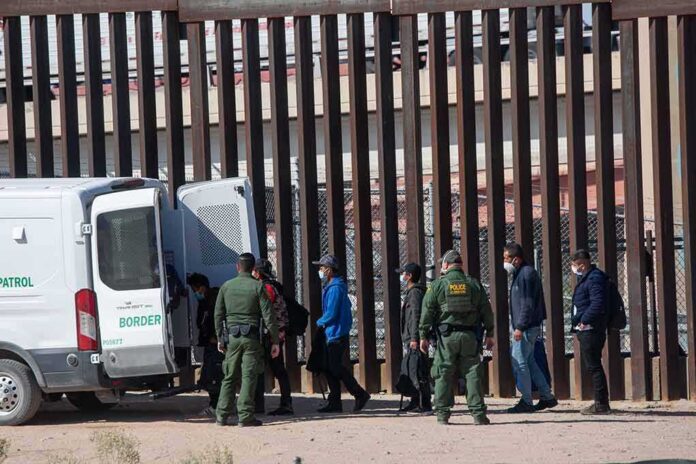
Smugglers are showcasing ladders and ropes on social media to sell illegal border crossings—and some clips look like step-by-step demos that end with the gear yanked back into Mexico.
Story Snapshot
- News reports describe videos that pitch paid crossings and show ladders on the border wall.
- Border agents say cartels and coyotes use ladders and ropes to move people over barriers.
- Customs and Border Protection documented real ladder-and-rope crossings, including children at height.
- A Border Patrol intelligence unit reviewed TikTok videos as smuggling ads tied to a criminal probe.
What the videos show and why they matter
Reporters found social media clips that do not just brag; they pitch. One TikTok video used words like “We have openings” while showing border-crossing scenes. Another clip showed migrants climbing an aluminum ladder from the Mexican side, then a guide flipped the ladder back over the wall to erase the trace. That is sales language matched with a method. It is not theory. It is content aimed at buyers who want proof the route works.
Border Patrol intelligence agents have treated some of these clips as ads by smugglers. An investigation out of El Paso reviewed videos of migrants scaling the wall with ladders and linked the content to a human smuggling case. Officials had already described similar posts as bait used by Mexico-based smugglers to lure customers who will pay to jump the line and risk the fall. That framing treats the videos as marketing, not random stunts.
The method is real, and the risks are brutal
Customs and Border Protection recorded real incidents that match the gear and tactics. In one case, operators watched smugglers give a ladder to climb a 30-foot fence and use a rope to lower adults and kids down the U.S. side. Another record describes a seven-year-old on a rope ladder at the top of the boundary fence before agents rescued the child. These are not harmless hacks. A fall from that height can kill. Smugglers choose speed and profit over safety.
Field footage backs up the mix of tools and roles. A report showed guides using a thick yellow rope, radios, and binoculars to time movements and control who goes first at the wall. That looks like choreography, not chaos. The guide’s job is to move bodies, not care for them. American common sense says: any adult who dangles a child off a 30-foot wall for cash is not a “guide.” He is a criminal risking a life to make a sale.
What is proven, what is not, and how to think about it
The core facts are firm: ladders and ropes are used to breach the wall; media have found posts that advertise crossings; agents describe such posts as ads; and some cases tie video content to real investigations. What is less certain is the identity and intent behind every viral clip. One widely shared video appeared authentic, but reviewers could not confirm when it was filmed. That limits any claim about timing or the exact actors involved.
Smuggler Using Rope Ladder to Scale US-Mexico Border Wall
A recording from three days ago captures a human smuggler (commonly known as a “coyote”) using a rope ladder to climb over the border wall between Mexico and the United States in order to help migrants cross illegally. pic.twitter.com/3LuZspoviu
— Cartel Watch (@CartelWatchNet) November 24, 2026
The bottom line should track what aligns with reality and responsibility. The wall slows people; it does not stop a paid crew with ladders, ropes, and radios. That does not mean the wall fails. It means criminals adapt and profit when our policies reward attempts. A smart border strategy pairs barriers with surveillance, fast consequences, and pressure on the money flow that fuels the ads. Hit the smugglers where it hurts: speed, certainty, and cash.
What works next: pressure points that change the game
Agents need rapid takedowns of accounts that solicit crimes, paired with legal holds so evidence is not lost. Platform records, upload times, and linked payment trails can feed fast arrests. Prosecutors should treat videos as commercial speech for a crime. Congress should back more sensors and mobile teams at known ladder spots, plus civil fines that seize vehicles and tools on the first offense. Families deserve a border where a 30-foot drop is not a business model.
Sources:
youtube.com, kxan.com, x.com, cbp.gov
© featuredheadlines.com 2026. All rights reserved.