
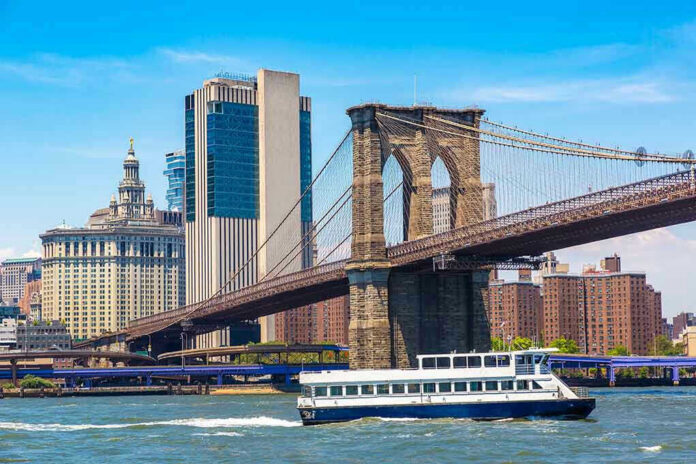
On a night meant to celebrate American grandeur, the Brooklyn Bridge itself briefly caught fire under the nation’s biggest birthday candle show.
Story Snapshot
- The 50th Macy’s Fourth of July fireworks marked America’s 250th with massive, tightly planned spectacle
- A small fire on the Brooklyn Bridge broke out right after the show, grabbing headlines and social media
- City leaders touted careful planning, street closures, and ticket controls, yet key safety questions remain open
- The incident exposes a bigger tension between patriotic pageantry, public safety, and media-driven fear
How a Signature Celebration Ended With Flames on an Iconic Bridge
The Macy’s Fourth of July fireworks show is not some local block party with bottle rockets. It is a fifty–year institution, marketed as the nation’s largest Independence Day celebration and backed by a deep history of professional pyrotechnics, permitting, and engineering. In 2026, organizers wrapped the show into America 250, the official quarter–millennium branding, and placed it squarely on one of the most famous structures in the country: the Brooklyn Bridge. That choice made for stunning television. It also raised the stakes if anything went wrong.
New York City treated the event like a controlled operation, not a casual gathering. The Mayor’s office pushed out 100,000 free tickets for prime waterfront viewing areas along Brooklyn Bridge Park and the Manhattan shoreline, framing the night as a managed civic experience instead of a free–for–all. The city’s public event office mapped out broad street closures and issued a formal list, signaling active coordination between police, transportation officials, and event planners. The message to the public was simple: we have this under control; just show up and enjoy the show.
Massive Fireworks, Massive Expectations, And A Narrow Margin For Error
The scale of the show made that promise both impressive and fragile. America 250’s official listing highlighted 60,000 shells planned for launch, a number that only a handful of professional teams in the world can safely handle. Macy’s promoted national television coverage on a major broadcast network and streaming platform, turning the East River and the Brooklyn Bridge into a live stage for millions of viewers. When you hang your brand and your city’s image on that kind of spectacle, the unwritten rule is clear: zero visible failures, especially around a landmark that commuters drive over every day.
That rule is tough to keep in the real world. Fireworks are, by definition, controlled explosions. The United States Consumer Product Safety Commission reports thousands of injuries and numerous fires tied to fireworks each year, and those numbers have climbed over the past decade. Safety groups urge families to avoid backyard fireworks and instead attend professional shows for a reason: even trained crews deal with misfires, hot debris, and unpredictable winds. A show on a steel and stone bridge, over water, surrounded by dense neighborhoods, leaves no room for sloppy safety work. It also guarantees that any misstep will be caught on video and replayed online.
What We Know And What We Do Not Know About The Bridge Fire
Right after the Macy’s display ended, flames were spotted on the Brooklyn Bridge. Firefighters from the New York City Fire Department responded and put out what official coverage at the time called “small flames” following the show. That description suggests a limited incident rather than a full structural fire, and there were no reports of serious injuries linked directly to the blaze. Yet no detailed incident report, no technical breakdown, and no public explanation of the ignition source have surfaced in the materials available.
The silence matters because the rest of the event was sold as tightly managed. Ticket–holders were told this was a curated, safe experience. City statements about earlier fireworks events on the Brooklyn waterfront highlighted “no serious injuries or violent incidents” and praised police and staff for keeping crowds secure. When a fire still breaks out on the bridge under that framework, most Americans watching instinctively ask the common–sense question: if everything was so safe, why did the bridge catch fire at all? That gap between promises and visible reality fuels doubt.
Media Framing, Public Fear, And A Conservative Read On Accountability
News outlets and social media accounts tend to prefer dramatic language over nuance, especially when iconic infrastructure is involved. A fire on the Brooklyn Bridge during a nationally televised fireworks show is tailor–made for alarmist headlines and viral clips. That push toward spectacle can turn what might be a contained, quickly handled incident into a perceived symbol of government incompetence or corporate carelessness, whether the facts support that narrative or not. The absence of a clear, prompt statement from Macy’s or city agencies explaining the fire gives that narrative more room to grow.
From a conservative, common–sense point of view, the core expectation is simple: if government and big business invite families to a massive patriotic event, they owe the public straight answers when something goes wrong. That does not mean every minor mishap proves systemic failure or demands new regulation. It does mean citizens have the right to know whether a fire on a major bridge came from human error, equipment malfunction, or unavoidable risk tied to the nature of fireworks. When officials delay real transparency, they encourage suspicion and open the door to yet more calls for rules and reviews that may or may not solve the underlying problem.
What This Says About Spectacle, Risk, And Future Fireworks On The Brooklyn Bridge
High–profile shows like Macy’s fireworks on the Brooklyn Bridge sit at the intersection of patriotism, commerce, and urban risk. The bridge fire did not appear to cause widespread harm, but it pierced the illusion that enough planning and branding can erase danger from an event built on controlled explosions. Fireworks injury trends, national fire data, and safety warnings from respected groups all point to the same reality: risk can be reduced, not erased. Future shows on the bridge will likely go on, but each one will carry the memory of those flames and a renewed demand from the public for honest risk talk, not just glossy celebration.
Sources:
cbsnews.com, brooklynbridgepark.org, abc7ny.com, southstreetseaportmuseum.org, instagram.com, brooklynbridgeparents.com, hsi.com, cpsc.gov
© featuredheadlines.com 2026. All rights reserved.