A pre-approved “trusted traveler” U.S. citizen tried to smuggle over $1 million in cocaine through America’s busiest border crossing, exposing a vulnerability in our expedited screening programs that cartels appear to be exploiting.
Story Snapshot
- CBP arrested a 25-year-old U.S. citizen with SENTRI trusted traveler status smuggling 60 pounds of cocaine worth $1.1 million at San Ysidro Port of Entry
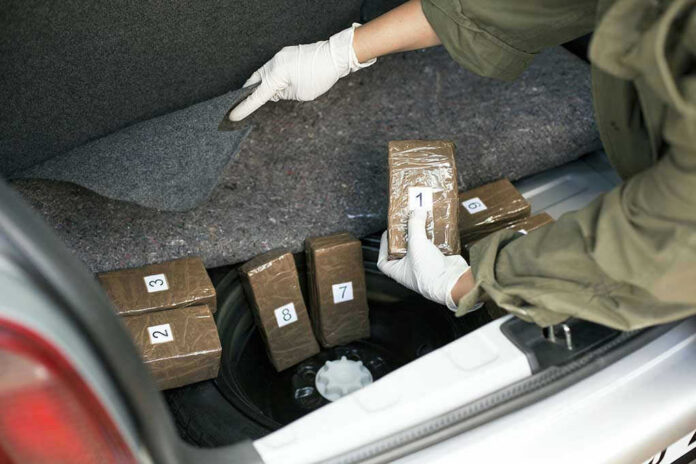
- Officers discovered the drugs hidden in the doors of the suspect’s 2020 Honda Civic using imaging technology and canine teams during secondary inspection
- The arrest highlights a critical security gap as trusted travelers receive expedited processing based on pre-approval and low-risk status
- CBP cocaine seizures are up 27 percent compared to March 2024, signaling intensified smuggling operations at the southern border
When Trust Becomes a Weapon Against Border Security
The April 7, 2026 arrest at San Ysidro Port of Entry reveals how drug cartels are weaponizing our own security programs against us. The 25-year-old American held a SENTRI card, a credential designed to speed border crossings for low-risk, pre-vetted travelers. That trust gave him access to expedited lanes where scrutiny is lighter and processing is faster. CBP officers pulled him for secondary inspection anyway, where non-intrusive imaging technology and a trained canine detected anomalies in his vehicle’s door panels.
The Honda Civic yielded 60.14 pounds of cocaine, a haul valued at more than $1.1 million on the street. CBP seized the vehicle, the narcotics, and two cellphones as evidence. The suspect now faces federal charges for narcotics importation and smuggling, crimes carrying significant prison time. His trusted traveler status, once an asset for quick commutes across the border, became the very credential that nearly enabled a major drug delivery into American communities.
The SENTRI Program’s Growing Vulnerability Problem
Launched in 1995, the Secure Electronic Network for Travelers Rapid Inspection program was intended to facilitate legitimate cross-border commerce and travel while maintaining security. Applicants undergo background checks, interviews, and fingerprinting before receiving approval. Once vetted, SENTRI members enjoy dedicated lanes and reduced wait times at designated ports of entry. The program processes thousands daily at San Ysidro alone, the busiest land border crossing in the Western Hemisphere. This case demonstrates that even rigorous pre-screening cannot predict future criminal behavior or cartel recruitment.
The breach raises uncomfortable questions about program oversight and ongoing monitoring. How many other trusted travelers have been compromised? Are cartels systematically targeting SENTRI holders for recruitment, knowing their credentials provide operational advantages? The answers remain unclear, but the 27 percent increase in CBP cocaine seizures compared to March 2024 suggests smuggling networks are adapting faster than our defenses. This arrest proves that technology and canine teams remain essential even in expedited lanes, a reality that may slow processing times for legitimate travelers.
Technology and Training Prevented a Major Drug Delivery
CBP officers at San Ysidro relied on layered security measures to catch what pre-approval missed. Non-intrusive imaging scans the vehicle’s structure without physical dismantling, revealing density inconsistencies that suggest contraband. Canine units trained to detect narcotics provide a biological confirmation that technology cannot replicate. Together, these tools flagged the Honda Civic for closer examination despite the driver’s trusted status. The discovery of 27.28 kilograms of cocaine hidden in door panels confirmed the system worked as designed, but only because officers did not let credentials override protocols.
The seizure removed a significant quantity of cocaine from distribution networks that fuel violence, addiction, and overdose deaths across America. Every pound intercepted represents lives potentially saved and cartel revenue denied. Yet the arrest also underscores the persistent threat posed by smugglers willing to exploit every advantage, including government programs designed to ease legitimate travel. Federal prosecutors will now determine whether the suspect acted alone or as part of a larger conspiracy, a distinction that could reveal broader cartel infiltration of trusted traveler programs.
CBP Says It Seized More Than 60 Pounds Of Cocaine From US Citizen At Border https://t.co/BxbAQD2xfK
— zerohedge (@zerohedge) April 16, 2026
What This Means for Border Security and Program Integrity
The case demands a hard look at how we balance efficiency with security at our borders. Trusted traveler programs serve a legitimate purpose, supporting commerce and reducing congestion for millions of law-abiding citizens. But when those same programs become vectors for drug smuggling, their value diminishes rapidly. CBP may need to tighten eligibility requirements, increase random inspections of SENTRI users, or implement continuous monitoring systems that flag behavioral changes or unusual travel patterns. None of these solutions are easy or cheap, and all would inconvenience honest travelers who rely on expedited processing.
This arrest also serves as a reminder that no vetting system is foolproof. People change, circumstances shift, and criminal organizations offer inducements that can tempt even previously law-abiding citizens. The $1.1 million street value of the seized cocaine hints at the financial pressures or rewards that might motivate a 25-year-old to risk everything. Whether he was coerced, recruited, or simply greedy, the outcome is the same: a trusted traveler exploited his status to serve cartel interests. The only thing standing between that cocaine and American streets was the diligence of CBP officers who refused to assume trust meant safety.
Sources:
CBP Says It Seized More Than 60 Pounds Of Cocaine From US Citizen At Border – Zero Hedge
CBP Says It Seizes More Than 60 Pounds of Cocaine From US Citizen at Border – The Epoch Times