“You’re the ID” was not a slip-up; it exposed how Minnesota’s legal vouching rule actually works at the polls.
Story Snapshot
- Undercover video shows poll workers describing vouching and “no ID” at Minnesota polls.
- Vouching is a lawful same-day registration method to prove address, capped at eight per voucher.
- Minnesota does not require photo ID to vote if already registered; new registrants must verify identity.
- Officials say voter data gets checked against government records after registration to prevent abuse.
What O’Keefe’s Camera Caught Inside Minneapolis Polling Places
James O’Keefe’s team walked into Minneapolis polling locations during a primary and asked direct questions about registering and voting. Poll workers told them a registered voter in the same precinct could “vouch” for people who lacked proof of address, and that one voucher could cover up to eight people. One line stuck out: “You’re the ID.” The clip went viral because it seemed to confirm a door-sized hole in election security, not a paper-thin crack.
The shock came from how casual the process looked. The workers did not demand a physical identification card from the vouched-for person at that moment. Viewers heard “no ID needed” and saw a path to a ballot. That created a strong impression that someone could round up eight strangers and push them through with zero trace. The video framed the exchange as corruption in plain sight, rather than a legal rule applied loosely by staff.
What Minnesota Law Actually Allows — And Why
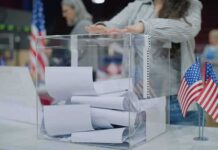
Minnesota law allows same-day registration. If a person lacks proof of address, a registered voter from the same precinct can sign an oath confirming that person’s residence. That oath is “vouching.” The law caps a voucher at eight people. That part in the video is accurate. The rule has existed for years and is meant to help people who move often, students, and those in residential facilities register and vote in the right precinct on Election Day.
Two other points define the guardrails that got lost in the clip. First, vouching covers proof of address, not every part of a person’s identity. Second, an Election Day registrant still must provide a driver’s license or state identification number, or the last four digits of a Social Security number, if they have one, for identity verification. That requirement exists even when a voucher signs the oath.
The “No ID” Line, The Eight-Voter Cap, And The Real Safeguards
Minnesota does not require a photo ID to cast a ballot if a voter is already registered and active. That is why many voters hear “no ID needed” and walk straight to a ballot. But if a person needs to register at the polls, they must show proof of residence or get vouched for, and they must supply identification numbers for verification if they have them. Photo ID is not the rule; identity verification is still part of registration.
State officials say the registration data does not vanish into a black hole. It gets checked against Driver and Vehicle Services, Social Security Administration, Department of Health, and court records. Addresses also get verified by a mail card and challenge procedures. The goal is to catch errors and stop double voting. That back-end process lacks the drama of a sting video, but it is the belt and suspenders of the system.
Where Outrage Meets Policy — And What Should Change Now
The clip’s power rests on a true core: one voter can vouch for up to eight same-precinct neighbors, and staff do not demand a photo ID from a registered voter who simply arrives to vote. That aligns with state rules. The leap from “legal feature” to “open fraud” needs proof of misuse, not just the existence of vouching. Yet the “you’re the ID” phrasing invites abuse if workers skip the steps that attach the oath to a named voucher and a named registrant on paper.
🚨 O’KEEFE PUTS MINNESOTA’S ELECTION SYSTEM TO THE TEST — WHAT HE FOUND SHOULD ALARM EVERY AMERICAN
James O’Keefe has gone undercover inside Minneapolis polling locations to test just how far Minnesota's voter “vouching” system can be pushed.
What happened is extraordinary.…
— Jim Ferguson (@JimFergusonUK) August 14, 2026
Common-sense fixes would narrow the worry without stripping lawful access. Lawmakers could cut the cap from eight to two or three, require instant digital logging of voucher-registrant pairs, and trigger an automatic cross-check within hours, not days. Clear scripts for poll workers would also help. Say out loud that vouching proves address only, and that the registrant still must provide identity numbers. Voters want clarity as much as access.
Sources:
twitchy.com, youtube.com, x.com, facebook.com, instagram.com, foxnews.com, sos.mn.gov
© featuredheadlines.com 2026. All rights reserved.