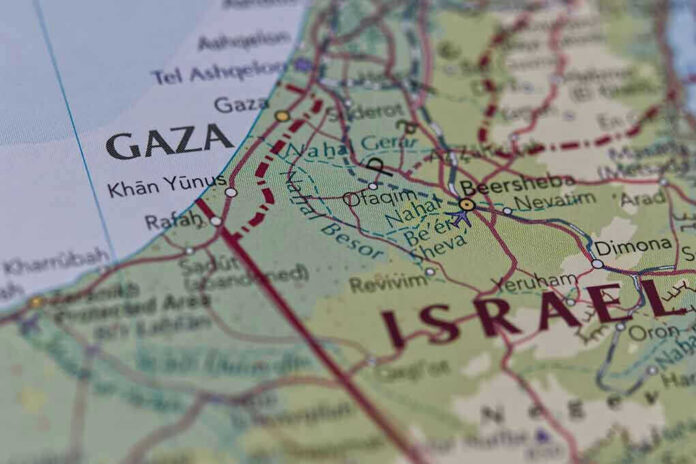
Amid a fragile ceasefire, Gaza reports 45 dead following Israeli airstrikes, exposing the escalating breaches by both sides.
Story Snapshot
- High civilian casualties amid a ceasefire agreement in Gaza.
- Both Israeli and Palestinian factions accused of truce violations.
- Concurrent hostage exchanges and humanitarian aid negotiations.
- International mediation struggles to maintain peace.
Escalating Breaches in Gaza
A ceasefire agreement intended to pause the ongoing conflict between Israel and Gaza quickly unraveled. The Gaza Health Ministry reported 45 Palestinians dead from Israeli airstrikes. This tragic event marked a significant escalation in the hostilities, undermining the shaky truce. Both Israeli and Palestinian factions accused each other of violating the ceasefire, with each side justifying their actions as retaliatory measures against the other’s provocations.
The timeline of events shows a series of missteps in maintaining peace. Between October 3 and 14, multiple Israeli strikes resulted in daily casualties, with numbers fluctuating between 44 and 66 Palestinians killed. The ceasefire, which came into effect on October 10, quickly dissolved as both parties engaged in military actions, further complicating the fragile peace efforts. Hostage exchanges and humanitarian aid negotiations occurred amid the violence, highlighting the ongoing humanitarian toll.
Humanitarian Crisis Deepens
The humanitarian situation in Gaza continues to deteriorate. With widespread destruction, food shortages, and a collapsed healthcare infrastructure, the region faces a severe crisis. International actors, including Egypt and the US, have been involved in mediation efforts, but their attempts to enforce the ceasefire have thus far proven ineffective. The Gaza Health Ministry and organizations like the Palestinian Red Crescent Society are struggling to provide emergency medical aid amid the chaos.
The ongoing conflict has far-reaching implications. The short-term effects include continued loss of life, displacement, and increased regional tensions. Long-term consequences could involve renewed large-scale conflict and a deepening humanitarian catastrophe. The erosion of trust in ceasefire agreements poses a significant barrier to lasting peace, as previous agreements have frequently collapsed due to mutual distrust and ongoing hostilities.
International Mediation Efforts
Despite international efforts, the ceasefire remains fragile. Both sides blame each other for breaches, with conflicting narratives regarding the attribution of strikes. The IDF claims its operations are defensive, targeting militants violating the truce, whereas Hamas accuses Israel of deliberate violations and hindering aid delivery. The humanitarian sector faces increased demand and operational risks, with restricted access impacting aid organizations’ ability to assist those in need.
Scholars and experts emphasize the cyclical nature of violence in the region, pointing to the failure of past peace initiatives to address root causes. The need for robust monitoring and enforcement mechanisms for ceasefires is a common theme among analysts. International mediation is crucial, but insufficient without local buy-in and accountability. The situation remains volatile, with the potential for further escalation and increased humanitarian suffering.
Sources:
Wikipedia – Timeline of the Gaza war
Wikipedia – Timeline of the Gaza war (3 October 2025 – present)
Red Cross – Gaza crisis timeline
CFR – Israeli-Palestinian conflict timeline