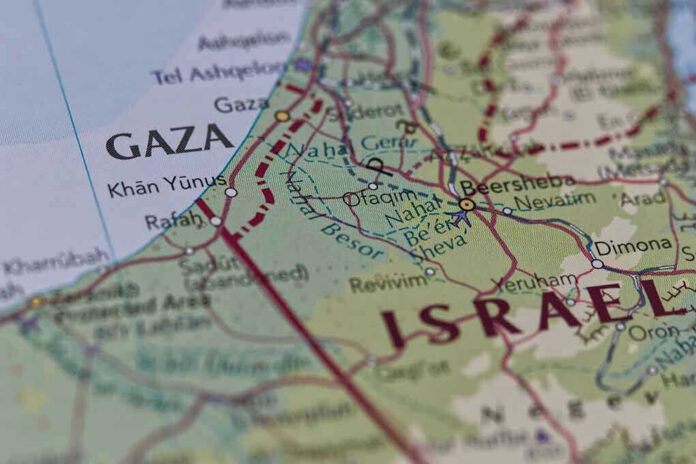
The Gaza Health Ministry reports a staggering death toll of over 60,000 since the start of the war, raising questions about the humanitarian crisis unfolding in the region.
At a Glance
- More than 60,000 people have died since the conflict began in October 2023.
- Humanitarian lifelines are collapsing, causing widespread starvation and displacement.
- The United Nations warns of catastrophic conditions in Gaza.
- Efforts to establish a durable ceasefire have repeatedly failed.
Unprecedented Humanitarian Crisis
Since the onset of the Israel-Hamas conflict on October 7, 2023, the situation in Gaza has deteriorated beyond belief. The Gaza Health Ministry, operating under Hamas, reports that the death toll has surpassed 60,000, with injuries to over 145,000 individuals. These figures, while difficult to independently verify, paint a picture of unimaginable human suffering. The United Nations and various humanitarian organizations have sounded alarms about the near-total collapse of basic services, warning of severe starvation and mass displacement.
BREAKING – Gaza health ministry says more than 60,000 killed since start of warhttps://t.co/LDn1N3obnt
— Insider Paper (@TheInsiderPaper) July 29, 2025
The crisis has its roots in the blockade imposed by Israel and Egypt since 2007, following Hamas’s takeover of Gaza. This blockade has led to periodic escalations of violence, but nothing compares to the ongoing conflict, which began with a large-scale attack by Hamas on Israel. The subsequent Israeli military response included extensive aerial bombardments and ground operations, further exacerbating the already dire humanitarian situation.
Ceasefire Failures and Humanitarian Collapse
Efforts to broker ceasefires have repeatedly failed, each collapse followed by intensified military actions. The most significant breakdown occurred in March 2025, leading to a renewed Israeli offensive and further humanitarian collapse. As of July 2025, the death toll has reached unprecedented heights, and the United Nations Office for the Coordination of Humanitarian Affairs (OCHA) reports that over 737,000 people have been newly displaced since March. With 86% of Gaza now under displacement orders or militarized zones, the humanitarian crisis shows no signs of abating.
Malnutrition, particularly among children under five, has more than doubled since March 2025. Reports indicate that deaths from starvation are now a grim reality. The blockade has severely restricted access to food, fuel, and medical supplies, leaving the civilian population in a perilous state. Humanitarian agencies find their efforts stymied by access restrictions and security risks, as most aid missions are denied or impeded.
Destruction of Infrastructure and Services
The destruction of homes, hospitals, and essential services compounds the crisis. Fuel shortages have jeopardized water, sanitation, and healthcare systems. United Nations agencies, including the UNRWA, describe conditions in Gaza as increasingly incompatible with continued existence. The collapse of humanitarian lifelines and the risk of famine are now pressing concerns.
The toll on civilian infrastructure is catastrophic. With Gaza’s already fragile systems now in ruins, the crisis’s impact will likely endure for generations. The destruction of educational institutions, health facilities, and economic hubs will have far-reaching consequences on the region’s recovery and future stability.
International and Regional Dynamics
The situation in Gaza has drawn international attention, with stakeholders including Israel, Hamas, Egypt, and various global actors playing critical roles. Israel maintains its military superiority and controls most access to Gaza, while Hamas continues its resistance efforts from within the enclave. Egypt, controlling the Rafah border crossing, occasionally acts as a mediator in the conflict.
International actors like the United States, European Union, and Arab states are involved in diplomatic and financial capacities, attempting to mediate and provide aid. However, the power dynamics heavily favor Israel, complicating efforts to reach a lasting resolution. The ongoing humanitarian crisis in Gaza remains a point of contention and a focal issue in regional stability discussions.
Sources:
UN OCHA Humanitarian Situation Update #306