
Senate Republicans kept John Thune as leader days after losing their majority, and the base has not forgiven the symbolism or the strategy that produced it.
Story Snapshot
- Republicans reelected Thune after steep midterm losses that cost the Senate majority.
- Fifteen Republican senators tried to delay the leadership vote to debate the party’s direction.
- Conservative senators blasted the process as rushed and out of touch with voters.
- Thune’s defense centers on Senate rules, independents, and a bipartisan affordability agenda.
What sparked the backlash inside the Senate Republican conference
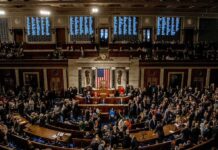
Republican senators walked into a closed-door meeting with fresh midterm scars and reelected John Thune anyway. The Associated Press reported that Republicans suffered steep losses and lost their Senate majority before choosing to stick with Thune. A bloc of conservatives pushed to slow the process. The conference voted 31-15 to proceed that day, brushing aside a delay effort led by Senator Ron Johnson. No challenger emerged. Thune won by acclamation, which made the revolt look loud but small.
The tension ran deeper than a calendar fight. The Hill described a bruising showdown, with Johnson threatening to leave if leaders forced an immediate vote and then walking out when the delay failed. That scene captured the mood of many grassroots conservatives. They saw a pattern: a Senate leadership that moved fast to secure titles but slow to deliver on core promises. Washington Examiner reporting framed the 31-15 tally as resistance to the timing, not a vote against Thune, yet the anger was real.
Why the base calls Thune “radioactive”
Conservative media connected Senate inaction to voter apathy. Townhall argued that a torpid Senate pace helped scuttle parts of the Trump agenda and claimed a large share of Trump voters stayed home. That claim spoke to a gut feeling on the right, but the article did not provide the pollster, sample, or method to back a precise number. The grievance stuck because it matched what many saw: talk of priorities, few floor wins, and little urgency on issues that animate Republican voters.
Thune’s own words fed a perception split. Reuters and Politico reporting showed him stressing affordability, longer work weeks, and bipartisan cooperation while blasting “socialist” ideas on the other side. That pitch targeted moderates and independents. Critics heard a centrist frame without dates, bill numbers, or a procedural plan to force votes. They wanted visible fights on border security, election integrity, crime, and energy. They got process and patience. After a loss, process and patience feel like sand in the gears.
Thune’s case for his approach — and the limits of the proof
Thune’s defense relied on math and the Senate rulebook. He pointed to the 60-vote threshold and said photo identification provisions drew 53 votes at most, short of what the Senate demands to advance legislation. He argued that scrapping the filibuster would help Democrats in the long run and that the Senate is built to slow things down. He framed the losses around inflation, gas prices, and a weak connection with independents rather than leadership choices.
It’s day three of me calling out
Ted Budd for standing up harder for John Thune than he does for his own Republican constituents in North Carolina and not calling on the NCGOP leadership to resign.This message isn’t going away.
If he’s not going to be the voice, we will…
— Margo (@MargoinWNC) November 19, 2026
He highlighted affordability and permitting reform as concrete steps that could lower costs and cut red tape. That list sounds practical, but it reads like a cross-party ledger, not an election rallying cry. From a conservative, common-sense lens, this is the core friction. Voters want results that move the needle on border, crime, and election security. Leaders want consensus items that can get 60 votes. The more leaders talk about bipartisan process wins, the more the base hears a retreat from hard fights.
The conservative voter’s test: fights seen, fights forced, fights won
Republican voters do not grade on a curve. They watch for public pressure, floor time, and forced votes that draw a bright line. They judge whether leaders create accountability for Democrats and for holdout Republicans. The record shows anger over the timing of Thune’s reelection, not proof he personally blocked a specific Trump-backed bill. That distinction matters. It also does not end the political problem. If voters cannot see the fight, they assume it did not happen. Politics punishes invisibility.
The Senate’s rules make governing hard. That is true. But leadership choices still shape urgency, messaging, and risk. After a painful loss, Republicans wanted a visible gear shift. Instead, they watched the same leader keep the gavel with no alternative on the ballot. That outcome telegraphed stability to Washington and stasis to the base. Until Senate Republicans pair their affordability pitch with high-profile fights that define contrasts, the “radioactive” label around Thune will linger — earned or not.
Sources:
townhall.com, apnews.com, pbs.org, thehill.com
© featuredheadlines.com 2026. All rights reserved.