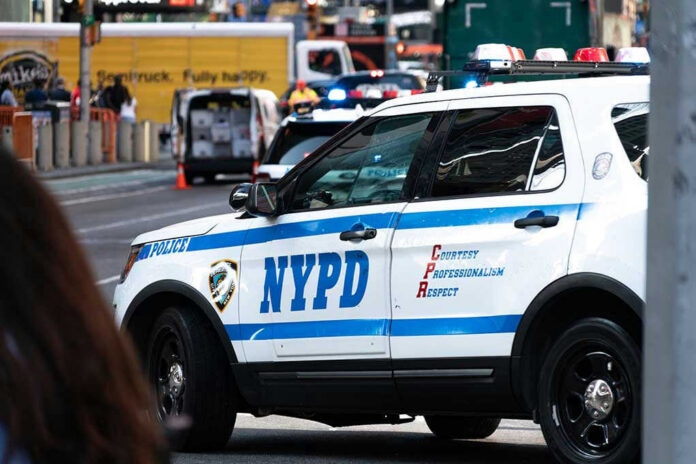
A decorated NYPD sergeant sits in prison for throwing a cooler at a fleeing gang member during a drug bust, while hockey fans rallied at an Islanders game to raise tens of thousands for his appeal in what many view as a striking example of justice gone sideways.
Story Snapshot
- Former NYPD Sgt. Erik Duran sentenced to 3-9 years for manslaughter after throwing a cooler that killed a fleeing suspect in 2023
- New York Islanders fans raised nearly $45,000 through a 50/50 raffle and donations displayed on the arena jumbotron
- The National Police Defense Foundation and Sergeants Benevolent Association launched a legal defense fund that exceeded $85,000
- Duran’s supporters argue his split-second decision saved lives during a dangerous pursuit, while he remains in custody pending appeal
When a Cooler Became Evidence
The incident that forever changed Erik Duran’s life unfolded during a sweltering August 2023 afternoon in the Bronx. Supervising a routine narcotics buy-and-bust operation, Duran watched as suspect Eric Duprey fled on a motorcycle, roaring down a sidewalk toward officers and bystanders. In seconds, Duran grabbed a cooler from a nearby family’s table and hurled it at Duprey, knocking him from the bike. The impact proved fatal. What Duran’s defenders call a heroic act to protect innocent lives, prosecutors labeled second-degree manslaughter, setting in motion a legal battle that exposes deep fractures in how America views police use of force.
The Courtroom and the Sentence That Sparked Outrage
Bronx Judge Guy Mitchell presided over Duran’s bench trial, ultimately convicting the father of three in February 2026. The April 9 sentencing delivered the hammer blow: three to nine years in prison, with Duran taken into custody immediately. The National Police Defense Foundation called it a blatant miscarriage of justice, arguing Duran had no intent to kill but every reason to believe lives hung in the balance. Duprey, identified as a Trinitarios gang member, was speeding unhelmeted toward officers who had just arrested another suspect. The optics were damning for both sides. Critics of the prosecution point to Attorney General Letitia James’s aggressive stance on police accountability, while reform advocates see appropriate consequences for a death caused by improvised force.
The speed and severity of the sentencing galvanized police unions and supporters who view the case through the lens of a broader war on law enforcement. Judge Mitchell’s decision to deny bail and impose immediate custody struck many as excessively harsh for an officer with a decorated record and deep family ties. The bench trial itself raised questions among Duran’s supporters about whether a jury might have delivered a different verdict, though prosecutors maintained the evidence justified the manslaughter charge under New York law. The case landed squarely in the crosshairs of a polarized debate: When does a cop’s split-second judgment cross from justified force to criminal recklessness?
Hockey Fans Answer the Call
The UBS Arena on Long Island became an unlikely battleground for criminal justice debate on April 14, 2026. Between face-offs during the Islanders versus Carolina Hurricanes game, the jumbotron flashed a QR code directing fans to Duran’s legal defense fund. The crowd responded with wallets open, contributing to a 50/50 raffle that generated nearly $45,000 for the cause. Combined with donations that had already pushed the fund past $40,000 by game time, the total exceeded $85,000 in a matter of days. The Sergeants Benevolent Association orchestrated the arena rally, transforming a sports event into a statement of solidarity that reverberated far beyond the ice.
This grassroots fundraising model represents a notable shift in how police advocacy organizations mobilize public support. Rather than relying solely on union dues or traditional legal defense funds, the strategy leveraged the emotional power of live sports and community identity. For attendees, many of whom likely include current and former law enforcement families, the donation became more than financial support. It was a public declaration that they viewed Duran as a scapegoat rather than a criminal, a decorated officer punished for doing what he believed necessary to protect others from a dangerous fleeing suspect on a crowded Bronx sidewalk.
The Precedent Problem Nobody Wants to Discuss
Duran’s conviction raises uncomfortable questions about how officers should respond when suspects flee in ways that endanger the public. Throwing a cooler is hardly standard NYPD procedure, yet supporters argue the unorthodox tactic worked exactly as intended: stopping a threat without firing a weapon. The National Police Defense Foundation framed it as life-saving improvisation, emphasizing that Duprey posed an immediate danger barreling toward officers and civilians on a motorcycle. Critics counter that the outcome was death, and intent matters less than the reckless nature of hurling an object heavy enough to kill. The legal system sided with prosecutors, but the court of public opinion remains hung.
The case could influence how future use-of-force incidents are prosecuted and defended across New York and beyond. If the conviction stands on appeal, it may deter officers from taking aggressive action during pursuits, potentially allowing dangerous suspects to escape or cause harm. Conversely, overturning the sentence might signal that improvised force resulting in death receives lenient treatment when officers claim split-second judgment calls. Either way, NYPD training protocols and prosecutorial discretion face scrutiny, with Duran’s fate serving as a bellwether for the balance between officer autonomy and accountability in an era of heightened scrutiny following nationwide protests over police conduct.
What the Appeal Hinges On
Duran remains in custody while his legal team prepares to challenge the conviction and sentencing. The defense fund aims to cover bail if granted and finance a robust appellate effort. The core argument will likely center on whether Duran’s actions met the legal threshold for manslaughter or constituted justifiable force under circumstances involving imminent danger. New York law permits reasonable force to prevent harm, but prosecutors successfully argued the cooler throw crossed into criminal recklessness. Appellate courts will examine whether Judge Mitchell applied the law correctly and whether the sentence fits the crime given Duran’s record, family circumstances, and the chaotic context of the pursuit.
The fundraising success demonstrates that Duran’s supporters possess both financial resources and public sympathy, assets that could sustain a prolonged legal fight. Yet money and rallies cannot overturn a conviction without compelling legal grounds. The appellate process will dissect trial evidence, jury instructions if applicable, and sentencing rationale with clinical precision. For Duran’s family and the officers who view his imprisonment as unjust, the wait is agonizing. For those who believe accountability for Duprey’s death was necessary, the conviction represents a rare instance where the justice system held a police officer responsible for a fatal use of force, regardless of the officer’s intentions or the suspect’s criminal background.
Sources:
NYPD sergeant facing manslaughter sentence for hurling cooler at suspect