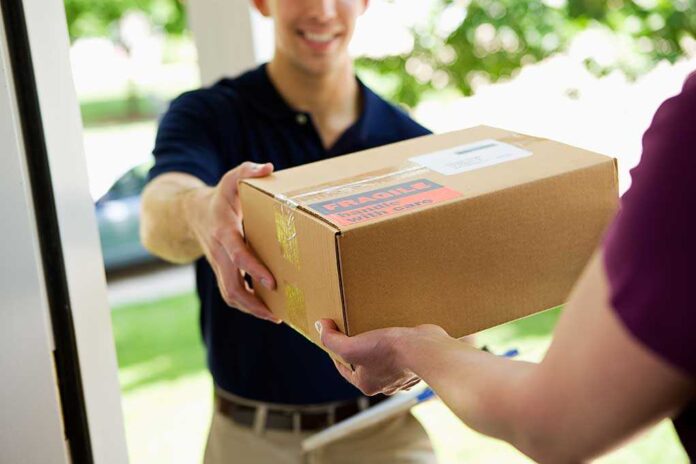
Porch pirates could snatch your next delivery before you even know it arrived, turning holiday joy into instant frustration amid record online shopping surges.
Story Snapshot
- Package thefts hit 37 million in 2025, costing $8.2 billion with average stolen value at $222.
- Apartments face 3x higher risk; 52% of Americans worry about porch piracy.
- Doorbell cameras adopted by 34-36%, yet 79% of victims suffer repeat thefts.
- Highest risks in Kentucky, North Dakota, Nebraska, Iowa, and Alaska.
- Underreporting at 75% hides true scale, burdening law enforcement.
Porch Piracy Roots in E-Commerce Boom
Porch piracy surged with e-commerce growth from 11% of retail in 2019 to over 20% by 2021. COVID accelerated deliveries, reaching 25 packages per adult in October-December 2025. Thieves target visible, medium-sized branded boxes within 25 feet of curbs, with 98% of thefts from street-viewable spots. Urban apartments experience three times as many incidents as houses. Low reporting under 25% to the police masks the problem’s depth.
Term “porch pirate” gained traction around 2016 through social media videos. Amazon’s expansion fueled early spikes, hitting 1-in-7 Americans by 2022. Holiday seasons amplify risks, with 70-95% of shopping online in 2025. Inflation boosts package values to $222 average, making thefts more lucrative for opportunists.
Stakeholders Bear Uneven Burdens
Consumers lose most, with 31-46% affected lifetime and 82% facing $100+ per theft. Retailers like Amazon, UPS, USPS, and FedEx absorb some via insurance but push pickup options used by 3-20%. Security firms such as Ring profit from 34-36% camera adoption, boasting 65% user satisfaction. Law enforcement handles under 25% reports, strained by volume.
Thieves operate opportunistically, favoring single-package grabs. Power tilts to carriers dictating delivery policies. Surveys from Security.org and Insurify shape awareness, urging reports even for low values. Common sense demands consumers demand better from giants profiting billions while individuals foot repeated losses—aligning with self-reliance over reliance on under-enforced systems.
2025 Theft Trends and Projections
2025 projections show 37 million thefts, down slightly from 2024’s 58 million+ but with $8.2 billion losses from higher values. Theft rate stands at 1-in-179 deliveries, up 0.33% year-over-year. Holiday peaks persist, with 31 million gift victims and 32% repeat cases. 52% express theft worries, driving prevention like home scheduling by 46%.
Experts note AI and motion tech could cut thefts, with 36% optimistic. Yet 38% doubt doorbell efficacy despite installs during 22% of incidents. Underreporting inflates estimates; true daily averages hover 100,000-330,000, debunking sensational 250,000 claims without data backing.
Economic and Social Ripples
Thefts cost $8.2-16 billion yearly, eroding e-commerce trust despite 95% holiday online reliance. Victims in high-risk states like Kentucky and Alaska face delays, replacements, and eroded confidence. Low-income households suffer most from $100-500 losses. Security spending averages $143, fueling a 4.3% global smart camera market boom.
Politically, underreporting stalls action, no federal measures, only local ordinances. Broader effects include shipping strains for USPS and UPS. Conservative values emphasize personal prevention over waiting for government fixes; facts support tech deterrence and vigilant reporting to reclaim control from criminals exploiting e-commerce vulnerabilities.
Sources:
2025 Package Theft Report and Statistics