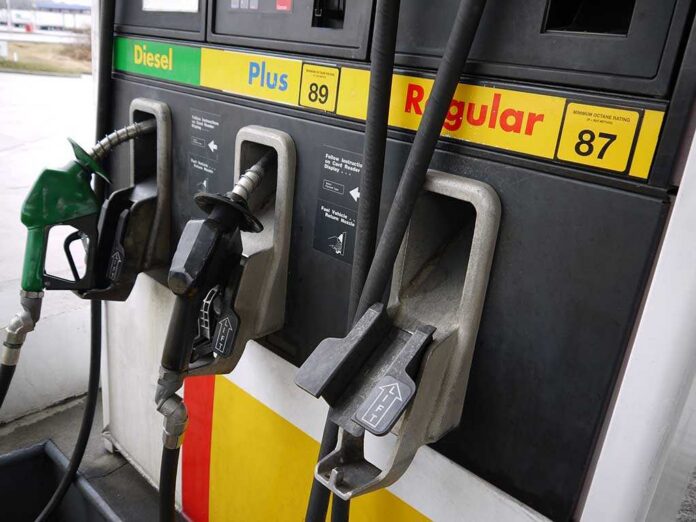
A distant war half a world away just left hundreds of Australian gas stations bone-dry, revealing how perilously thin the line is between global stability and everyday fuel pumps running empty.
Story Snapshot
- Hundreds of gas stations across Australia out of petrol due to panic buying triggered by Strait of Hormuz disruptions from US-Israel-Iran conflict.
- Australia imports over 80% of fuel from Asia, which relies on Middle East crude passing through the chokepoint handling 20% of global oil.
- Stocks hold 30-38 days’ supply, but six key shipments cancelled, exposing just-in-time import vulnerabilities.
- Energy Minister Chris Bowen downplays rationing risks through April, secures Singapore pact amid soaring prices.
- Long-term wake-up call: Low reserves demand more domestic refining to avoid future crises.
Timeline of the Hormuz Fuel Crisis
US-Israeli strikes hit Iran on 28 February 2026, prompting Iranian retaliation that mined the Strait of Hormuz and restricted traffic to non-belligerents coordinating with Tehran. Early March saw weeks of tension as shipowners and insurers shunned the route. Australia cut its Minimum Stockholding Obligation by 20% on 13 March to shift supplies. By 17 March, stocks stood at 38 days gasoline, 30 days gasoil, 29 days jet fuel.
Six shipments from Singapore, South Korea, and Malaysia cancelled on 21-22 March. Energy Minister Chris Bowen assured supplies through March and April on 19 March, but post-April remained uncertain. On 23 March, Australia and Singapore forged an energy cooperation deal as vessels like VLGCs Pine Gas and Jag Vasant navigated restricted passages under Iran’s $2 million transit fees. President Trump ordered a five-day strike pause after talks.
Australia’s Dangerous Reliance on Imported Fuel
Australia operates just two domestic refineries, importing over 80% of petrol, diesel, and jet fuel from Asian refineries in Singapore, South Korea, Malaysia, and China. These refineries source 60-70% of crude oil through the 39km-wide Strait of Hormuz between Iran, Oman, and the UAE. This chokepoint carries 20% of global oil and gas shipments. A just-in-time model with minimal stockpiles leaves the nation exposed to disruptions thousands of miles away.
The current crisis dwarfs 2019 tanker attacks, which caused no full closure. Iran’s mining and fees created an effective blockade, hitting Australia’s 80 monthly imports hard. Asian exporters imposed curbs—South Korea controls, China bans—to protect domestic needs. Late March stocks: 36 days petrol, 32 diesel, 29 jet fuel, above minimums but fragile against prolonged delays.
Key Players Shaping the Response
Chris Bowen leads Australia’s response, reassuring no rationing looms while securing the Singapore partnership. His statements emphasize replacements for dry stations and stocks covering March-April, aligning with common-sense crisis management to prevent panic. Donald Trump initiated strikes, issued ultimatums, then paused after “productive” talks with Iran. Abbas Araqchi coordinates transits for non-belligerents, extracting fees for leverage.
Australian government and DCCEEW manage reduced stock obligations to avert emergency declarations. Singapore offers emergency supplies for regional stability. Asian suppliers prioritize home markets. Power tilts toward US military pressure and Iranian control of the strait, with Australia bridging via alliances. State governments eye local rationing if federal measures falter.
Immediate Chaos and Lasting Lessons
Hundreds of stations ran dry from panic buying, prices soared, and supply chains buckled. Regional areas and airlines suffer most from jet fuel shortages. Economic hits include higher transport costs; social unrest brews over gouging claims; political heat mounts on Bowen’s government. No federal emergency yet, but April uncertainty lingers if Hormuz delays persist.
Hundreds Of Gas Stations Run Dry In Australia As Hormuz Shock Exposes Energy Security Failures #newshttps://t.co/sg2Rwpqzdd
— Filtered News (@filterednews) March 24, 2026
Short-term pain spotlights import addiction; long-term, it demands domestic refining revival and reserve builds—practical steps echoing conservative self-reliance over endless foreign dependence. Experts like Dr. Norm Sanders warned of this fragility; Dr. Lurion de Mello flags 36-day petrol risks. Argus Media notes mine-laying outpaces clearance, validating pessimists over official optimism grounded in thin facts.
Sources:
Australia turns to Singapore for oil and gas as Middle East war chokes Strait of Hormuz
Six fuel shipments to Australia cancelled – minister
Australia’s looming fuel crisis: How Trump’s Middle East war could hit home
Could Australia run out of petrol?