A single word at Fenway Park turned a routine strikeout into a full-blown fight about trash talk, race, and who gets to say what to whom in modern baseball.
Story Snapshot
- Cade Cavalli strikes out Willson Contreras, then yells “Sit down, boy,” sparking a brawl.
- Contreras, a Venezuelan star, hurls his helmet and gets ejected for the second straight game.
- Witnesses and video say Cavalli used “boy”; Cavalli later downplays it as simple trash talk.
- The word “boy” brings a long, ugly racial history into a moment MLB would rather brand as “competitive fire.”
A blowout performance, then one word changes everything
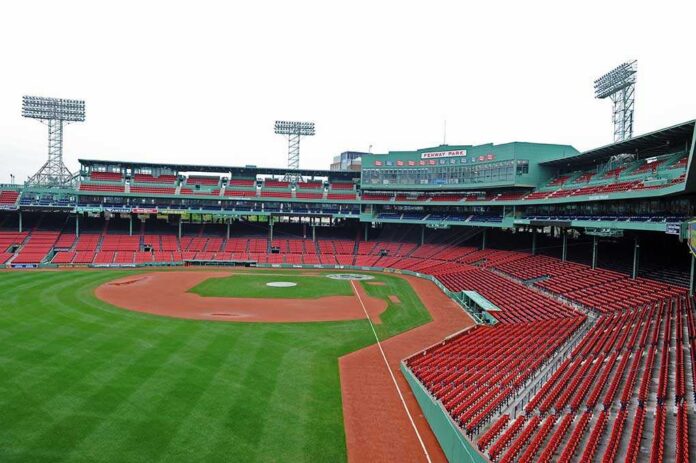
Fenway Park saw a pitcher at his peak and a league at its breaking point. Washington Nationals right-hander Cade Cavalli carved up the Boston Red Sox lineup, striking out 13 batters in a career-best outing. The turning point did not come on his sharp breaking ball or his rising fastball. It came after a fourth-inning strikeout of Red Sox first baseman Willson Contreras, when Cavalli turned toward him and, according to multiple clips and reports, yelled, “Sit down, boy.”
Contreras did not treat it as harmless noise. Video and eyewitness accounts describe him freezing for a second, then walking toward Cavalli and yelling back. Catcher Carlos Narvaez tried to hold Contreras, but the slugger broke free and launched his helmet toward the mound as both benches poured onto the field. Umpires ejected Contreras, interim manager Chad Tracy, outfielder Nate Eaton, and Nationals pitcher Miles Mikolas after the scrum settled.
What Cavalli said, and why “boy” hits a nerve
A wide range of social clips, from fan videos to sports pages, agree on the phrase: Cavalli strikes Contreras out looking and can be heard yelling, “Sit down, boy,” toward first base. TheScore’s recap flatly states Cavalli “immediately told him ‘sit down, boy.’” Tracy told reporters he heard that exact phrase from the dugout. AOL’s breakdown notes hot mic audio where “many folks think” that is what Cavalli yelled, and that it clearly “didn’t sit well” with Contreras.
The word itself is not just casual smack. American history has long treated “boy” from a white mouth toward a man of color as a way to push him down a level, to deny him adult respect. Black players who followed Jackie Robinson reported being called “boy” and worse, then blamed when they fought back. That baggage does not vanish because the game is close or the pitcher is “competitive.” It rides along with every syllable, especially inside a park like Fenway that has already seen ugly fan racial incidents.
Cavalli’s denial and the “just trash talk” defense
After the game, Cavalli tried to narrow the frame. Asked what he said, he told reporters, “I don’t know. I just lose my head in it. I’m competitive. I just told him to sit down.” That quote avoids the word “boy” entirely and leans on the familiar shield of intensity: this was passion, not prejudice. That story sits uneasily next to repeated video replays and Tracy’s direct statement that he heard “Sit down, boy” from the mound.
Contreras did not give the media a clean headline either. When asked if he felt there was a racial element, he demurred. For a player already ejected the night before over a check-swing call, and playing while his home country deals with deadly earthquakes, silence may be strategy more than uncertainty. Star players know that once they name something as racism, the league and media often turn the spotlight back on them as the “problem.” That pattern has played out for Adam Jones and other players who spoke up about slurs in Boston and beyond.
MLB’s culture clash: trash talk, race, and Latin players
This blow-up fits a wider clash in Major League Baseball. Latin American players bring a lively, emotional style that often collides with older, conservative norms that say “act like you’ve been there.” Bat flips, staring at pitchers, and loud reactions are fine for highlight reels, until a white pitcher decides the show is “too much” and fires back with a cutting line. When that line includes a loaded word like “boy,” it drags race right into the heart of a culture war over how the game should look.
CADE CAVALLI IS HIM 😤🔥
7 IP, 1 H, 0 R, 13 K, 100 pitches at Fenway AND a full blown brawl after he set it off. Then he went and retired 19 straight. UNREAL.
Nats win 8-1. That’s an ACE. pic.twitter.com/bcML5lhIEb
— natsfanatics (@natsfanatics_) July 1, 2026
Research on racism in baseball shows the bias does not stop at the outfield wall. Studies find racial gaps in pay, hiring, and even who gets to be a team doctor. ESPN has urged MLB to confront systemic issues head-on, not just punish the loudest outburst on a given night. Yet on this brawl, the league so far has stuck to discipline for visible actions—helmet throwing, fighting—while leaving the deeper question of language and intent to talk shows and fan arguments.
Common sense, consequences, and where this goes next
From a common-sense, conservative view, two things can be true. Players need room to compete hard, chirp, and show emotion without every sharp word becoming a federal case. But they also need clear lines. Calling a grown man of color “boy” crosses a line that any adult in 2026 should understand, especially at a workplace that has already had to review security after racial slurs and objects were thrown at Black players.
Contreras should face consequences for throwing his helmet. Physical attacks cannot become acceptable responses to speech, on a field or anywhere. But the pitcher who lit the fuse should not skate simply because his team needed him to finish seven innings. Fans see one standard for star pitchers and another for everyone else, and that double standard fuels the very anger MLB claims to fear. If baseball wants fewer brawls and less racial controversy, the fix is simple: say clearly what is out of bounds, then call it that way for everyone.
Sources:
mediaite.com, facebook.com, instagram.com, mlb.com, reddit.com, andscape.com, youtube.com, pmc.ncbi.nlm.nih.gov
© featuredheadlines.com 2026. All rights reserved.