

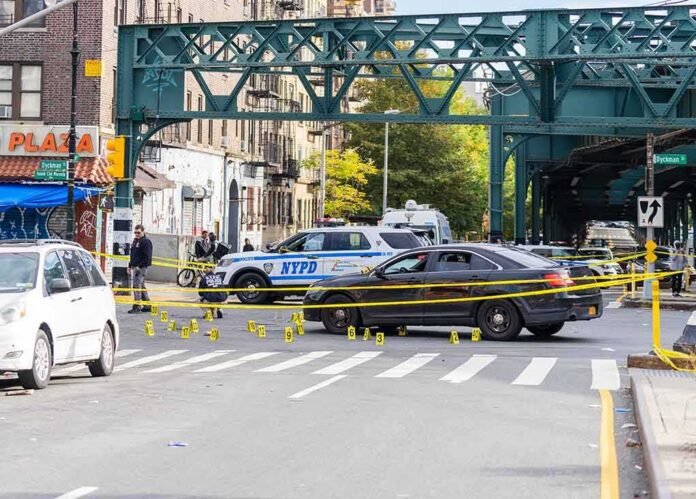
A single mistaken trigger pull in a Brooklyn subway sent metal fragments into a cop and a commuter during rush hour.
Story Snapshot
- An NYPD officer’s gun fired inside Kingston–Throop Avenues station around 4:40 p.m.
- Fragments struck a fellow officer and a 34-year-old woman; all had minor injuries
- Both involved officers were hospitalized, released, and placed on modified duty
- The NYPD Force Investigation Division is leading the review
What Happened On The Platform
Police said an officer’s service weapon discharged inside the Kingston–Throop Avenues subway station in Bedford–Stuyvesant around 4:40 p.m. on Thursday. The round did not hit anyone directly. Bullet fragments injured another officer on scene and a 34-year-old woman nearby. Medics took the two officers and the bystander to local hospitals. All were treated for minor injuries and released the same day, according to local reports that cited police. The department called the discharge accidental.
Reporters placed the event on the station’s platforms as riders moved through the late afternoon commute. One outlet described the shot as unintentional and said the fragments caused the injuries. Another report said the gun “accidentally discharged,” without a detailed explanation of how it happened. Both accounts stated the New York City Police Department’s Force Investigation Division took the case. No names were released. No other riders were hurt, police said.
Who Was Hurt And How Badly
The 34-year-old woman suffered minor injuries linked to bullet fragments and was released after treatment, according to station-area coverage that cited police. The officer hit by fragments and the officer whose weapon fired were also taken to the hospital and released. Police said their conditions were stable. The bystander’s exact wound details were not described in the initial summaries. Early reports did not specify where the bullet struck before it broke into fragments.
Police placed two officers on modified duty while the inquiry proceeds, which is a standard step after a firearm discharge. Modified duty usually means the officers do not perform regular patrol work and may have their service weapons taken pending review. The Force Investigation Division handles scene reconstruction, evidence collection, and interviews in police firearm events. Results typically flow into the department’s formal use-of-force reporting system.
How NYPD Handles Accidental Discharges
The New York City Police Department tracks all firearm discharges in an annual use-of-force system. The department recorded 48 firearm discharges in 2023, down from the year before, and it publishes trend data to show where and how incidents occur. Historical reviews found that non-adversarial events, including accidental discharges, make up a recurring share of cases, which is why the internal process now emphasizes early scene control and detailed after-action review.
An NYPD officer accidentally fired => her <= service weapon in a Brooklyn subway station Thursday afternoon — and bullet fragments struck another cop and a bystander.
The accidental discharge occured at about 4:40 p.m. inside the Kingston-Throop Avenue station in… pic.twitter.com/T9qelepY6J
— Crime In NYC (@Crime_In_NYC) September 12, 2026
Independent studies commissioned by the city years ago urged tighter training, clearer weapon-handling rules, and better forensic review after every discharge. That work shaped the current model, where an internal investigative unit responds, logs the facts, and checks whether tactics and gear met policy. The goal is simple and practical: stop preventable gunfire in crowded public spaces, protect riders, and keep officers alert to the risks of handling errors under stress.
Why This Matters For Riders And Cops
Subway stations are dense, echoing, and full of hard surfaces. One shot can break apart and turn into flying fragments in a split second. That is why strict handling and clear discipline are non-negotiable in transit zones. The reported outcome here—minor injuries and fast releases—was the best of bad options. But common sense says the standard must be higher than “no one died.” Riders expect professional control in tight quarters, and officers deserve gear and training that back them up.
Local coverage shows the system doing what it was built to do: treat the injured, secure the scene, and hand the case to the Force Investigation Division. That process now needs to deliver a clear account of how the discharge happened and what will change to keep it from happening again. New York moves on steel rails. Safety on those platforms rides on careful hands, steady judgment, and quick lessons learned when a mistake breaks the quiet.
Sources:
nypost.com, bbc.com, policyarchive.org, theiacp.org
© featuredheadlines.com 2026. All rights reserved.