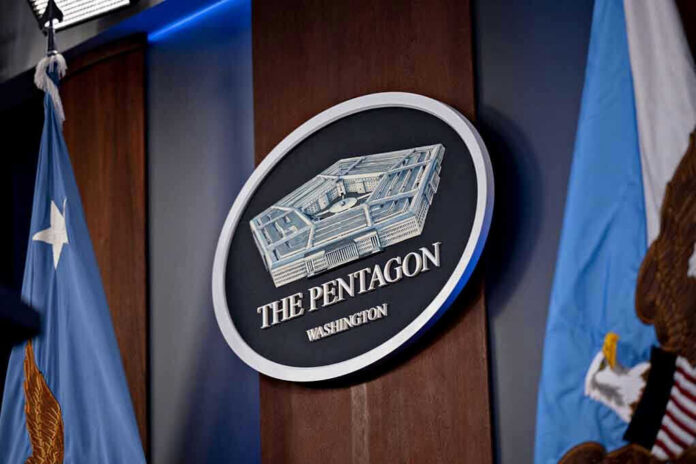
featuredheadlines.com — A man who pleaded guilty to storming the United States Capitol now holds a counterterrorism job inside the Pentagon, and the official defense of that decision may tell you more about where Washington is headed than the hire itself.
Story Snapshot
- Elias Irizarry, convicted for his role in the January 6 Capitol breach, was hired as a political appointee in a Pentagon office handling classified military and counterterrorism operations.
- Acting Pentagon Press Secretary Joel Valdez called Irizarry “a qualified, patriotic young professional” and said the Pentagon was proud to have him.
- Irizarry later expressed regret for his participation in the Capitol attack, which the administration cited as part of its rationale for the hire.
- President Trump’s broad January 6 clemency action covered most defendants, with more than 1,500 people charged in connection with the attack ultimately affected by the 2025 pardons.
What Actually Happened at the Pentagon
Elias Irizarry pleaded guilty to charges stemming from the January 6, 2021 Capitol breach and was subsequently hired by the Trump administration to work inside a Pentagon office involved in highly classified military operations and counterterrorism functions [3]. He is a political appointee, meaning he was placed directly by the administration rather than through the competitive civil service process that typically governs sensitive national security positions. The hire became public in early June 2026 and drew immediate criticism from lawmakers and security professionals.
The Pentagon’s public response was notable for what it did not say. Spokesperson Joel Valdez praised Irizarry’s character and patriotism without addressing the specifics of how his background was vetted, what access level the position carries, or whether any suitability review flagged his conviction [3]. That kind of answer might satisfy a press briefing room, but it does not satisfy the logic of a security clearance framework, which exists precisely to ask uncomfortable questions about past conduct and the potential for future compromise.
A Pardon Is Not a Security Clearance
The administration’s broader defense rests on the fact that President Trump issued sweeping pardons to the vast majority of January 6 defendants [2]. Legally, that clemency wipes the criminal record clean. But a pardon and a suitability determination for access to classified counterterrorism intelligence are two entirely different things, governed by different standards and different institutions. A federal pardon does not automatically restore a security clearance, and it does not erase the underlying conduct from a background investigator’s analysis.
Irizarry reportedly expressed regret for his participation in the Capitol attack, and that matters at a human level [4]. Rehabilitation is real. People do change. But the question here is not whether Irizarry deserves a second chance in life. The question is whether a position involving highly classified military operations is the appropriate vehicle for that second chance, and whether the normal vetting process was followed or quietly bypassed. Those are institutional questions, not personal ones, and the administration has not answered them.
The Broader Pattern Nobody Wants to Discuss Plainly
More than 1,500 people were charged in connection with the January 6 attack, and the 2025 clemency action applied broadly across most of those cases [2]. That unprecedented scale creates a downstream problem that will surface repeatedly: what happens when pardoned defendants seek public employment, security clearances, or positions of institutional trust? The Irizarry case is unlikely to be the last time this question lands on a congressional hearing room table or a Pentagon spokesman’s podium.
The Department of War has hired Elias Irizarry, who pleaded guilty to taking part in the breach of the U.S. Capitol on Jan. 6, 2021.
Department of War spokesman Joel Valdez confirmed on June 3 that Irizarry is working for the Pentagon as a political appointee, calling him a… pic.twitter.com/uPB5gS2ZTq
— The Epoch Times (@EpochTimes) June 3, 2026
The honest tension here is not simply partisan. Conservatives who take national security seriously should want the same rigorous suitability standards applied regardless of a candidate’s political affiliation or the circumstances of their prior conviction. A framework that bends its screening standards for politically favored applicants is a weakened framework, full stop. If the administration conducted a thorough review and concluded Irizarry met every standard for this specific role, it should say so with specifics. The silence is what feeds the doubt.
The Question That Deserves a Straight Answer
What clearance level does Irizarry’s position require, and did he receive it through the standard adjudicative process or through a political waiver? That single question cuts through all the noise. If the answer is that he went through full adjudication and passed, critics owe the public that context. If the answer is that the normal process was modified or skipped, then the concern is not about January 6 politics at all. It is about whether the people running the most sensitive offices in American national security are treating the vetting process as a bureaucratic inconvenience rather than a meaningful safeguard [3].
Sources:
[2] YouTube – Man pardoned for Jan. 6 gets life in prison for plotting to incite …
[3] Web – Pardon of January 6 United States Capitol attack defendants
[4] Web – Jan 6 Capitol Rioter Elias Irizarry Hired at Pentagon: Rpt – Mediaite
© featuredheadlines.com 2026. All rights reserved.