
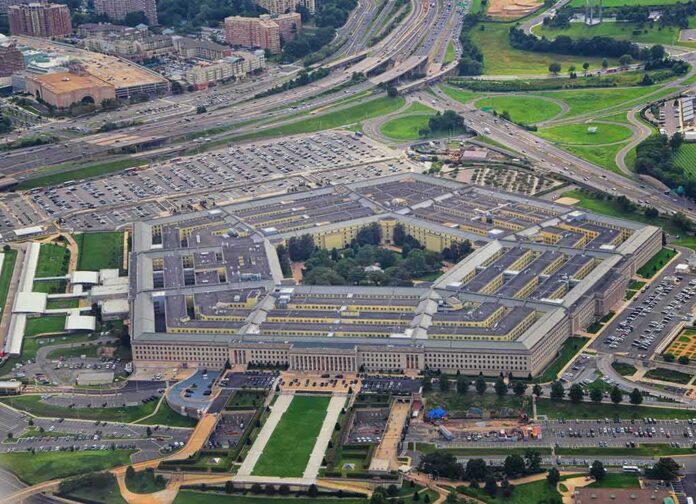
Pope Leo XIV’s blunt verdict on the death penalty landed the same week the Pentagon prepared a firing-squad execution the world could watch live.
Story Snapshot
- Pope Leo XIV declared capital punishment “inadmissible,” grounding it in Catholic teaching and human dignity.
- President Trump ordered a firing squad for Nidal Malik Hasan, who murdered 13 and wounded 32 at Fort Hood in 2009.
- The Pentagon moved to livestream the execution, reviving a long-abandoned public model.
- The Vatican’s stance challenges both the killing and the spectacle, not only this one case.
A rare execution collides with a global moral rebuke
Pope Leo XIV stated that the death penalty is “inadmissible” because it attacks the dignity of the person. He cited Church teaching that justice and public safety can be met without killing the offender. The timing intensified the clash. The administration advanced the first United States military execution since 1961 and the first by firing squad since World War Two, aimed at Hasan, the Fort Hood murderer who left 13 dead and 32 wounded.
President Trump framed the punishment as deserved retribution. He said Hasan “killed many, many people” and called the death penalty a “very worthy way” for him to die. Defense Secretary Pete Hegseth argued for a public broadcast to show that attacks on United States service members bring serious consequences. That rationale fits a classic deterrence pitch. It also sets the stage for a modern version of an old practice: turning an execution into a public event.
The livestream plan breaks with nine decades of American custom
Public executions faded from American life after the 1936 hanging of Rainey Bethea, when crowds and spectacle discredited the practice. For about ninety years, executions moved behind prison walls, often under strict secrecy rules. Pentagon officials say they plan to livestream Hasan’s death. They have not pointed to any clear regulation or precedent for doing so in the military system. That gap matters. Institutions tend to regret policies born from anger rather than tested rulemaking.
Supporters see a bright-line message: kill soldiers, face the ultimate penalty, and let the public bear witness. Opponents warn that broadcasting death risks turning justice into a show. Criminologists have long questioned whether public executions deter crime better than private ones. History suggests the opposite. Crowds can dull empathy, invite copycats, or shift focus from the victims to the killer’s final act. Common sense says deterrence needs certainty and swiftness more than theater.
What the Church actually teaches—and why it reaches beyond this case
The Vatican’s position is not a one-off tweet. The Church’s catechism now holds that the death penalty is inadmissible because it violates human dignity. It also argues modern states can protect society without killing offenders. That shift has developed for decades. It balances a real demand for justice with the belief that even grave sinners should live with the chance to repent. Many Americans disagree, yet the moral logic is consistent and clear.
Pope Leo XIV called the death penalty “an attack” on human dignity a day after senior Church officials pointedly condemned the decision by the U.S. Defense Department to live-stream the execution of the convicted Fort Hood shooter Nidal Malik Hasan. https://t.co/4U6UnvcS1A
— The Washington Post (@washingtonpost) October 10, 2026
The Pope’s stance challenges two things at once: the act of execution and the plan to stage it before the world. On the narrow question of Hasan, few dispute his guilt or the pain he caused. The public knows the names of the dead and wounded, and soldiers remember the horror. On the broader question—whether the state should kill, and whether it should do so for an audience—the Church says no. That makes this more than a policy spat; it is a clash of first principles.
Accountability, dignity, and the line we draw as a nation
American law allows the military death penalty in rare cases. The last military execution happened in 1961 after full court-martial review and presidential approval. The gravity of that step demands careful bounds. A firing squad can be fast and decisive. A livestream can feel bold but become corrosive. If the goal is to honor victims, uphold order, and warn would-be attackers, tight process and sober conduct work better than spectacle. Conservatives worth their salt know that limits preserve justice.
Sources:
thegatewaypundit.com, vaticannews.va, rmb.reuters.com, ua.news, bbc.com, afp.com
© featuredheadlines.com 2026. All rights reserved.