

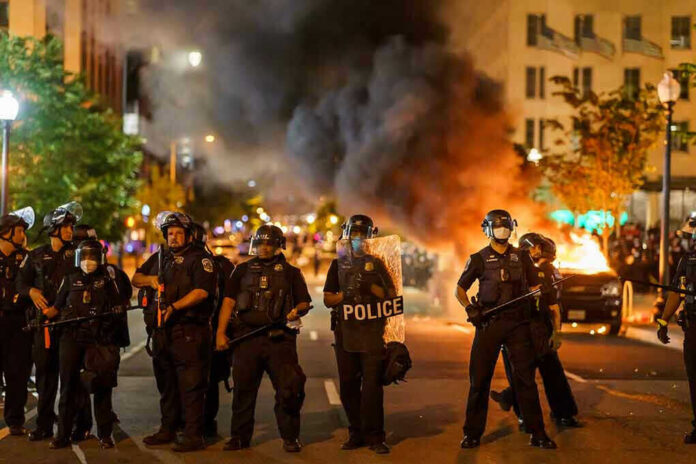
Albanian protesters hurled Molotov cocktails at Prime Minister Edi Rama’s offices in Tirana, turning a political demonstration into a fiery confrontation that exposes the deepening crisis threatening one of Europe’s most fragile democracies.
Story Snapshot
- Democratic Party supporters launched violent protests outside PM Rama’s offices in Tirana
- Molotov cocktails created flames and chaos as police struggled to maintain order
- The escalation represents a dangerous turn in Albania’s ongoing political tensions
- Violence raises serious questions about democratic stability in the Balkan nation
Fire and Fury in Tirana’s Streets
Monday evening’s protest began as another political demonstration but quickly transformed into something far more dangerous. Supporters of Albania’s opposition Democratic Party gathered outside Prime Minister Edi Rama’s offices, their frustrations boiling over into acts of violence that shocked even seasoned observers of Albanian politics. The sight of Molotov cocktails arcing through the air and exploding into flames painted a disturbing picture of a nation where political discourse has devolved into street warfare.
Police forces found themselves overwhelmed as they attempted to contain the situation. The protesters showed no signs of backing down despite law enforcement’s presence, suggesting a level of desperation and anger that goes beyond typical political grievances. When citizens resort to firebombs to express their political views, it signals a breakdown in the fundamental social contract between government and governed.
Opposition Desperation Reaches Breaking Point
The Democratic Party’s supporters didn’t arrive at this moment of violence overnight. Years of political frustration have been building as Albania struggles with corruption, economic challenges, and questions about electoral integrity. The opposition has repeatedly accused Rama’s government of authoritarian tendencies and democratic backsliding, claims that have found some resonance among international observers concerned about rule of law in the Balkans.
However, resorting to Molotov cocktails represents a dangerous escalation that threatens to undermine any legitimate grievances the opposition may have. Violence never strengthens democratic institutions or advances political causes in a meaningful way. Instead, it provides ammunition for those in power to justify crackdowns and dismiss valid criticism as the work of extremists.
European Implications and Regional Stability
Albania’s political crisis extends beyond its borders, particularly given the country’s strategic importance in the Balkans and its aspirations for European Union membership. The EU has invested considerable political capital in supporting Albania’s democratic development, but scenes of protesters throwing firebombs at government buildings send exactly the wrong message to European partners evaluating the country’s readiness for closer integration.
The violence also raises concerns about regional stability at a time when the Balkans face multiple challenges. Democratic backsliding in any Balkan nation creates ripple effects throughout the region, potentially emboldening authoritarian tendencies elsewhere and undermining the progress made since the conflicts of the 1990s. European leaders watching these events must wonder whether their investments in Albanian democracy are paying dividends.
The Path Forward Requires Leadership
Both sides bear responsibility for de-escalating this dangerous situation before it spirals further out of control. Prime Minister Rama’s government must demonstrate restraint in its response while addressing the legitimate concerns that fuel opposition anger. Heavy-handed crackdowns often backfire, creating martyrs and further radicalizing moderate voices who might otherwise seek peaceful solutions.
The Democratic Party leadership faces an even greater challenge: condemning violence while channeling their supporters’ energy toward constructive political action. Leadership means rejecting the easy path of inflammatory rhetoric and instead building coalitions around specific policy proposals and democratic reforms. Albanian citizens deserve better than Molotov cocktails and street battles as expressions of political will.