

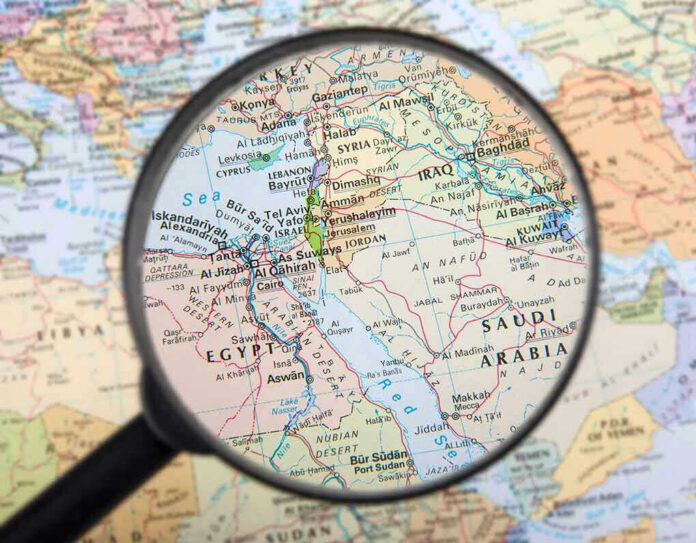
Another commercial ship was just hammered by armed attackers in the Red Sea, yet the world’s “leaders” seem more preoccupied with virtue-signaling and bureaucratic blather than protecting the arteries of global commerce and American security. How much longer will we let chaos reign off Yemen’s coast while hard-working Americans pay the price?
At a Glance
- Bulk carrier Magic Seas attacked near Yemen, forcing crew to abandon ship after a barrage of gunfire and grenade strikes.
- Attack method and location point squarely at Houthi rebels, yet no group claims responsibility.
- Global supply chains and U.S. interests at risk as Red Sea shipping faces relentless threats and escalating costs.
- International response remains tepid, with little real deterrence against repeat attacks.
Red Sea Shipping in the Crosshairs—Again
The world’s so-called “security community” was left scrambling July 6, 2025, after the Liberian-flagged, Greek-owned Magic Seas was assaulted roughly 60 miles southwest of Yemen’s Hodeida port. Eight small boats, bristling with armed militants, opened fire with rifles and rocket-propelled grenades. The attack escalated when four unmanned surface vehicles—essentially waterborne drones—rammed the ship, setting its cargo ablaze and forcing the entire crew to abandon ship. Miraculously, all crew survived, but the vessel was left crippled and drifting. This is not a one-off, isolated incident: over a hundred merchant vessels have been targeted in the Red Sea since late 2023, with recent attacks showing a disturbing trend toward more sophisticated, military-style tactics.
Maritime security analysts and UK maritime authorities have little doubt about the culprit. The attack’s signature—a swarm of small boats followed by remote-controlled suicide craft—matches the established playbook of Yemen’s Houthi rebels. These Iran-backed militants have made it their mission to disrupt trade in the name of “solidarity” with Gaza and opposition to Israel. Yet, as is so often the case, the world’s response amounts to little more than sternly worded statements and increased insurance premiums for shipping companies. The U.S. Navy’s 5th Fleet, tasked with securing the region, referred questions up the chain and offered no comment. Meanwhile, Houthi leaders, true to form, ignored requests for comment and instead broadcast anti-Western screeds on state-run media.
Who Pays for This Chaos? Everyday Americans, as Usual
While diplomats wring their hands and international organizations issue advisories, it is the American public and global consumers who shoulder the real burden. Each new attack in the Red Sea sends shipping costs soaring, reroutes vital cargo, and injects fresh uncertainty into already fragile supply chains. Shipping giants—who have the option—are now steering clear of the Red Sea, opting for the long, expensive detour around Africa’s Cape of Good Hope. Who foots the bill for higher fuel, longer transit, and all the new “hazard pay”? The answer is clear: American families, already squeezed by inflation, rising prices at the pump, and a government that never met a spending bill it didn’t love.
Insurance premiums for ships transiting the Red Sea have spiked, and some carriers have halted Red Sea operations altogether. The ripple effect? A drag on global trade, higher costs for goods, and yet another blow to the wallets of working Americans. The economic toll is compounded by the threat to lives and livelihoods of seafarers, who now risk their safety for every paycheck. Despite the obvious strategic importance of the Red Sea—handling over a trillion dollars in goods each year—there is no serious, coordinated international effort to restore order and deter future attacks. Instead, we get platitudes and endless “monitoring” from agencies that seem more interested in virtue-signaling than real solutions.
Houthi Tactics Escalate While Leaders Dither
The Magic Seas attack is simply the latest escalation in a long-running campaign by the Houthis to destabilize the region and flex for their Iranian backers. Unlike the Somali pirates of the early 2010s, who were in it for ransom, the Houthis are in it for the politics and the headlines—and they’ve got the weapons to make things ugly. The use of unmanned surface vehicles marks a new phase, complicating any effective defense and raising the prospect of even more devastating attacks to come. Maritime security firms and regional analysts are clear: this is not just a local problem, it’s a global threat. Yet, as usual, the U.S. response is hamstrung by politics, red tape, and a refusal to name the enemy for what they are.
Meanwhile, impacted communities—including Yemenis suffering under the crossfire, global shipping firms, and economies up and down the supply chain—face mounting uncertainty. The West’s reluctance to act decisively has created a power vacuum, emboldening Iran and its proxies while undermining the credibility of every so-called “security guarantee” we extend to our allies. The longer this goes on, the higher the risk of a broadening conflict that could draw in more regional and international players—at tremendous cost to American interests and security.
Sources:
Trump’s 2025 Executive Orders: Reshaping Security on the Southern Border
What’s in the 2025 Reconciliation Bill So Far?
CBP’s Primary Mission Areas in 2025