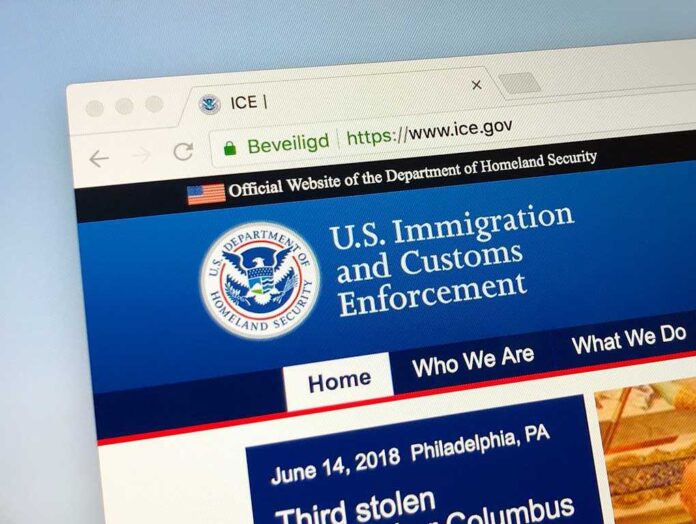
Could the U.S. government really be turning to bounty hunters for immigration enforcement?
Story Snapshot
- Kristi Noem, as Secretary of Homeland Security, considers using private bounty hunters for ICE operations.
- This controversial strategy aims to bolster recruitment challenges amidst Trump’s mass deportation agenda.
- The unprecedented plan involves financial incentives for successful apprehensions.
- Legal, ethical, and social concerns loom over this secretive initiative.
The Unprecedented Proposal
As Secretary of Homeland Security, Kristi Noem is reportedly considering an unprecedented approach to immigration enforcement by employing private bounty hunters. This plan is a response to recruitment challenges faced by Immigration and Customs Enforcement (ICE), with an emphasis on mass deportations under the Trump administration. The strategy includes hiring contractors to locate and apprehend undocumented immigrants, offering incentive-based pay structures to boost performance.
The proposal has sparked significant controversy due to its scale and the ethical concerns it raises. Historically, while the U.S. has used private contractors in law enforcement, deploying them for direct apprehension of individuals on this scale is unprecedented. This move underscores the ongoing struggle to meet immigration enforcement goals amidst recruitment shortfalls.
Timeline of Key Events
July 2025 marked the passage of the “One Big Beautiful Bill Act,” allocating $75 billion for immigration enforcement. By October 2025, ICE had issued a procurement document seeking private contractors for services targeting up to one million immigrants. This move coincided with a congressional letter expressing concerns about ICE’s hiring practices, leading to heightened scrutiny.
As media reports surfaced in late October 2025, detailing the bounty hunter proposal, the public and legal backlash began to intensify. The plan’s secretive nature and its reliance on private contractors for federal immigration enforcement have raised questions about accountability and oversight.
Stakeholders and Motivations
Key stakeholders include Kristi Noem, ICE, President Trump, private contractors, Congress, state and local governments, and immigrant communities. Noem and ICE are motivated by political promises to reduce undocumented immigration, while private contractors are driven by financial incentives. Congress is divided between supporting enforcement and demanding oversight, with state and local governments concerned about public safety and civil rights.
Immigrant advocacy groups are vocal in their opposition, emphasizing the risks to civil liberties and community trust. The power dynamics highlight the federal government’s authority over immigration enforcement, which faces resistance from states and cities. The proposed involvement of contractors raises accountability questions, with oversight and transparency being key concerns.
Current Developments and Implications
Recent updates confirm ICE’s exploration of private contractor use for mass round-ups, with congressional scrutiny intensifying. Noem defends the strategy, while DHS warns of operational dangers due to cartel threats against ICE and CBP agents. The contractor program remains in the exploratory phase, with no public evidence of operational deployment yet.
The implications of this plan are significant. In the short term, it could increase fear and anxiety in immigrant communities and lead to potential civil unrest. In the long term, it sets a precedent for privatized immigration enforcement, potentially eroding trust in law enforcement and increasing the risk of civil rights violations.
Sources:
U.S. Senate Judiciary Committee letter (PDF)