The real fight over women’s rights is not on the face of a quarter, but in the fine print of Trump-era laws that can quietly strip millions of women of their vote.
Story Snapshot
- The quarters honoring women’s suffrage and civil rights were never actually canceled by Trump.
- Congress, not the president, locked in the American Women Quarters program through statute.
- The real rollback is happening in voting rights, health care, and civil-rights enforcement, not in coin design.
- Claims about “canceled quarters” distract from concrete policies that could disenfranchise millions of women.
How A Viral Coin Controversy Missed The Real Story
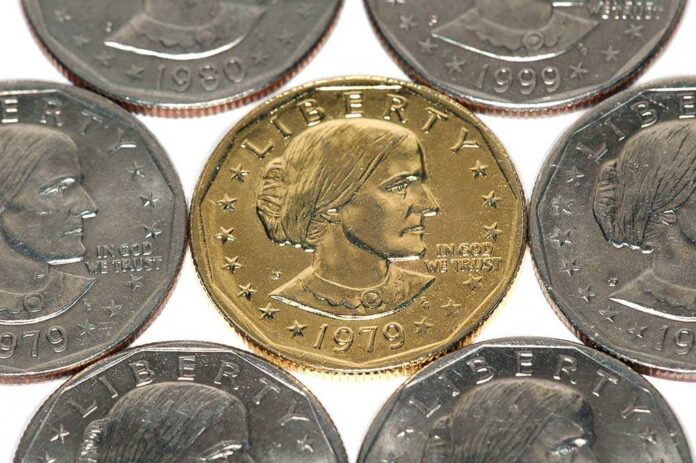
Social media posts claiming that “new quarters set to honor women’s suffrage and civil rights were canceled by Trump” sound tailor-made to go viral: vivid, simple, and perfectly aligned with existing outrage. The problem is that no serious numismatic outlet, no Federal Register entry, and no U.S. Mint announcement backs that up. Meanwhile, Congress’s American Women Quarters program has moved forward as written, featuring women whose lives were defined by civil-rights and suffrage battles.
Currency fights make great headlines because they compress cultural conflict into something you can hold in your hand. That is why the delay of the Harriet Tubman $20 under Trump became such a lightning rod. It signaled, to many people, a willingness to sideline a Black woman freedom fighter from the nation’s everyday iconography. But that highly visible skirmish has primed the public to assume every story about Trump and currency is true, even when hard evidence is missing.
Who Actually Controls Quarters Honoring Women
Congress, not the president, designs the cage around these fights. The Circulating Collectible Coin Redesign Act authorized the American Women Quarters series, and the U.S. Mint and Treasury operate inside that legal box. A president can nudge priorities through appointments and messaging, but outright canceling a congressionally mandated program would invite immediate political and legal blowback. If an administration tried to erase a suffrage or civil-rights coin line, you would expect the lawsuits to stack up fast.
That absence of visible conflict is the tell. Civil-rights groups that meticulously document Trump-era rollbacks have nothing about canceled quarters. Their dockets and alerts are full of voting restrictions, health-care discrimination, and attacks on LGBTQ protections instead. When watchdogs like the Leadership Conference on Civil and Human Rights spend their limited bandwidth, they go after the policies that change who can vote, who can marry, who can access medical care, and who can seek justice in court. They are not seeing or litigating a war on quarters because the real damage is elsewhere.
Where The Real Rollbacks Are Happening
The 2025 Trump term opened with a blunt message: civil-rights protections would be scaled back in the name of “restoring merit” and “ending illegal discrimination.” Executive actions revoked Biden-era racial equity efforts, pulled back agency-level voting access initiatives, and weakened some policing reforms, replacing an expansive view of civil rights with a narrow, formal equality that ignores how rules work on actual people.
Women find themselves in the crosshairs of these changes in ways that are highly specific and measurable. A sweeping executive order now demands documentary proof of citizenship to register to vote, funneling eligibility through a single gold-standard document that millions of women do not have. The Democratic Women’s Caucus has warned that this functions like a modern poll tax, especially for women who changed their last names after marriage and never updated passports or underlying papers. The impact is not symbolic; it is a hard barrier between them and the ballot box.
How Voting Rules Can Erase Suffrage Gains
When you force citizenship proof into a narrow pipeline, you tilt the electorate. Lawsuits brought by groups like the League of Women Voters and voting-rights coalitions argue that Trump’s new order violates federal voting law by erecting unnecessary obstacles that fall heaviest on women, people of color, low-income citizens, and the disabled. Those are precisely the communities the 19th Amendment and the civil-rights movement were supposed to bring fully into American democracy, even if those promises were only partly kept.
Conservatives committed to rule-of-law principles should scrutinize whether such orders respect the balance Congress struck in the National Voter Registration Act and related statutes. When the federal executive imposes requirements that functionally override legislative choices, it risks the same overreach conservatives criticize in other contexts. If the policy results in millions of lawful voters being turned away over paperwork—without evidence of massive noncitizen voting to justify it, that is not election integrity, it is bureaucratic disenfranchisement wrapped in patriotic branding.
Why The “Canceled Quarter” Myth Still Matters
False stories about Trump canceling suffrage and civil-rights quarters persist because they fit an emotional script: a president seen as hostile to equality erases women from the money. That script feels accurate to many Americans who watch courts reshaped, civil-rights enforcement muted, and reproductive freedoms narrowed. But focusing anger on the wrong front lets more consequential moves advance with less scrutiny. Outrage is finite; misdirect it, and real power goes unchecked.
The hard truth is that a woman’s face on a coin does nothing for her if she cannot cast a ballot, access fair health care, or rely on civil-rights law when she is discriminated against. Symbolic recognition matters, currency shapes national memory, but it is not a substitute for enforceable rights. The smart response is to separate myth from fact: stop sharing unverified claims about canceled quarters, and start tracking the legal changes that could decide whose daughters still inherit the full fruits of suffrage.
Sources:
2025 Supreme Court Term: Trump Wins, Women Lose
Democratic Women’s Caucus Statement on Trump’s Executive Order
Trump Administration Civil and Human Rights Rollbacks
League of Women Voters v. Trump
Voting Rights Groups Challenge Trump’s Recent Executive Order
Congressional Record—House, March 26, 2025
Ending Illegal Discrimination and Restoring Merit-Based Opportunity