Donald Trump has approved a nuclear agreement that opens the door for Saudi Arabia to someday enrich uranium on its own soil, under a framework sold as “peaceful” but loaded with long-term strategic risks.
Story Snapshot
- Trump greenlights a 30-year U.S.–Saudi civil nuclear deal that could allow uranium enrichment in the kingdom.
- The agreement is framed as peaceful energy cooperation under U.S. law, with American companies at the center.
- Key safeguards demanded for decades by nonproliferation hawks are weakened or missing, raising weapons concerns.
- The deal tests whether Washington still holds nuclear partners to a “gold standard” or now bends that rule for allies.
Trump’s approval creates a nuclear opening for Saudi Arabia
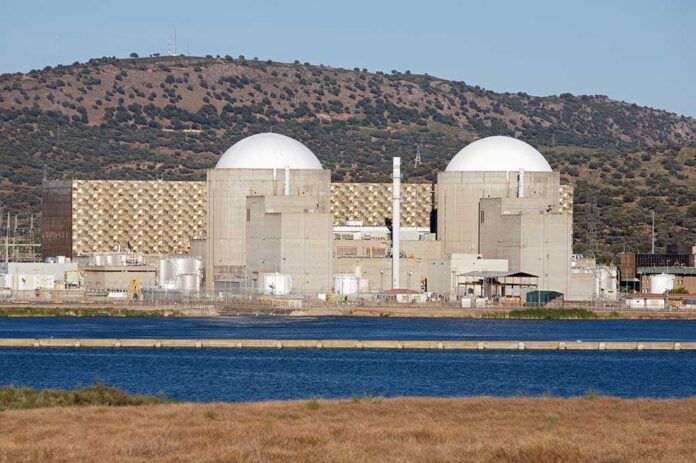
President Donald Trump has approved a civil nuclear agreement with Saudi Arabia that could eventually give the kingdom access to uranium enrichment for its civilian nuclear program. The deal is expected to last about 30 years and put American firms at the center of Saudi Arabia’s reactor and fuel-cycle build-out, with tens of billions of dollars in potential contracts at stake. Reporting based on Associated Press and other outlets says the accord creates a legal path to build an enrichment facility in Saudi Arabia after a joint feasibility study. For readers who care about American strength and stability in the Middle East, this is not a small bureaucratic step; it is a structural shift in who gets to play with the most sensitive part of the nuclear fuel cycle.
The deal sits under Section 123 of the U.S. Atomic Energy Act, the legal framework for civil nuclear cooperation with foreign countries. In simple terms, a “123 agreement” lets American companies sell nuclear materials, equipment, and technology abroad if certain nonproliferation conditions are met. The White House fact sheet and expert analysis describe this agreement as laying the foundation for a decades-long partnership and making U.S. firms Riyadh’s “partner of choice” for its nuclear program. That is the attractive commercial and geopolitical side: more American-built reactors, more export jobs, and deeper energy ties with a major oil producer that Washington wants firmly in its camp.
Peaceful energy goals mix with sensitive fuel-cycle ambitions
Saudi Arabia publicly says it wants nuclear power to free up more of its oil for export and support long-term energy diversification. Civilian nuclear power needs fuel, and uranium enrichment is part of that fuel cycle. Supporters of the deal argue that giving Riyadh a structured, monitored way to access that fuel, with U.S. involvement and technology, is safer than letting Russia or China dominate its nuclear build-out. Some proposals even contemplate a U.S.-operated enrichment plant on Saudi soil or a future review where Washington could decide whether to provide enrichment technology after a moratorium. That kind of phased, conditional approach lines up with a common-sense view: keep tight control early, then revisit once trust and performance are proven.
At the same time, Saudi officials have pressed hard not to permanently give up enrichment options. Their argument echoes what many countries say under the global nuclear treaty: peaceful nuclear use should include full fuel-cycle rights. From an American conservative perspective focused on sovereignty and fair play, that claim has surface appeal. But enrichment is different from building a simple power plant. The same machines that make low-enriched reactor fuel can, if misused and not tightly inspected, be reconfigured to produce highly enriched uranium suitable for nuclear weapons. That dual-use reality explains why critics call enrichment on unstable ground a red flag, not a routine “right.”
Guardrails trimmed compared with past U.S. practice
For more than a decade, many in Washington pushed a “gold standard” for nuclear deals with new partners: no domestic enrichment, no reprocessing, and stronger international inspections through the International Atomic Energy Agency’s Additional Protocol. That standard was applied in the 2009 agreement with the United Arab Emirates, which explicitly forswore these sensitive activities. Arms control experts and watchdog groups now warn that the Saudi agreement breaks from that model. Reports say the draft deal does not require Saudi Arabia to adopt the Additional Protocol and instead relies on a special bilateral safeguards arrangement between Washington and Riyadh. According to material submitted to Congress, that bilateral system is supposed to focus on the most “proliferation-sensitive” steps—enrichment, fuel fabrication, and reprocessing—and add extra verification measures. Supporters say this meets current U.S. legal requirements; critics argue it weakens tested, global guardrails in favor of a custom fix that depends heavily on political will in both capitals.
Strategic stakes for Iran, Israel, and U.S. credibility
This nuclear opening for Saudi Arabia lands in a Middle East already on edge over Iran’s nuclear program. Tehran has faced intense pressure, sanctions, and military threats over its own enrichment activities. If Riyadh gains an easier path to enrichment with looser international oversight, Iran will point to that as proof of a double standard. Israeli leaders and many American security hawks worry that a wealthy, status-conscious monarchy could see a civil fuel-cycle as a hedge: a way to get within striking distance of weapons capability without openly crossing the line. Arms control experts warn that the deal, as described in public sources, could shorten Saudi Arabia’s “breakout” time—the period needed to move from peaceful use to weapon-grade material—if the political situation ever changed. That is not a prediction that Riyadh will build a bomb; it is a warning about how much faster it could do so if it chose to.
President Trump has formally approved a nuclear energy 123 agreement between the US and Saudi Arabia.
Congress will have 90 days to review it. Derailing the agreement would require signed legislation that is likely to require a 2/3 majority to overcome an expected veto.
The…
— Rod Adams (@Atomicrod) July 22, 2026
For Americans who value both strong alliances and firm nonproliferation norms, this agreement forces a hard question: how much risk is acceptable to keep Saudi Arabia close and Russian or Chinese suppliers out? The Trump administration and its supporters appear to believe that U.S. oversight and commercial leadership can manage the dangers while delivering jobs and leverage. Arms control voices and many in Congress see the same text and conclude that Washington is trading away proven safeguards for short-term gains and an uncertain promise of future monitoring. The facts on the table are clear: the deal is real, it is designed to last decades, and it creates a pathway—under U.S. law and with U.S. help—that may eventually let Saudi Arabia enrich uranium. Whether that is wise policy or a nuclear mirage will depend less on the paper than on who holds power in Riyadh and Washington over the next thirty years.
Sources:
houseofsaud.com, armscontrol.org, brookings.edu, reuters.com, saudigazette.com.sa, thebreakthrough.org, cnn.com, tftc.io, docs.house.gov, washingtoninstitute.org, heritage.org, gao.gov
© featuredheadlines.com 2026. All rights reserved.