Iran’s streets are on fire again, and this time a U.S. president is hinting he might back the crowds with more than just words.
Story Snapshot
- Fresh nationwide protests in Iran have morphed from anger over inflation into a direct challenge to the Islamic Republic’s religious rule.
- Security forces have answered with live fire, snipers, and internet blackouts, while credible reports suggest a death toll already in the hundreds.
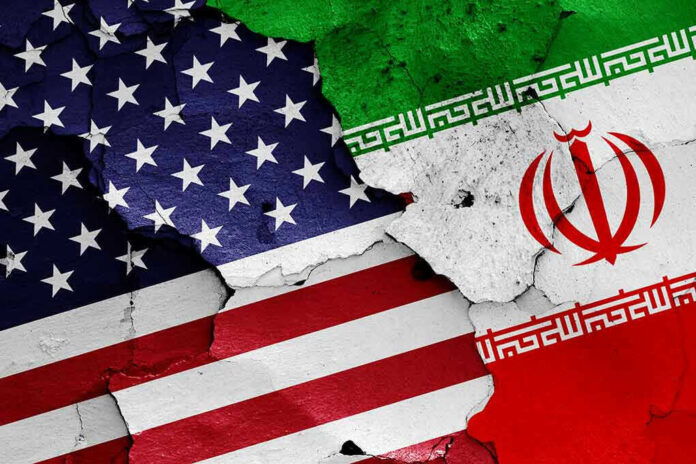
- Donald Trump says the United States “stands ready to help,” as his team reportedly reviews options from cyber ops to possible military strikes.
- Tehran’s leaders are warning that any U.S. move could ignite a wider fight targeting Israel and American bases across the region.
Iran’s New Protest Wave Targets the System, Not Just Prices
Protests began in Tehran’s bazaars over crushing inflation, but they quickly transformed into a political revolt that reached deep into the regime’s supposed strongholds. Crowds poured into cities like Mashhad and Qom, places long associated with clerical power, chanting “Death to Khamenei” and “Clerics must go and get lost.” That shift from pocketbook rage to open rejection of the Supreme Leader and the clerical system is the nightmare scenario for any theocracy that has relied on religious authority to keep people in line.
Reports from inside Iran describe hospitals overwhelmed, blood supplies running low, and bodies piling up as security forces fire live ammunition and use snipers and military rifles against demonstrators. Human-rights monitors have confirmed at least 116 to more than 200 deaths in the early phase, while U.S. and Israeli officials privately estimate that the true toll is several times higher. The regime has layered this violence with nationwide internet shutdowns, cutting protesters off from each other and from the outside world just as the confrontation escalates.
Trump’s “Ready to Help” Message and Washington’s Options
Donald Trump stepped directly into this crisis with a Truth Social post declaring, “Iran is looking at FREEDOM, perhaps like never before. The USA stands ready to help!!!” That statement goes beyond the usual diplomatic boilerplate and sounds closer to a promise. Axios reporting, summarized by Iran International, says his team is weighing a menu of pressure tools: cyberattacks, information operations aimed at the regime, visible deterrent steps like deploying a carrier strike group, and even potential strikes on Iranian targets.
Some U.S. officials reportedly argue that major kinetic action could actually hurt the protest movement by letting Tehran paint demonstrators as foreign puppets, a propaganda script the regime has used for decades. From a conservative, America-first standpoint, that concern tracks with common sense: moral support and smart pressure that raise the cost of repression can align with U.S. interests, but rushing into strikes that turn a domestic uprising into an American war risks American lives, spikes oil markets, and hands Iran’s rulers the foreign-enemy narrative they crave.
Tehran’s Threats, Regional Risks, and the Question of Leverage
Iran’s leaders are not pretending this is business as usual. Supreme Leader Ali Khamenei has vowed the government will not back down, while parliamentary speaker Mohammad Bagher Qalibaf has warned that if the United States attacks, Israel and all American bases and ships in the region become “legitimate targets.” Qalibaf also signaled that Iran reserves the right to act on “objective signs” of a threat, not just respond after the fact, raising the specter of pre-emptive escalation if Washington moves military assets closer.
That threat matters because Iran has spent years building a network of missiles, drones, and proxy forces designed to hit U.S. interests and Israel without a conventional war. At the same time, the regime leans heavily on its old script: President Masoud Pezeshkian and other officials blame “terrorists” tied to foreign powers for killing civilians and torching property, casting protesters as tools of outsiders rather than citizens demanding accountable government. That narrative is harder to sustain when videos show even elderly clerics denouncing the regime as “criminal and murderer” and urging people to rise up.
Freedom Rhetoric, Hard Power, and a Conservative Reading of Prudence
Foreign leaders are lining up rhetorically with the Iranian people, from Israel’s foreign minister openly cheering their “struggle for freedom” to Japanese officials condemning the use of force against peaceful protest. In Europe, politicians such as French MEP Raphaël Glucksmann push for the Islamic Revolutionary Guard Corps to be formally treated as a terrorist organization, arguing that Tehran is in “open war” with its own citizens and that the West should target IRGC financing and networks rather than just issue statements.
American conservatives generally favor standing with people who want to throw off tyrannical, anti-American regimes, but they also know that freedom rhetoric without a strategy can backfire. The hard question is not whether the United States should morally support Iranians demanding basic rights; it is how to translate that support into pressure that weakens the regime’s grip without stumbling into another open-ended Middle Eastern conflict. Cyber operations, sanctions that hit the security apparatus rather than ordinary Iranians, and efforts to keep information flowing inside Iran all line up more cleanly with limited-government, strong-defense principles than large-scale strikes that could unify Iranians around the very leaders many now openly reject.
Sources:
TIME: Iran Threatens to Retaliate Against U.S. As Trump Considers Strikes
Iran International: Trump weighing options to back Iran protests – Axios summary