

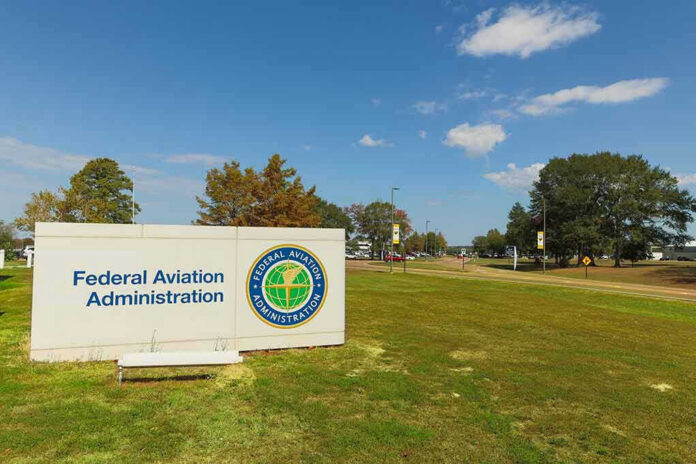
The federal government just told every major U.S. airline that hiring pilots based on anything other than pure skill and qualification will trigger enforcement action, compliance investigations, and potential regulatory consequences.
Story Snapshot
- FAA issued Operations Specification A134 on February 13, 2026, mandating all Part 121 carriers certify pilot hiring as exclusively merit-based
- Airlines have 7 days to respond and 30 days for FAA to finalize adoption, with non-compliance triggering federal investigations under aviation safety law
- Transportation Secretary Sean Duffy and FAA Administrator Bryan Bedford frame the mandate as safety-focused, despite no evidence of current DEI-related violations
- Air Line Pilots Association defends existing uniform training standards, stating pilot qualifications already ensure safety regardless of identity
- Mandate follows President Trump’s January 2025 executive orders ending diversity initiatives across federal agencies
The Regulatory Hammer Drops Without Warning
Transportation Secretary Sean Duffy delivered a stark message to commercial aviation on February 13, 2026: certify your pilot hiring is merit-based, or federal regulators will come knocking. The FAA published Notice N 8900.767 alongside OpSpec A134, a formal operations specification requiring every airline operating scheduled passenger and cargo flights under 14 CFR Part 121 to submit written confirmation that race, sex, or any demographic factor plays zero role in cockpit hiring decisions. Principal Operations Inspectors received orders to notify carriers within two business days. Airlines then face a seven-day window to provide information, with the FAA making final adoption decisions within 30 days.
Built on Executive Orders, Not Evidence
This mandate traces directly to President Trump’s January 21, 2025, Executive Order 14173, titled “Ending Illegal Discrimination and Restoring Merit-Based Opportunity,” paired with a presidential action focused on aviation safety. The administration dismantled DEI offices and contracts at the Department of Transportation and FAA shortly after inauguration, reversing Biden-era diversity pushes that included renaming “cockpit” to “flight deck” and recruiting underrepresented groups amid pilot shortages. Yet the research reveals a glaring gap: Duffy and Bedford cite “rumors and allegations” of demographics-based hiring but provide no documented cases of airlines compromising qualification standards. The OpSpec A134 text itself offers no specific incidents justifying the enforcement threat, raising questions about whether this addresses a real problem or preemptively shuts down hypothetical scenarios.
What Airlines Must Do and What Happens If They Refuse
The operational mechanics are straightforward but carry heavy consequences. Airlines must submit certification that pilot selection relies exclusively on knowledge, skills, and experience—factors tied to Safety Management Systems and the rigorous training Part 121 regulations already demand. Carriers missing the seven-day response deadline or failing to satisfy FAA scrutiny within 30 days face enforcement action under 49 U.S.C. § 44701(b) and (d), federal statutes granting the FAA authority to investigate and penalize safety violations. This introduces a formal certification layer unprecedented in FAA oversight. Prior actions raised pilot qualification standards or eliminated diversity programs, but none required airlines to affirmatively declare hiring practices under threat of federal investigation. The compliance burden is administrative in the short term, yet the long-term implication is clear: any hiring decision remotely tied to diversity goals now carries regulatory risk.
Pilots and Their Union Push Back on the Premise
Air Line Pilots Association President Captain Jason Ambrosi issued a pointed defense of the profession, emphasizing that every pilot already meets identical training and certification standards regardless of identity. He stated that race, sex, or creed are irrelevant to flying safely and that qualification is paramount. His comments reflect frustration that the mandate implies current pilots might have bypassed merit-based selection, a suggestion the union flatly rejects. ALPA argues the industry’s existing framework—strict FAA medical exams, written tests, simulator evaluations, and line checks—leaves no room for shortcuts. The union’s stance highlights a fundamental tension: the administration frames this as a safety enhancement, but the pilots who actually fly the planes see it as a solution in search of a problem, potentially undermining public confidence in aviators who earned their seats through rigorous vetting.
The Political and Cultural Battlefield
This mandate is as much about cultural messaging as regulatory enforcement. Duffy declared that families should fly with confidence knowing the pilot earned the job through skill alone, a statement that resonates with voters skeptical of diversity initiatives but frustrates those who see merit and inclusion as compatible. FAA Administrator Bedford echoed this, stating safety is the priority and demographics are irrelevant. The timing aligns perfectly with the Trump administration’s broader rollback of DEI across federal agencies, from renaming the Gulf of Mexico to Gulf of America to Delta Air Lines banning “woke” terminology. Critics argue this creates a false dichotomy between safety and diversity, implying that hiring from underrepresented groups inherently compromises standards. Supporters counter that ending race- or sex-conscious hiring removes any ambiguity and restores public trust. The debate ignited across aviation conferences, union meetings, and social media well before this mandate, and OpSpec A134 has now codified one side of that argument into federal regulation.
What Happens Next and What It Means for Aviation
Airlines now operate under a compressed timeline: inspectors are notifying carriers by February 17, 2026, submissions are due by February 20, and the FAA finalizes adoption by March 15. The industry faces potential hiring delays as legal and human resources teams parse the certification language to avoid triggering investigations. Pilot shortages, already straining schedules, could worsen if recruitment slows under heightened scrutiny. Longer term, this shifts the hiring calculus entirely toward explicit merit documentation, likely reducing outreach to historically underrepresented pilot candidates even when qualifications are equivalent. The mandate may also ripple beyond Part 121 carriers, influencing regional airlines and charter operators who watch major carriers for compliance cues. Whether this enhances safety or simply reshapes hiring optics depends on perspective, but the regulatory architecture is now in place to enforce one view of merit over all others.
Sources:
Sean Duffy Orders Airlines to Halt DEI Pilot Hiring Or Face Enforcement Action
FAA Orders Airlines Merit-Based Pilot Hiring
Trump’s US Transportation Secretary Sean P. Duffy Doubles Down Purging DEI Our Skies
ALPA Pilots FAA DEI Merit-Based Hiring
End of DEI Cockpit: How FAA Enforce Merit Hiring
FAA Ends DEI-Driven Pilot Selection Processes in Favor of Merit-Based Pilot Hiring
Trump Administration FAA Mandating Airlines Scrap DEI for Pilots
View From The Wing: FAA DEI Mandate