
When a political giant faces disaster, the world gets ready for economic whiplash—Donald Trump appears poised to upend U.S. trade policy just as his own political fortunes hit rock bottom.
Story Snapshot
- Trump signals a dramatic reversal on tariffs after a string of political setbacks.
- Major U.S. industries and global partners brace for unprecedented changes in trade policy.
- Short-term economic relief may come at the cost of long-term U.S. negotiating power.
- Stakeholders are divided as economic uncertainty collides with political survival instincts.
Trump’s Tariff Reset: A Political Earthquake in the Making
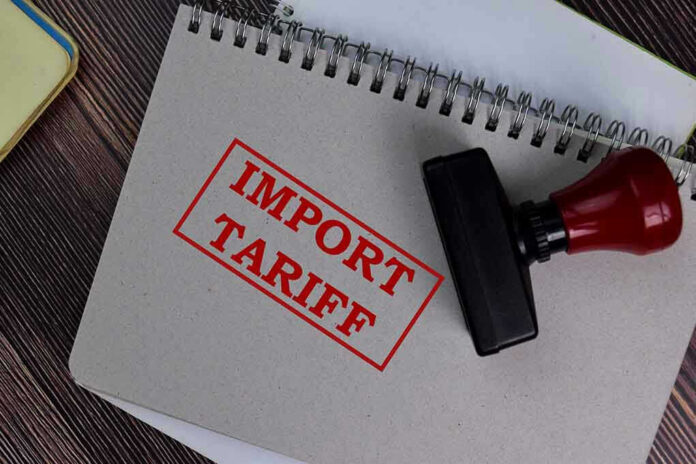
Donald Trump’s latest maneuver isn’t just a shift in economic strategy—it’s a full-scale gamble. After months of bruising headlines and legislative gridlock, sources close to the president report he’s preparing to “wipe the slate clean” on tariffs. This isn’t incremental tinkering. The potential rollback dwarfs anything seen in prior administrations. Trump’s team, battered by a disastrous month that saw approval ratings plummet and key legislative priorities stall, views the tariff reset as a lifeline—one that could reframe the 2025 narrative and send shockwaves through global markets.
Industry insiders from Detroit to Des Moines have started hedging their bets. Automotive, agriculture, and manufacturing giants—long burdened by rising input costs—are lobbying hard, sensing their moment. Meanwhile, foreign governments, especially China and South Korea, are sharpening their negotiating pencils, eager for less restricted access to the lucrative U.S. consumer base. For Trump, the timing is as glaring as the stakes: the proposed rollback lands amid political chaos, with the November extension of Section 301 tariff exclusions serving as a temporary balm for restless corporations and anxious trade partners.
Origins of Conflict: Tariffs as Weapon and Weakness
Trump’s first term was defined by a protectionist barrage: tariffs wielded as both sword and shield against China and other economic rivals. Section 301 and Section 232 measures targeted everything from electronics to steel, igniting a trade war that battered global supply chains and triggered tit-for-tat retaliation. The intended beneficiaries—American workers and manufacturers—have seen mixed results. While some factories roared back to life, others buckled under the weight of rising costs and foreign countermeasures. By late 2025, the narrative had flipped: inflation, supply chain bottlenecks, and international resentment left policymakers questioning whether the tariffs had become a self-inflicted wound.
As the economic picture soured, the Biden administration cautiously tweaked but largely maintained Trump-era tariffs, wary of both domestic backlash and diplomatic fallout. Yet with the U.S. economy now facing fresh headwinds and a contentious election cycle looming, the calculus has shifted dramatically. Trump’s apparent willingness to erase his own signature policy signals a desperate pivot—one that could either revive his political fortunes or deepen the perception of chaos.
Winners, Losers, and the High-Risk Trade-Off
Trump’s tariff reset would deliver immediate relief to importers and consumers. Lower input costs could translate to cheaper goods on American shelves, offering a sugar rush for inflation-fatigued households. Major industries, especially auto and electronics, could see profit margins rebound as supply chains unclench. Yet the long-term trade-offs are sobering. Removing tariffs without reciprocal concessions threatens to erode U.S. leverage in future trade disputes. Industry groups may cheer now, but trade scholars warn of strategic risks: diminished bargaining power, the specter of renewed trade deficits, and a potential return to pre-tariff vulnerabilities.
On the global stage, China and South Korea are watching closely. Both governments have signaled readiness to strike new deals, but U.S. negotiators may find themselves bargaining from a weaker position. Congressional trade committees and industry lobbyists remain divided, with some urging caution and others pressing for decisive action. The only certainty is uncertainty: as Trump’s team weighs the risks and rewards, stakeholders from Wall Street to Main Street are bracing for impact.
Expert Analysis: Calculated Risk or Strategic Retreat?
Leading economists and policy experts offer contrasting views. Many argue that broad tariff removal could inject much-needed stimulus, spurring job growth and consumer activity. Yet, respected think tanks like the Atlantic Council and Congressional Research Service caution against whiplash policy reversals, noting the potential for market instability and lost negotiating ground. Industry groups, desperate for cost relief, generally support the move but acknowledge the longer-term dangers of unilateral disarmament in trade wars. As the debate rages, one reality looms large: Trump’s unprecedented tariff reset could redefine America’s economic landscape, for better or worse.
For now, the world watches. Trump’s legacy—once anchored in economic nationalism—may soon become the story of a leader forced to choose between political survival and policy conviction. Whether this gamble pays off or backfires spectacularly, the outcome will shape U.S. trade, politics, and global influence for years to come.
Sources:
Congressional Research Service