Marcus Coleman’s four words—“I reject your sympathy”—turned a Hill hearing into a reckoning.
Story Snapshot
- A California crash in 2024 left Dalilah Coleman permanently disabled; her father blames state policies.
- Officials identified the truck driver as Partap Singh, an undocumented immigrant from India.
- Coleman told lawmakers sanctuary and licensing choices failed his family.
- House members introduced the Dalilah Law to bar commercial licenses for undocumented immigrants.
A father’s accusation, a policy on trial
Marcus Coleman faced lawmakers and said their policies failed his daughter. He described a 2024 crash that changed everything for his family. He rejected condolences and linked the harm to California’s approach on immigration and enforcement. Coverage of the House Judiciary hearing quoted him directly and framed his claim in stark terms. The point cut through the noise: policy is not some far-off idea. Policy decides who gets on the road in an eighty-thousand-pound truck, and who pays when it goes wrong.
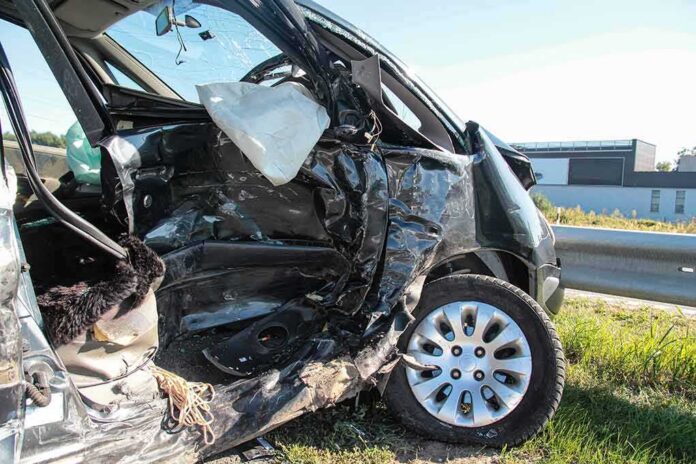
Authorities and reports named the driver as Partap Singh, an undocumented immigrant from India. Singh allegedly failed to stop in a construction zone. The impact set off a multi-vehicle chain reaction and hit the Coleman family’s car. The Department of Homeland Security was cited as the source for the identification and the core facts around the crash. Coleman has said his daughter, Dalilah, now faces life-long challenges, including trouble walking and speaking.
What happened on the ground
Accounts describe a construction area in California where traffic slowed. A commercial 18-wheeler approached and did not stop in time. The force triggered a pileup, and the Coleman vehicle took the hit. Local and national reports followed the case as immigration authorities later detained the driver. Coverage in California outlets and national platforms aligned on the event’s key details and on the driver’s status. The caution is simple and urgent: heavy trucks demand skill, diligence, and rules that get enforced.
Lawmakers asked what, beyond sympathy, would help. Coleman pointed at the system. He argued that state leaders sent a message: rules will bend, and accountability will wait. That message, he said, put families like his at risk. His testimony echoed a common-sense view that safety rules must be clear, enforced, and blind to politics. On core safety, conservatives and most parents tend to agree: if the state puts you behind the wheel of a semi, you must be here lawfully, trained, and fully vetted.
The policy clash: roads, licenses, and sanctuary
After the crash, members of Congress introduced the Dalilah Law. The bill would block commercial driving privileges for undocumented immigrants nationwide. Supporters say this is a narrow fix with a clear aim: no commercial truck cab without legal status and documented training. Backers argue that federal and state rules drifted apart, and that drift created a hole you could drive a rig through. The focus is not rhetoric. It is a checklist: status, vetting, and skill must come first.
Broader research on immigration, sanctuary policy, and traffic safety is mixed. Several studies find that giving driver’s licenses to undocumented immigrants did not raise overall accidents and reduced hit-and-runs, which helps victims and police work cases. Others report increases in fatal crashes after license expansions in some states. Reasonable people can debate the broad trend. Coleman’s point is narrower and more concrete: a single gate failed, and a child paid the price.
The conservative case for bright lines
Conservative policy favors clear rules that do not reward unlawful presence and do not gamble with public safety. That means aligning state licensing with federal immigration law, not cutting around it. It means enforcing work and training standards in sectors where an error kills. Coleman’s charge against California leaders lands because it sounds like common sense: if the state cannot prove a commercial driver is lawfully present and properly vetted, the state should not hand over the keys.
The father of a 7-year-old girl who was left permanently disabled by a crash involving an illegal immigrant truck driver told House Democrats on Tuesday "I reject your guys’ sympathy."
"There’s no way you guys are sorry. Not one of you guys have ever called me. Not one of you…— Make Europe Great Again – M.E.G.A (@ScaryEurope) September 2, 2026
The fix list is not long. First, tie commercial licensing to verified legal status and full background checks. Second, share data across state and federal systems, so red flags travel as fast as freight. Third, enforce language, training, and hours-of-service rules without exceptions. Congress can move on the Dalilah Law; states can tighten their own rules today. Families do not want a speech after a crash. They want it not to happen in the first place.
Sources:
nypost.com, foxnews.com, newsnationnow.com, youtube.com, kmph.com, bakersfieldnow.com
© featuredheadlines.com 2026. All rights reserved.