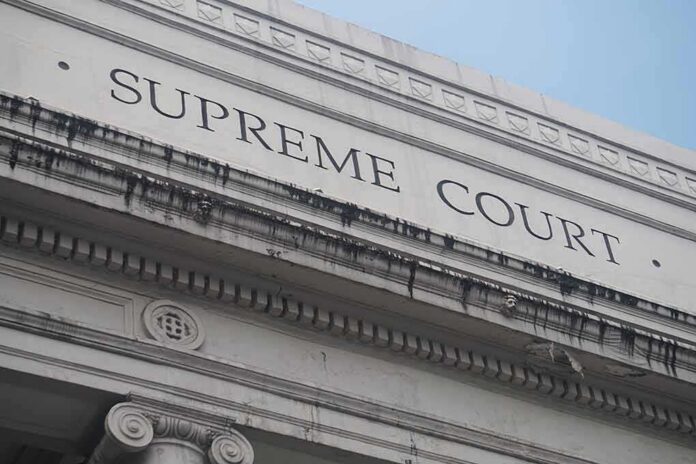
The Supreme Court’s emergency order cracked the door for new mail-ballot checks, then slammed it on a hard deadline.
At a Glance
- The Court let parts of the mail-ballot rule proceed, briefly, before later blocks returned in some areas.
- The rule required state voter lists, unique ballot barcodes, and allowed Postal Service rejection of noncompliant mailings.
- Lower courts questioned both timing and agency power to police ballot handling.
- Dueling claims pit fraud detection goals against risks of ballot disruption near an election.
What The Court Did And Why It Matters Now
The Supreme Court issued an emergency order in late August that allowed the administration, for now, to move ahead with mail-ballot limits in parts of the country. That green light was narrow and temporary, but it signaled that at least some justices saw the case as serious enough to proceed while arguments continued. Days later, other courts reimposed constraints, leaving a split-screen landscape as ballots started moving. Voters and officials faced shifting rules with the calendar already ticking toward Election Day.
The order did not settle the law. It shifted momentum. The administration argued that the United States Postal Service could set conditions to keep the mail stream secure, including for ballot envelopes. Critics said the Postal Service cannot refuse or delay lawful ballots. Appeals judges warned of chaos if standards changed midstream. That clash created a simple, high-stakes question for every county clerk: follow new federal screens on barcodes and lists now, or risk federal pushback later if courts flipped again.
What The Rule Actually Required
The Postal Service rule demanded three concrete steps. First, states had to submit lists of mail-ballot recipients to a federal portal. Second, states had to place unique, serialized barcodes on outbound and return ballot envelopes. Third, the Postal Service could reject ballot mailings that did not match the lists or lacked compliant barcodes. Supporters said this would curb duplicate ballots and flag ineligible mailings. Opponents warned that errors in lists or codes could block valid voters with no fraud suspicion at all.
The rule linked to a wider plan to compare voter lists with citizenship records kept by the Department of Homeland Security. That link aimed to address the risk of noncitizen voting by keeping ballot mailings tied to verified citizen data. Courts pressed for evidence that the benefit would outweigh the cost so close to an election. Judges noted the record lacked proof of large-scale mail-ballot fraud that these steps would catch, especially under tight timelines.
The Fight Over Power And Timing
Litigation turned on two levers: who has authority, and when changes can take effect. One federal judge wrote that Congress never gave the Postal Service power to dictate election procedures or withhold ballots that meet state law. The government replied that the Postal Service has a duty to protect the mail and can set standards to stop misuse. The Supreme Court’s brief opening suggested the argument was not frivolous. But courts grew wary of rolling out a “fundamental overhaul” with voting already in motion.
Timing cuts both ways. Security backers argue that waiting invites harm if gaps exist. Access backers argue that late changes risk more harm than they prevent. Here, the clock favored stability. Election offices told courts they could not reprint envelopes or stand up new data feeds in time. Any misstep could strand ballots in mail tubs and strand voters at home. Judges leaned against last-minute pivots unless the law and the facts cleared a high bar.
Security Goals Versus Real-World Friction
The policy case for barcodes and lists is simple: track every envelope and confirm every recipient. That mirrors tools used in shipping and in some states’ election audits. The legal case is tougher because federal power over elections is shared and specific. The political case is touchier still because many Americans, across parties, see mail voting as essential. Research often finds tiny fraud rates relative to total mail ballots, which puts the burden on new rules to show clear, measurable gains under real deadlines.
AP confirms: the Supreme Court rejected Trump's mail ballot restrictions Monday, with voting already underway in Alabama, North Carolina and Wisconsin.
The split was roughly 7-2 — Thomas and Alito dissented publicly, and the majority gave no reasoning, as is typical on the… https://t.co/K8CMumKrRw— WORLD COMPASS (@world_compass_) September 15, 2026
Common sense says security and access can coexist when systems are tested, phased, and transparent. That means pilots well before an election, published failure rates, and clear appeal paths for voters flagged by errors. Courts asked for that kind of record here and did not see it. If the administration wants barcode-and-list controls, it will likely need explicit statutory text, full technical validation, and rollout windows measured in years, not weeks. That roadmap is hard, but it is also how trust is built.
Sources:
npr.org, apnews.com, pbs.org, scotusblog.com, theguardian.com, democracydocket.com
© featuredheadlines.com 2026. All rights reserved.