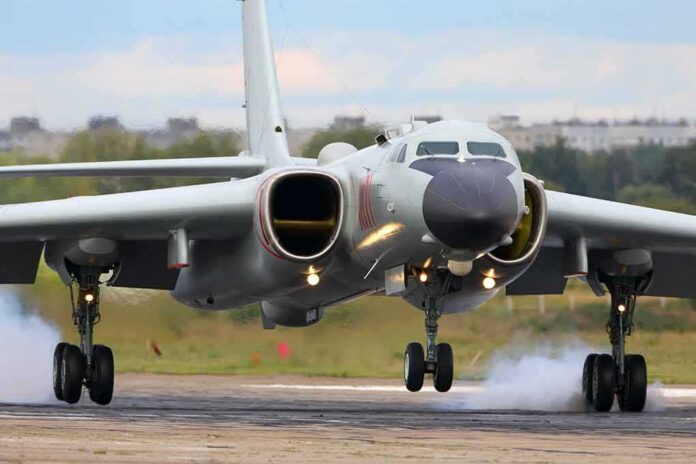
Twelve American B-1 bombers lifted off from Britain in a hurry because a suspected terror plot got too close for comfort.
Story Snapshot
- The Pentagon said all bombers at RAF Fairford returned to U.S. home bases.
- Reports pointed to a full dozen B-1s pulled after a suspected plot near the base.
- British leaders cited strong signs of an Iran link, while Tehran flatly denied it.
- Police arrested five men, evacuated homes, and declared a major incident.
What triggered the rapid bomber exit from Britain
The Pentagon confirmed that every American bomber deployed to Royal Air Force Fairford had been sent back to the United States. The statement was brief and direct. It said all bombers at the base returned to their home stations. Reporters on scene and across major outlets tallied the force at twelve B-1 Lancers, which matched earlier public counts of the rotation. This was a snap decision with clear intent: remove high-value targets from a threatened location before trouble arrives.
British police activity near the base accelerated the timeline. Officers moved in after reports of three suspicious vehicles in the area. They arrested five men on suspicion of preparing a terrorist act and explosives offenses. Authorities declared a major incident and told dozens of families to leave their homes. The scene was tense, and the sequence matched how forces respond when they see credible danger to a key site.
How leaders framed the Iran question
British Prime Minister Andy Burnham said there were strong indications Iran played a part. That is careful language but pointed. It reflects an early judgment that may rest on classified signals or human sources. Iran’s embassy answered with a total denial. Officials called the claims unfounded and part of propaganda. The record now shows a firm claim of likely involvement from London and a categorical rejection from Tehran, with evidence still held close.
Reporters heard similar notes from security services. Some accounts said an Iran-linked motive was the most likely but that other options remained under review. Those included possible Russian sabotage or an Islamist plot. That is exactly how early-stage attributions work in counterterror cases. Investigators test branches before they prune them. The public hears the headline, not the tree of judgments behind it.
Why RAF Fairford mattered enough to move a dozen bombers
Royal Air Force Fairford hosts American bomber missions and is run day-to-day for United States operations. The base has supported long-range flights and rapid global reach for years. In the current climate, it also sits in the narrative crosshairs because of ongoing tensions with Iran. That makes it a high-payoff target for any state or proxy that wants to rattle the West and score a media win against American airpower.
The evacuation of all 12 B-1 Lancer bombers from RAF Fairford was driven by fears of a plot against the base, according to NYT.
U.S. officials believe a branch of Iran's Islamic Revolutionary Guard Corps recruited UK nationals to attack the bombers and kill personnel.
The plan… pic.twitter.com/D5392XHaTG
— Comandante🎖️ (@commandante_) October 4, 2026
Commanders do not gamble with bombers on the ground. A single drone, a small charge, or a well-timed fire can sideline an aircraft for months. The safe play is to change the problem for the attacker. By flying the bombers home, the United States removed the prize while the United Kingdom worked the case. That choice fits common sense, conservative defense values, and a simple duty: protect forces first, then talk details later.
The open questions that still matter
Police released the arrested men on bail as the investigation kept going. That does not clear them, but it also does not tie them to Tehran in public yet. Officials have not disclosed the exact method of the suspected attack. Reports mentioned suspicious vans and later said police found fuel but not confirmed explosives in the first days. That leaves the how and the who still partly in the dark for the public record.
The attribution picture may sharpen if courts, lawmakers, or agencies release more material. That could mean search warrants, charging documents, forensic lab reports, or device extractions. Until then, the strongest on-the-record facts are these: the Pentagon pulled every bomber; British authorities treated the case as terrorism; the Prime Minister pointed to Iran with measured words; Iran denied it all. The rest is the hard grind of counterterror work, which often trails the headlines by weeks.
What to watch next
Watch for a public update from counterterror police on evidence seized from the vehicles or related sites. Look for Parliament questions that press ministers on the Iran link and ask for declassification. Track any United States request for United Kingdom cooperation on sanctions or arrests tied to foreign proxies. And watch Royal Air Force Fairford flight activity; a fresh rotation will signal restored confidence, hardened defenses, or both.
Sources:
aljazeera.com, abcnews4.com, bbc.com, france24.com
© featuredheadlines.com 2026. All rights reserved.