

Federal agents seized Rep. Ilhan Omar’s phone and searched her D.C. home under a judge-approved warrant, and the clock is now ticking on what that means next.
Story Snapshot
- Justice Department confirmed a judge-approved warrant and ongoing criminal probe.
- NBC News says agents seized Omar’s phone and sent about a dozen subpoenas.
- Reports say the inquiry tracks old immigration paperwork tied to her family.
- No charges filed; Omar calls the raid political intimidation.
What Agents Did And What It Signals
Federal agents executed a judicially authorized search at Rep. Ilhan Omar’s Washington residence. The Department of Justice said Homeland Security Investigations carried out a judge-approved warrant as part of an ongoing criminal investigation. That statement anchors the key facts: a warrant exists, a judge approved it, and agents acted under that order. A search at a sitting lawmaker’s home is rare. It signals that prosecutors convinced a judge they would likely find evidence of a specific crime at that location.
NBC News reported that agents seized Omar’s phone and that investigators issued roughly a dozen subpoenas. Those steps suggest a larger evidence map and a plan to test statements across multiple witnesses or records. No public filing lists the seized items beyond the phone, and the government has not released the warrant affidavit. That leaves the public without the probable-cause theory or the exact evidence sought, a gap that fuels spin from both sides.
The Reported Focus: Old Papers, Big Stakes
Coverage from several outlets linked the probe to possible false statements in historical immigration paperwork tied to Omar’s family and her entry to the United States as a child. These reports, based on unnamed sources, say investigators are reviewing forms completed decades ago, potentially by her late father. That detail matters because federal law treats willful misstatements on immigration forms as serious. But it also raises hard questions: who signed what, what was known at the time, and whether any misstatement was “material” under the law.
Materiality is the hinge. United States Citizenship and Immigration Services policy says a lie matters only if it could affect eligibility for an immigration benefit. Courts look for a misstatement that had the tendency to influence a decision. Without proof of that, a bad fact may be embarrassing but not legally decisive. That is why the missing affidavit and any inventory from the search loom large. Those documents would state the suspected offense and the facts agents offered to the court.
Charges Absent, Politics Present
No charges have been filed. News accounts emphasize that point and note the Department of Justice did not identify a target or describe the suspected offense. Omar has denied wrongdoing and called the raid political intimidation. She also highlighted her claim of derivative citizenship through her father, a line she has repeated in past statements. Those are her positions; the investigation will test them against records and witness accounts.
The timing weeks before an election magnifies the fallout. Legal analysts flagged long-standing Department of Justice norms that discourage overt steps that could sway a race so close to voting day. Those norms are practice, not statute, and the manual does not impose a hard 60-day bar. Still, officials have often followed the spirit of it to protect public trust. When prosecutors act anyway, they should expect scrutiny and be ready to show why delay risked losing evidence or allowing obstruction.
What A Serious Probe Must Prove
To sustain an immigration fraud or false statement case, prosecutors must show a knowing lie about a material fact. They must also show who made the statement, not just that a form contains an error. If the theory involves derivative citizenship through a parent, investigators must nail down whether the parent naturalized, the timing, and whether any claimed age or identity detail would have changed the outcome. That is fact-heavy work, not cable talk. Anonymous leaks do not carry that burden; documents and testimony do.
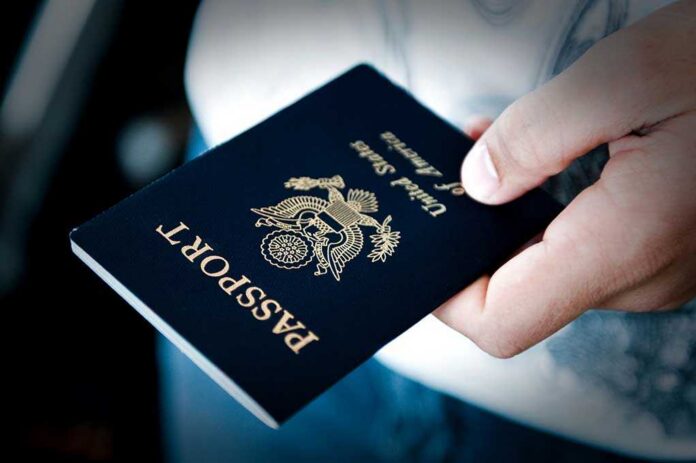
Ilhan Omar's cellphone, passport among items taken in home raid as feds try to build case to deport her.
Rep. Ilhan Omar and her husband were at their Washington home Monday morning when federal agents executed a search warrant, taking the Minnesota Democrat’s cellphone,… https://t.co/VrzK2xHBmY
— Blacklist News (@PilonEric2) October 15, 2026
Common sense and conservative principles point to two guardrails. First, no one is above the law. A judge-approved warrant means the system worked as designed, and agents should follow the evidence wherever it leads. Second, process legitimacy matters. If the Department of Justice breaks with election-season caution, it owes the public clarity when it can lawfully provide it. Sunlight, through court filings and unsealed records, will do more than spin to steady trust. The next documents will tell the real story.
Sources:
mediaite.com, nbcnews.com, nypost.com, commondreams.org, motherjones.com, amp.dw.com, time.com, thehill.com, democracydocket.com, uscis.gov
© featuredheadlines.com 2026. All rights reserved.