

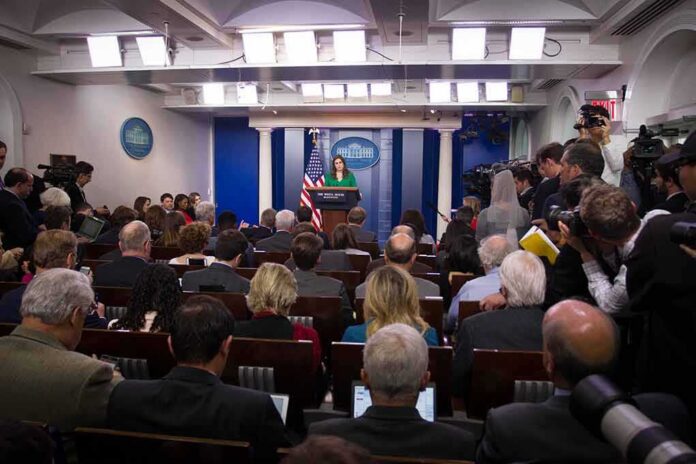
A Trump-appointed judge said the White House likely crossed constitutional lines when it yanked three outlets’ press access.
Story Snapshot
- A federal judge ordered the White House to keep access open for CNN, MS NOW, and Politico.
- The court found likely due-process problems and warned of viewpoint retaliation.
- The administration’s rationale shifted from “negative coverage” to national security.
- The fight now centers on rules: clear standards versus ad hoc punishment.
The Ruling That Stopped The Ban
U.S. District Judge Timothy Kelly granted a preliminary injunction on October 14, 2026. He kept White House access open for reporters from CNN, MS NOW, and Politico while the case proceeds. He found the outlets are likely to show that the ban violated due process. He also said President Trump’s complaints about their coverage support a finding of likely viewpoint retaliation under the First Amendment. This is not a final win, but it is a strong sign of how the law leans.
Judge Kelly’s order followed an earlier temporary restraining order that restored access in late September. Media lawyers argued that the White House cannot operate a press-pass system and then use it to punish coverage it dislikes. They pointed to a 1977 case from the appeals court in Washington, D.C., that requires notice and a chance to respond before revoking press access. The judge’s early orders tracked that rule and pressed the government for clear standards.
What The White House Argued
The Justice Department said White House access is a privilege, not a right. It told the court the president can exclude outlets that fail to meet basic professional standards or endanger national security. It said the three outlets published sensitive or classified information. It argued that cutting their access serves a compelling government interest. These are serious claims. But claims rise or fall on facts, process, and consistent reasons, not broad labels.
The administration cited specific stories. It pointed to CNN reporting on alleged top-secret bunker construction at the East Wing. It flagged MS NOW reporting on an alleged leak probe. It targeted a Politico document on ballroom funding with Secret Service security details. The court did not resolve those security claims. It focused on process and motive for now. That is how preliminary injunctions work: protect rights while the record builds.
The Judge’s Concern: Moving Goalposts And Missing Rules
Reporting says the president first complained about “negative” or untruthful coverage. Later, the official defense leaned on national security. The judge flagged that shift as evidence of possible retaliation rather than a consistent security call. He also noted the White House did not show clear, written standards for revoking credentials. Courts look hard at such gaps. Power needs guardrails others can see and follow, not after-the-fact justifications.
A federal judge has extended an order restoring White House press access for CNN, MS NOW and POLITICO, according to multiple reports. The outlets will retain access while litigation over the media restrictions continues. CNN reports that the judge said the ban likely violates the… pic.twitter.com/OmhcX79JXj
— Cool X Media Group (@teslamillion) October 14, 2026
The legal backbone comes from a case called Sherrill v. Knight. The appeals court said the White House may deny access for valid reasons, but it must give notice, a chance to respond, and a written basis. That balances security needs with fairness and free speech. Judge Kelly’s orders fit that pattern. He did not strip the president of security authority. He told the government to use that authority under clear rules and without targeting viewpoints.
What It Means For Conservatives And The Country
Conservative instincts prize order, clear rules, and equal treatment. This case is not a blank check for media. It is a reminder that if government builds a system, it must post the rules and follow them. If a reporter crosses a real security line, the White House can act. But it must give fair notice, explain the facts, and avoid punishing speech. That is common sense, and it keeps power honest without handcuffing security.
The road ahead will test the evidence. The government can bring forward security documents under proper court procedures. The outlets must show the ban was punishment for coverage and lacked due process. Appeals are likely. For now, the injunction keeps the press room open to all three while the facts get sorted. That is the right place to be when rights and safety both claim the stage.
What To Watch Next
Watch for the court to demand concrete standards for any future revocations. Look for a paper trail showing when the national security rationale began. Follow whether the Justice Department pushes to narrow that 1977 precedent or tries to work within it. Most of all, see if the White House proposes transparent, even-handed rules. That would protect secrets, honor due process, and lower the political heat before the next storm hits.
Sources:
thegatewaypundit.com, politico.com, cnbc.com, cnn.com, fortmorgantimes.com
© featuredheadlines.com 2026. All rights reserved.