
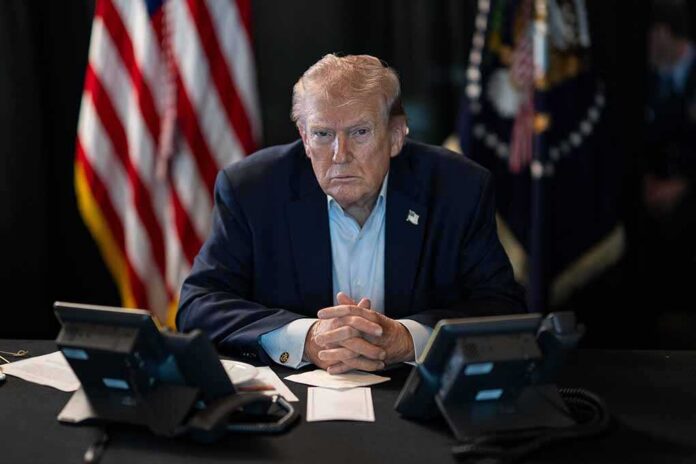
President Trump used his 60 Minutes interview to blame Republican losses on war, gas prices, turnout, and even his own policies—and then cracked the door to an immigration deal.
Story Highlights
- Trump listed clear reasons for GOP losses, led by his absence from the ballot and voter anger over war and gas prices.
- He said deportations were “too tough” and hurt him politically, taking personal responsibility.
- He described how removing non-criminal workers may have backfired and hinted at legal status in a future deal.
- He rejected forgiving political enemies, a line that drew attention beyond policy talk.
What Trump Said Cost Republicans
Trump told 60 Minutes that Republicans lost for several reasons. He pointed to his name not being on the ballot, voter anger at the war in Iran, higher gasoline prices, and weak candidates. He also said turnout hurt the party. He framed his absence as the main factor. He argued that many voters “didn’t like the war,” and that the price at the pump spoke louder than any ad or rally.
Trump did not hide from the tough parts. He said his immigration enforcement “was too tough” and added, “Ultimately, that hurt me.” That is a rare on-camera admission for any president. He still defended border control as a duty, but he tied a slice of the midterm damage to how enforcement hit day-to-day life. That mix—owning the political pain while standing by the goal—matched the sober tone of the interview’s opening.
How Immigration Enforcement Could Have Backfired
Trump named a mechanism that could hurt Republicans in swing areas. He said deportations sometimes removed people who had jobs and no criminal record beyond entering the country illegally. Neighbors, bosses, and church groups felt those removals up close. Those ripple effects can change local votes when families and employers get pulled into the story. That is the kind of ground-level cost that can matter more than a national talking point.
He also signaled space for a deal. He said he wanted to work with Democrats on immigration and answered yes when asked if a deal could include legal status for some undocumented workers. He did not sketch a bill or timeline. But the words said on camera matter because they set a marker for both parties. The next move would be to define who qualifies and what enforcement comes alongside that offer.
War, Gas, Candidates, and Turnout—The Blame Mix
The interview fit a familiar pattern after a bad election: leaders spread blame across clear buckets like war, prices, candidate quality, and turnout. Trump said voters disliked the war and felt pain at the pump. He said some candidates were not strong enough and that many of his voters stayed home. He wrapped those points around one theme: he believed results would have been different if he had been on the ballot himself.
‘60 Minutes’ takeaways: Trump calls his deportation policy ‘too tough’
The president was both reflective and defensive during his first TV network interview since the midterm losses.https://t.co/ynsIYyZF1o
— Frank Amari (@FrankAmari2) November 9, 2026
That view lines up with how parties talk after losses, but it is still a claim, not a measured effect. The transcript and coverage do not provide data that proves which factor moved how many votes. They do, however, record Trump’s own assessment in real time, days after networks called both chambers for Democrats. For readers who value direct accountability, the tape captures what he believed and why he believed it then.
The Moment That Stole Oxygen From Policy
One exchange drew quick heat. Asked if he could forgive political enemies to reach paradise, Trump said, “The answer is no,” and later added, “I do hate some of my enemies and I always will.” Those lines made headlines and risked drowning out his policy signals on immigration and turnout. Media outlets framed the interview as a blend of denial, reflection, and contradiction, which can shape how casual viewers process the rest.
Conservatives will hear two takeaways through a common-sense lens. First, security at the border still matters, but blunt tools can cut the wrong people and cost votes in places Republicans need to win. Smart enforcement focuses on criminals and traffickers, not stable workers tied to local communities. Second, if a limited legal status deal can lock in tougher border rules and workplace checks, it may convert a political weakness into a durable win for order and growth. The next test is whether Congress matches words with text.
Sources:
us.cnn.com, cbsnews.com, nbcnewyork.com, newsdive.net
© featuredheadlines.com 2026. All rights reserved.