

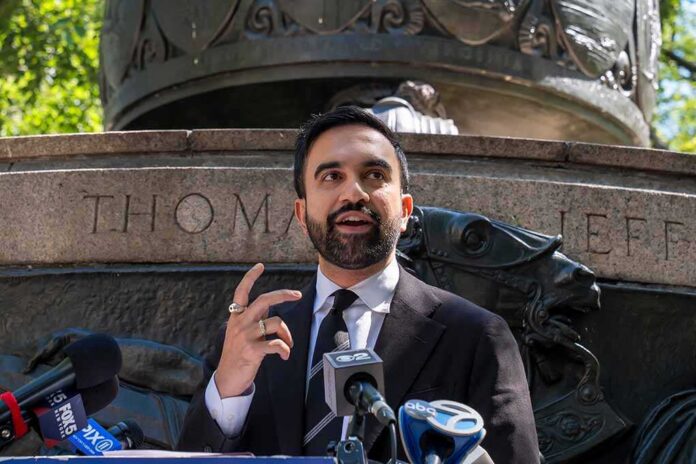
Five City Hall raises worth $95,000 landed on the same day the mayor warned New Yorkers about a $12 billion deficit — and that timing is the spark that will not die down.
Story Snapshot
- City records reviewed by reporters show five raises totaling $95,000 on January 28.
- At least 46 City Hall staffers reportedly received about $850,000 in raises since Mamdani took office.
- Officials later revised the deficit outlook closer to $5.4 billion, complicating the narrative.
- The mayor says his team balanced the budget with savings and without raising property taxes.
What Happened And Why The Date Matters
The New York Post reported that five City Hall employees received $95,000 in combined raises on January 28, the day Mayor Zohran Mamdani said the city faced a “massive” deficit of at least $12 billion. The paper also said at least 46 staffers saw raises totaling roughly $850,000 across the administration’s tenure. That same-day link fueled a clear charge from critics: do not preach austerity while sweetening pay at the top. The facts about timing are not in dispute; the interpretation is.
Fox News highlighted the Post’s findings and the symbolism of awarding raises while warning of a budget crunch. A local roundup said first-year hires got an outsized share of the boosts, and more early raises than under the last two mayors, which turns a one-day flashpoint into a broader pattern to question. The reports do not show personnel files, promotion memos, or timestamps of approvals. They show dates and totals. That is enough to pose a fairness test, but not enough to prove waste.
The Administration’s Stated Case On Fiscal Stewardship
Mayor Mamdani has said the administration inherited a deficit north of $12 billion and still balanced the budget without raising property taxes or slashing services. City Hall cites updated revenues, use of reserves, and savings, including a new requirement that every agency name a Chief Savings Officer, with a two-year savings target of $1.77 billion. That stance frames raises as compatible with reform if they help retain talent and improve results. The message is simple: tighten up across government, invest where it pays off.
This defense matches a common public finance view that targeted pay can lift performance when done with clear rules. Global research notes that pay flexibility can help when it rewards skilled work and curbs churn, but warns that ad hoc adjustments can erode trust if not transparent. New Yorkers do not need a lecture on theory; they need a paper trail. When the city explains who was promoted, why, and how the changes fit a budget plan, the public can judge the value claim on the merits rather than the optics.
What The Numbers Do And Do Not Prove
The $850,000 total is big to a household, small in a $100-billion-plus city budget. That is the wrong comparison. The right one asks whether the mayor’s office followed clear, pre-set rules that treat people equally and protect taxpayers. The record so far shows amounts and dates but not the criteria. The reports also note that the initial $12 billion gap later stood closer to $5.4 billion, which weakens arguments that hinge on one snapshot of red ink. The timing stings, but timing alone does not show harm to the bottom line.
Yes, the claim is accurate based on the New York Post’s review of municipal payroll records.
The November 27, 2026, NY Post exclusive (also covered by Fox News and others) reports that Mayor Zohran Mamdani approved roughly $850,000 in salary increases for at least 46 City Hall…— Robin Rexroat (@RexroatRobin) November 28, 2026
Conservatives should keep the focus on first principles: spend within your means, set rules before you spend, and show your math. If these raises were promotions or market fixes, say so and publish the standards. If they were merit increases, show the performance goals. If they were planned, show where they sit in the adopted budget. Sunlight is cheap and buys trust. Without it, even sensible pay changes look like insiders taking care of insiders during a crunch.
What Would Settle The Debate
City Hall can close the loop fast. Release the personnel action forms that show old and new pay, job titles, and effective dates. Provide the approval dates, not just pay-period dates, so the public can see when decisions were actually made. Tie each change to a budget line and a savings or service goal. Publish a simple rulebook that says when and how first-year staff can get a raise. Then compare these rules and actions to the Adams and de Blasio years to test what is normal and what is not.
New York keeps robust public payroll portals that can help frame this review, but leadership must add context and criteria so the numbers have meaning. Voters will forgive sharp choices in hard times when leaders share the plan, shoulder the tradeoffs, and lead by example. They will not forgive mixed signals. Announcing a huge deficit while greenlighting visible raises flunks the gut-check test. Prove the value, and the politics takes care of itself. Hide the ball, and the story writes itself.
Sources:
foxnews.com, nypost.com, nycnewscenter.com, newshub.in.net, us.headtopics.com, telegra.ph, ground.news, nyc.gov, didattica.unibocconi.it
© featuredheadlines.com 2026. All rights reserved.