
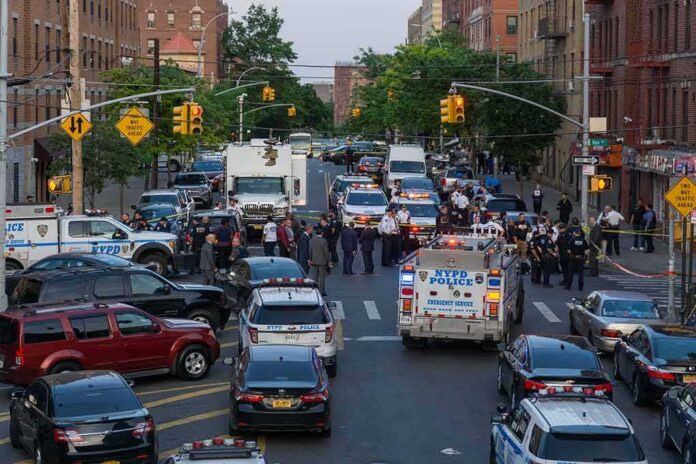
New York just broke apart the police unit built for terror threats and protests on the same day, and the clock is now ticking on whether the handoff keeps the city ready.
Story Snapshot
- The NYPD dissolved the Strategic Response Group and reassigned its officers.
- Counterterrorism duties move to the Intelligence and Counterterrorism Bureau.
- About 500–600 officers shift roles during the transition.
- The mayor says protesters and terrorists should not face the same response.
What Changed Inside the NYPD and Why It Matters Now
Mayor Zohran Mamdani ended the New York Police Department’s Strategic Response Group, which handled both protests and counterterrorism since 2015. City Hall says this is a clean split: protests go to a new, civilian-led model; counterterrorism consolidates inside the Intelligence and Counterterrorism Bureau. That sounds tidy on paper. The real test is operational. Moving missions and people can slow response, cloud command, and dull readiness if the transition plan stumbles.
Supporters of the change cite lawsuits, pepper spray incidents, and charges of heavy-handed protest tactics. They argue specialized protest units blurred lines between speech and crime. They also say headcount remains intact and no one gets laid off. These are policy goals most people can respect. But goals do not stop threats. The city still needs trained teams that know the sites, drills, signals, and routes, and can deploy heavy weapons at critical points when seconds count.
The Counterterrorism Core: What Was Kept, What Was Moved
Officials say the counterterrorism mission, including heavy-weapons deployments at key infrastructure, moves to the Intelligence and Counterterrorism Bureau. Police Commissioner Jessica Tisch said roughly 500 highly trained officers would be reassigned, many into that bureau. If those numbers hold, capacity may survive the change. The question is quality in motion: continuity of training, equipment custody, alert rosters, and joint drills during the move.
New Yorkers should demand a simple scorecard. List the teams on-call by borough, the gear assigned, and the average mobilization time before and after the switch. Publish the schedule for site-protection drills at bridges, tunnels, transit, and soft targets. If the administration wants trust, show data that the new structure meets or beats the old on time-to-scene and coverage depth. If it does, critics lose steam. If it does not, fix it fast.
Protest Policing, Civil Liberties, and the Tradeoff We Cannot Ignore
The mayor promised this split during his campaign and delivered after the election. He argues protests need dialogue first, not riot gear. The plan adds a civilian Community Dialogue and De-escalation Division and a First Amendment Support Team. It also restricts long guns and tear gas at protests. These moves answer years of criticism. They also raise a practical concern on busy days when protests, scares, and threats overlap and draw from the same pool of officers and supervisors.
American conservative values put safety, order, and constitutional rights in the same frame. That means clear lines on protest tactics and a sharp edge on terror response. The mayor’s team says both lines will sharpen under the new design. That claim deserves a fair chance and a firm audit. Reassignment is not elimination, and no one should pretend it is. But reassignment can fail if leaders do not guard against gaps that only show up when alarms ring.
What To Watch Next: Signals of Real Readiness
Watch for three tells. First, joint exercises with transit, fire, and federal partners, with after-action reports that name fixes and deadlines. Second, a public readiness brief that details alert procedures, heavy-weapon custody, and surge staffing. Third, a 90-day metrics release on mobilization times and coverage at critical sites. If the numbers trend steady or better, the city threaded the needle. If they slide, the fix is not another speech; it is immediate course correction.
Sources:
redstate.com, nbcnews.com, cnn.com, reuters.com, edition.cnn.com, newsday.com
© featuredheadlines.com 2026. All rights reserved.