
The controller told the UPS crew to yield, yet the two jets still touched metal in the dark at Miami.
Story Snapshot
- Federal regulators said controllers told the UPS crew to give way to the Copa jet.
- Copa’s Boeing 737 wingtip struck the nose of a UPS Boeing 767 while taxiing.
- Radio clips captured “Somebody hit us,” and “Yeah, we went too far” from the UPS crew.
- Airport officials placed the contact at about 9:15 p.m. at a taxiway intersection.
A low-speed collision that should not happen
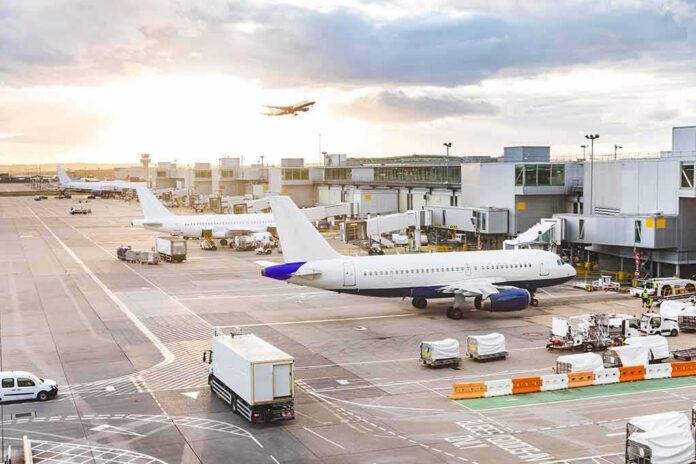
Two large jets made contact on the ground at Miami International Airport on a busy night. Federal officials said controllers had instructed the UPS cargo crew to give way to a Copa Airlines passenger jet before the touch occurred. The geometry tells a simple story: the Copa 737’s wingtip hit the UPS 767’s nose as both aircraft taxied toward a crossing point. The National Transportation Safety Board will determine causes, but the core sequence is not in doubt based on reports so far.
Radio traffic adds human texture to the timeline. The Copa pilot called in, “Somebody hit us.” Moments later, the UPS pilot said, “Yeah, we went too far, and then he clipped us with the wing”. Those lines are not courtroom findings. They are snapshots from a tense minute on the movement area. They match the physical description of the contact and the instruction to yield. That alignment matters because it suggests position and motion, not just blame-shifting.
Where and when the contact occurred
Airport officials said the contact happened around 9:15 p.m. at the intersection of two taxiways, not on a runway. That detail guides what investigators will pull: surface radar, airport camera video, movement logs, and controller tapes. Night conditions can tax depth perception and signage reading. High traffic can compress margins. None of that excuses a conflict, but it helps show how two crews and one controller’s plan can line up for trouble even at low speed.
The two injury reports in early coverage show how first facts can shift. One outlet reported two injuries, while an airport statement initially said no injuries. Both agree the impact was low speed and limited to the aircraft structures noted earlier. Airlines and cargo carriers design taxi procedures to prevent this exact event. The fact that the contact still occurred is the red flag for regulators and for any traveler wondering how safe the ground really is at rush hour.
What regulators watch on the airport surface
Federal runway and taxiway safety work treats these events as system problems, not only pilot mistakes. Government data show that pilot deviations make up the largest share of runway incursions, while vehicles, pedestrians, and controller actions make up the rest. Taxiway conflicts are a known slice of the pie, with hundreds recorded across years in federal datasets. The message is steady: human workload, confusing geometry, and rushed readbacks can chain together and put two airplanes on the same patch of pavement.
Recent safety alerts from the Federal Aviation Administration outline the common links. Crews lose situational awareness during checklists and frequency changes. Controllers juggle heavy traffic. Lighting and signs can mislead a tired pilot by a few feet at the wrong time. Miami’s event fits that classic pattern. A yield instruction, a taxi too far, and a wingtip-to-nose touch that damages hardware and confidence. Conservative common sense says this is preventable with better discipline, clearer markings, and zero tolerance for sloppy readbacks.
What comes next and what accountability looks like
Investigators will map each jet’s track and the exact stop points. They will line up the controller’s words, the pilots’ readbacks, and the airport layout. They will test whether the UPS crew received and could follow the order to yield and whether the Copa crew kept a safe margin as they approached the crossing. The Federal Aviation Administration and the National Transportation Safety Board will then issue findings. That is how aviation fixes problems: specific, evidence-based, and routine.
#Breaking "Two Injured After Copa Airlines Boeing 737 & UPS Boeing 767 Collide on Miami Airport Taxiway"
➡️ Two people suffered minor injuries Saturday night around 9:15 p.m. ET when a Copa Airlines Boeing 737-800 passenger jet & a UPS Boeing 767-300 cargo plane collided at the… pic.twitter.com/RnQsOQdsOO
— BreakinNewz (@BreakinNewz01) November 15, 2026
Travelers should take one comfort. The system reacts fast to surface scares. Carriers retrain. Airports adjust markings. Controllers tweak phraseology. The goal is fewer close calls and zero contacts, even on the toughest nights. The facts so far point to a simple truth that respects both safety and accountability: when a controller says yield, the aircraft that must yield needs to stop short, every time. Miami’s contact is a reminder that rules only work when everyone on the frequency follows them.
Sources:
mediaite.com, abcnews.com, cnn.com, cbsnews.com, en.cibercuba.com, endtimeheadlines.org, aol.co.uk
© featuredheadlines.com 2026. All rights reserved.