

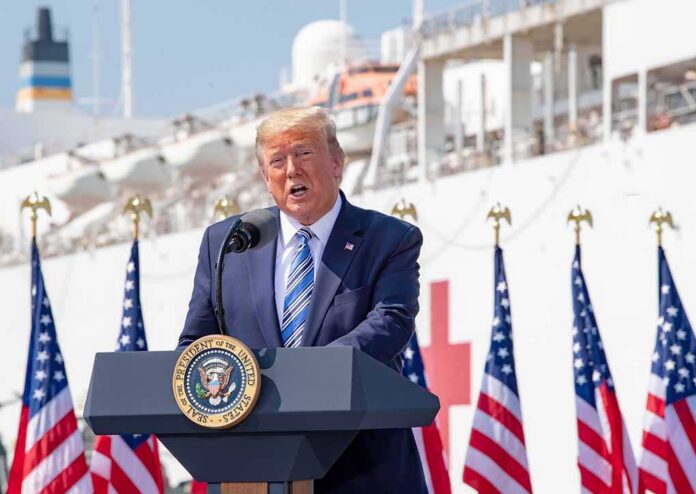
The White House just told incoming House Democrats that investigating President Trump’s administration could land them in criminal trouble.
Quick Take
- White House Counsel Will Scharf sent a three-page letter warning Rep. Robert Garcia that some oversight tactics “may cross the line into blatant criminality.”
- The letter argues congressional investigations must serve a real legislative purpose, not act as a stand-in for criminal prosecution.
- Garcia, set to lead the House Oversight Committee, fired back that Congress’s power comes from Article I, not White House permission.
- The clash sets up a bigger fight over subpoenas and document demands once Democrats take control of the House.
A Warning Letter Lands Before Democrats Take The Gavel
Will Scharf sent his letter to Robert Garcia on November 9, 2026. Garcia is expected to chair the House Oversight Committee once Democrats take the majority. The letter warns that threats aimed at scaring executive branch officials out of public service could cross into criminal territory. It also flags “abusive process” and subpoenas issued only to harass as potential legal violations.
Scharf grounded his warning in a specific legal rule. Congressional investigations, he wrote, must further a “legitimate legislative task.” Congress cannot use its investigative power to act as prosecutor and judge rolled into one, since the Constitution assigns that job to other branches. That standard isn’t new. It traces back decades through Supreme Court rulings on how far lawmakers can push an investigation.
Why The White House Picked This Fight Now
Timing matters here. Democrats haven’t taken the House majority yet, and no subpoena from the new majority has been issued. Scharf’s letter points instead to public statements from Democrats describing plans for aggressive investigations once they hold the gavel. Critics call that a preemptive strike, a legal shot across the bow before any formal oversight action even starts.
Supporters of the warning see it differently. They argue a sitting administration has every right to flag bad-faith investigative tactics before they happen, rather than wait for subpoenas to fly and relationships to sour. Given how often Washington treats “process” as a weapon, a clear marker drawn in advance isn’t unreasonable. It tells Congress exactly where the White House believes the legal line sits.
Garcia’s Pushback Rests On Article I
Garcia didn’t take the letter quietly. He said Congress’s authority to investigate “comes from Article I of the Constitution, not from permission of the White House”. He argues oversight power is baked into the legislative function itself, giving Congress wide latitude to dig into executive branch conduct without needing a green light from the people it’s investigating.
Garcia also laid out what he says is the legislative purpose behind the planned probes. He wants new laws stopping presidents’ family members from profiting off the office, and he’s pointed to questions about donors and policy exchanges tied to former Trump chief of staff Susie Wiles. “We investigate so that we can actually write good laws to stop corruption,” Garcia said, framing the inquiries as lawmaking, not punishment.
Garcia went further, calling the White House’s demand that Congress justify its legislative purpose “a clear abuse of power and an affront to our constitutional system of government”. That’s a strong claim, but it cuts both ways. If Democrats truly intend new legislation, naming the bills and the specific facts needed to write them would go a long way toward proving this isn’t just a political fishing expedition dressed up as oversight.
Rep. Robert Garcia (D-CA), incoming House Oversight Committee chair after the 2026 midterm Democratic gains, publicly enumerated targets including Kristi Noem, Kimberly Guilfoyle, Donald Trump Jr., Eric Trump, and Stephen Miller (now White House Chief of Staff) on CNN, stating he… https://t.co/IztYNZaaoZ
— Durwin Lloyd, ND (ret) (@LloydDurwin) November 12, 2026
The Legal Standard Both Sides Claim To Follow
Here’s the part both camps keep citing without fully spelling out: the Supreme Court has already ruled on how far Congress can push a president’s records. In the 2020 Mazars case, the Court said congressional subpoenas aimed at a president’s personal information need careful scrutiny that accounts for separation of powers concerns. The Court also affirmed Congress’s investigative power runs as wide as its power to legislate.
That means both sides have real constitutional footing, just aimed at different targets. The White House wants Congress to prove a legislative purpose before issuing subpoenas. Garcia wants the White House to butt out of a power the Constitution assigns to the legislature. Neither side has pointed to an actual unlawful subpoena yet, since House Democrats haven’t taken over the committee or issued demands.
Congress has historically relied on three tools to force compliance with its demands: inherent contempt, criminal contempt referrals, and civil lawsuits. Inherent contempt, which once let the Sergeant at Arms detain uncooperative witnesses, fell out of practice nearly a century ago. Criminal contempt and court enforcement remain the main options today, meaning any real fight here will likely play out in courtrooms, not jail cells.
What happens next depends on whether Garcia’s committee issues subpoenas that hold up under that Mazars standard, and whether the White House follows through on referring any of them for investigation. Until actual subpoenas land, this remains a war of letters and press statements. But given the stakes, both sides have every reason to keep sharpening their legal arguments now, before the real fight begins.
Sources:
redstate.com, abcnews.com, nbcnews.com, cbsnews.com, abc27.com, pbs.org, freep.com, heraldonline.com
© featuredheadlines.com 2026. All rights reserved.