

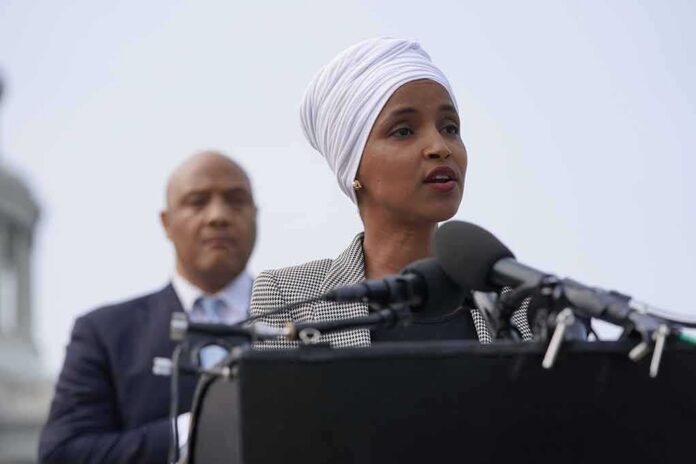
Federal prosecutors indicted Ilhan Omar’s onetime bodyguard, then dropped the case because he was being deported—and that sequence raises bigger questions than it answers.
Story Snapshot
- A grand jury charged Abdullahi Mohamed with allegedly lying under oath tied to an immigration interview.
- Prosecutors later moved to dismiss, citing no federal interest given his expected removal from the country.
- Mohamed’s lawyer says prosecutors tried to turn him into an informant against Omar; DOJ said the charge was unrelated.
- The case ended before trial, so no court weighed the evidence or his guilt.
What Happened, In Order
Reporters say the story began last October in an immigration interview. Officials asked Abdullahi Mohamed about ties to politicians. He allegedly denied such ties. Records show he had briefly served as a bodyguard for Representative Ilhan Omar during an overseas trip. Prosecutors presented the case to a grand jury. The panel returned an indictment in early April, charging him with making false statements under oath. The charging papers and statute have not been publicly posted.
The timeline then moved fast. Immigration officials started removal steps in August, according to reports. Prosecutors filed a motion in September to dismiss the criminal case. The filing said there was no longer a federal interest in continuing prosecution because Mohamed was expected to be removed from the United States. A trial had been set for late October. The case closed before any witness took the stand or any judge ruled on evidence.
The Government’s Rationale And The Gap It Leaves
The Department of Justice gave a simple reason to end the case: deportation made it not worth pursuing. That logic appears in other cases when a defendant will not be in the country, and trials would be hard or pointless to run. But a dismissal does not prove innocence, and an indictment does not prove guilt. This case ended without a verdict, cross-exam, or public proof. The public still lacks the transcript of the interview and the exact questions and answers.
One reported tension sticks out. The New York Times said prosecutors sought information from Mohamed about Omar. A Justice Department statement, as reported, said the charge was unrelated to any current investigation. Both can be true in a narrow sense. Prosecutors may try to gather leads from any witness. They also may claim a charge stands alone. But the mixed signals invite doubt about aims and methods. That doubt is the cost of silence and sealed records.
The Claims From Each Side
Representative Omar denied wrongdoing and called the effort political persecution by President Trump. Her office also said she never directly employed Mohamed. Mohamed’s lawyer, Bruce Rivers, said prosecutors pushed for months to make his client an informant. He said Mohamed had nothing to give them about Omar’s immigration history. Rivers claimed officials even tied the effort to the White House. Those are assertions from advocates, not sworn findings by a court.
DOJ DROPS CASE AGAINST ILHAN OMAR’S EX-BODYGUARD AFTER GRAND JURY TESTIMONY — HE LEAVES U.S.
Ilhan Omar’s former bodyguard Abdullahi Mohamed was indicted for allegedly lying under oath during his green card interview, then testified before a D.C. grand jury investigating Omar.… pic.twitter.com/3YxMEpfYZy
— D. Scott @eclipsethis2003 (@eclipsethis2003) November 12, 2026
A conservative lens asks two blunt questions. First, did a man lie to federal officers in an official process? If yes, that is a valid case and should be tried, deportation or not. Second, did prosecutors use a narrow false-statement charge as leverage to pry into a political figure? If yes, that is an abuse of trust. The problem is the closed record prevents clear answers. That vacuum fuels the very cynicism the Department of Justice says it wants to avoid.
What This Case Says About False-Statement Charges
False-statement cases in immigration settings are not rare, but they are not common either. Data from the Transactional Records Access Clearinghouse show that fraud and false-statement filings remain a small slice of thousands of monthly immigration prosecutions. The point is simple. The law is there. Prosecutors use it. But using it on someone linked to an elected official will always draw heat. That heat demands extra clarity and a cleaner record than this one provides.
The Conservative Common-Sense Test
Equal rules need equal enforcement. If the government believes someone lied under oath, it should present the proof in open court. If deportation blocks that, the government should explain why alternatives could not work. Prosecutors could secure testimony by video, seek short delays, or coordinate with immigration courts. When the state picks dismissal, it must accept that many will suspect strategy over substance. Trust cannot run on “just take our word for it” in cases tied to politics.
What To Watch Next
Key records could settle most doubts. The interview transcript would show the exact question and answer. The indictment and dismissal filing would show the legal basis and timing. Immigration court notices would confirm the removal schedule. If those appear, the public can judge whether this was a clean, narrow case cut short by logistics—or a pressure play that fizzled. Until then, both sides will fill the silence with their own stories, and confidence will keep leaking.
Sources:
thegatewaypundit.com, commondreams.org, tracreports.org
© featuredheadlines.com 2026. All rights reserved.