
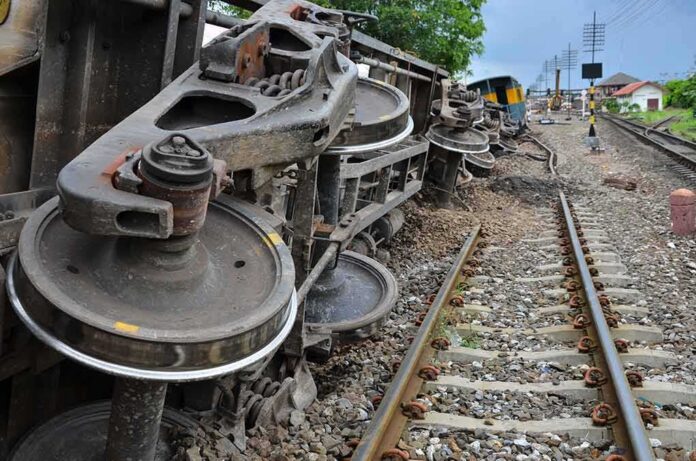
A moving passenger train slammed into a stopped train’s last carriage south of Cairo, killing seven and injuring more than a hundred.
Story Snapshot
- Two passenger trains collided in Al-Ayyat, Giza, south of Cairo.
- Seven people died and 112 were injured, officials said.
- Ambulances rushed the wounded to nearby hospitals; a probe is underway.
- The stopped train’s rear carriage was struck by a Giza–Fayoum service.
What Happened And Where
The Egyptian National Railways Authority reported a rear-end collision in Al-Ayyat, Giza, between Kafr Ammar and Al-Raqqa stations. A Giza-to-Fayoum passenger train hit the back of a Cairo-to-Aswan train that was standing on the track. The Egyptian Public Prosecution Office said the moving train, numbered 134, struck the last carriage of train 2010. The location sits roughly 35 to 52 kilometers south of Cairo. The impact derailed several carriages and trapped riders amid twisted metal.
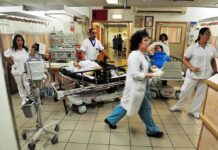
The Health Ministry confirmed seven deaths and 112 injured. Hospitals in the area received the wounded for treatment, with more serious cases transferred as needed. Early estimates varied by a few patients during the hectic first hours, which is common as hospitals reconcile intake lists. Emergency crews cleared wreckage while rail teams began repairs and inspections. Photos from the scene showed crushed seating, bent frames, and debris fields along the ballast.
How The Response Unfolded
Authorities dispatched more than 70 ambulances, according to reports citing officials, and set up triage near the tracks. Doctors stabilized fracture and trauma cases and moved burn and head injuries to higher-level care. The Public Prosecution Office opened a formal investigation to determine precise causes and potential responsibility. President Abdel Fattah al-Sisi directed agencies to care for the injured and to pursue accountability wherever negligence is proven, reflecting a push for order and results after mass-casualty events.
Railway recovery teams began rerailing operations, track checks, and asset inventories. Investigators will examine signal aspects, braking performance, and crew communications. The prosecution’s inquiry typically includes scene mapping, interviews, camera feeds where available, and mechanical tests. Officials did not immediately name the personnel involved. One of the dead was reported to be a driver, which adds urgency to retrieving event data and confirming signaling status at the time of impact.
Why This Area’s Name Rings A Bell
Al-Ayyat has seen tragedy before. A 2002 train fire in the district killed more than 350 people, the worst railway disaster in Egypt’s history. Later crashes in the broader region included a 2009 rear-end collision and a 2016 derailment with multiple fatalities. These events shaped how many Egyptians read this latest crash, not as a fluke but as part of a stubborn pattern that resists upgrades and policy promises.
Two trains collided in Egypt today — and the traced record is stark:
• A Giza–Fayoum train struck the rear of a stationary Cairo–Aswan train at Al-Ayyat, about 52 km south of Cairo
• Egypt's Health Ministry reported 7 dead and 112 injured, with 72 ambulances dispatched to the… pic.twitter.com/vJIR8BLWvb— TrustInsightReport (@trustinstrpt) November 9, 2026
Egypt’s rail network is among the oldest in the region and carries huge daily loads. Authorities and outside reports have cited thousands of rail incidents over past decades, from minor mishaps to major crashes. That history feeds a blunt question: how does a single point of failure turn into mass harm? The answer often lies beyond one driver or one signal. It sits in layered defenses—training, dispatch rules, signal interlocks, maintenance schedules, and investment discipline—either working or failing in series.
What To Watch Next
The official investigation should show if signaling, human error, or equipment faults lined up to allow a moving train to strike a stopped one. The best probes pull locomotive event data, dispatcher logs, radio traffic, and track-circuit records, then line them up against witness accounts. If the evidence confirms a rules breach, accountability must be swift and clear. If systems failed, leaders must fix the system, not just a scapegoat, or the cycle will repeat.
Common sense and basic safety demand a few non-negotiables. Trains must never share the same block without clear protection. Dispatch must confirm track status and communicate delays with margin. Crews must have working brakes and a clear read from signals. If any layer is weak, leadership should strengthen it now. Families do not care which office gets blamed. They care that a stopped train stays safe, that the next service can brake in time, and that every rider gets home.
Sources:
bbc.com, bbc.co.uk, us.cnn.com, cnn.com, news.sbs.co.kr, repubblica.it
© featuredheadlines.com 2026. All rights reserved.