

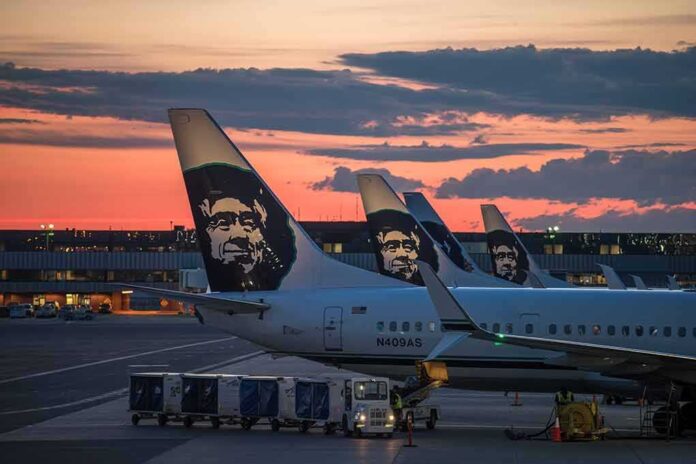
Alaska Airlines brought the entire US air travel system to a sudden, silent halt—grounding every last plane, from Seattle to Miami, not because of a storm or strike, but because of a single point of failure buried deep in its technology backbone.
Story Snapshot
- Alaska Airlines grounded all flights nationwide for hours after a major IT outage triggered by a critical hardware failure at a data center.
- The disruption led to 229 flight cancellations, stranded thousands of passengers, and forced a scramble to reposition crews and aircraft.
- Operations resumed within a day, but ripple effects lingered as the airline and airports worked to clear the backlog.
- The incident highlights how modern air travel relies on fragile, centralized digital systems—raising urgent questions about risk, redundancy, and who’s really in control when things go wrong.
Understanding the Impact
The IT outage had immediate and far-reaching consequences, causing significant travel disruptions for thousands of passengers. The logistical challenges of repositioning aircraft and crews after the resumption of operations further complicated the situation. This incident not only resulted in financial losses from canceled flights but also raised concerns about the airline’s reputational damage and customer trust. Alaska Airlines’ experience is not isolated; similar IT outages have affected other major airlines like Southwest and Delta in recent years. These incidents highlight the critical importance of reliable IT systems in ensuring smooth flight operations.
Industry-Wide Implications
The reliance on digital systems for flight operations, scheduling, and passenger management makes airlines increasingly susceptible to IT failures. As the industry continues to consolidate, with mergers like Alaska Air Group’s acquisition of Hawaiian Airlines, operational complexity increases, potentially amplifying the risk of such disruptions. Experts emphasize the need for robust backup systems and regular stress testing to mitigate these risks.
Expert Perspectives
Industry experts stress that IT outages are becoming more common due to aging infrastructure and complex digital dependencies. They recommend prioritizing technology resilience as a core business function for airlines. The incident serves as a reminder of the importance of investing in backup systems and disaster recovery protocols to prevent future disruptions.
Conclusion and Future Directions
The grounding of Alaska Airlines flights due to an IT outage serves as a stark reminder of the airline industry’s vulnerability to technological failures. As airlines continue to rely heavily on digital systems, enhancing IT infrastructure and investing in robust backup systems will be crucial to maintaining operational reliability and customer trust. The incident also underscores the need for ongoing regulatory oversight and industry-wide reassessment of technology resilience.
Sources:
KSL: Alaska Airlines Resumes Operations After an IT Outage Grounded Its Flights for Hours
OPB: Alaska Airlines Resumes Operations After an IT Outage Grounded Its Flights for Hours